Pakistan playing active mediatory role to defuse Middle East crisis: envoy tells US delegation
Pakistan’s UN envoy Asim Iftikhar Ahmad tells a US War College delegation that Middle East tensions risk global peace, energy security and trade. He says Islamabad engages the US, Iran and Gulf states to de-escalate.

Ambassador Asim Iftikhar warns Middle East tensions threaten global peace and economy
Says Pakistan engaging US, Iran, Gulf states and major powers for de-escalation efforts
Warns Strait of Hormuz disruption could severely impact global energy and trade flows
Highlights Islamabad’s role in combating Islamophobia and advancing multilateral diplomacy
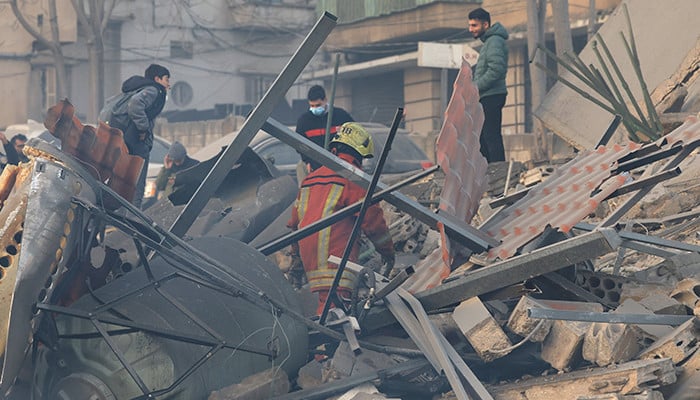
UNITED NATIONS: Pakistan’s Permanent Representative to the United Nations, Asim Iftikhar Ahmad, has warned that the ongoing Middle East crisis poses grave risks to international peace, global economic stability and energy security, while underscoring Islamabad’s active diplomatic engagement to promote dialogue, de-escalation and regional stability.
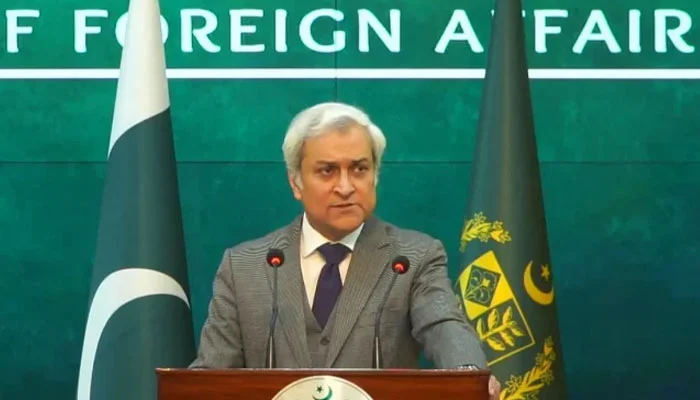
Addressing a 40-member delegation from the US War College during its visit to the Pakistan Mission at the United Nations on Monday, Ambassador Asim Iftikhar Ahmad highlighted Pakistan’s “constructive role” in advancing peace, diplomacy and mediation efforts, particularly in the context of tensions involving the United States and Iran.
The delegation, led by Stephan Walters, comprised 33 American participants along with representatives from Pakistan, Turkiye, Sri Lanka, Moldova, Guatemala and Ecuador.
Responding to questions regarding the escalating Middle East situation, the Pakistani envoy said the crisis carried far-reaching consequences extending well beyond the region itself.
He pointed to its direct impact on global energy markets, oil and gas supplies, fertilizer availability, food security, maritime navigation, merchandise trade, inflationary pressures and overall global economic growth projections.
Referring specifically to disruptions in the Strait of Hormuz, Ambassador Asim warned that any prolonged instability could have severe implications for international energy flows and strategic trade routes.
“The United Nations has examined multiple scenarios concerning the consequences of a prolonged regional crisis,” he said, noting that Pakistan had also experienced economic repercussions arising from instability in the Middle East and Gulf region.
Beyond the economic fallout, the envoy stressed that the crisis represented a serious threat to both regional and international peace and security.
He said Pakistan strongly supported efforts aimed at de-escalation, dialogue and diplomacy, adding that Islamabad remained actively engaged with the United States, Iran, Gulf countries, Egypt, China, Turkiye and other international partners to prevent further escalation and create conditions conducive to peaceful negotiations.
Ambassador Asim said Pakistan’s balanced, principled and objective foreign policy had enabled it to maintain trust and engagement with all key stakeholders.
He noted that Pakistan’s close ties with the United States, Iran, Gulf states and major world powers, combined with its current membership of the UN Security Council, positioned Islamabad to play a meaningful and constructive role in facilitating dialogue and supporting diplomatic efforts for regional peace and stability.
Discussing the evolving security dynamics in the Middle East and Gulf region, the envoy said recent developments could trigger renewed thinking on regional security arrangements and strategic alignments.
In this regard, he stressed that any future regional security framework must remain firmly grounded in international law, the UN Charter, collective security principles, mutual respect for sovereignty and equal security for all states.
Ambassador Asim also underscored Pakistan’s deep interest in maintaining peace and stability in the Persian Gulf region, citing the country’s longstanding economic, energy, security and people-to-people relations with Gulf nations, where millions of Pakistanis live and work.
Responding to questions on Islamophobia, the Pakistani envoy described the phenomenon as discrimination, marginalization and victimization of Muslims on the basis of their faith.
He emphasized that freedom of religion and belief was a fundamental human right and stressed the importance of promoting mutual respect, inclusion and interfaith harmony across societies.
The ambassador noted that Pakistan, together with like-minded countries, had played a leading role at the United Nations in advancing international efforts to combat Islamophobia, including support for the establishment of a UN Special Envoy to Combat Islamophobia tasked with developing practical recommendations and action-oriented initiatives for member states.
On questions relating to demographic changes, population shifts, aging societies and declining birth rates, Ambassador Asim observed that such issues were increasingly being debated within the UN framework in the context of development, economic policy, human rights and technological transformation.
He said artificial intelligence was already playing an expanding role in assisting governments and UN agencies through data analysis, policy recommendations and forecasting tools, adding that AI’s influence on policymaking was expected to grow significantly in the coming years.
At the outset of the session, Ambassador Asim reaffirmed Pakistan’s deep and enduring commitment to the United Nations and multilateralism, describing the world body as the central platform for collective global action on peace and security, sustainable development, human rights, climate change and emerging technological challenges.
He stressed that today’s interconnected global challenges were too complex for any country to tackle alone, underlining the continued relevance and necessity of multilateral cooperation through the UN system.
The ambassador also highlighted ongoing reform efforts within the United Nations, including revitalization of the General Assembly and reform of the Security Council.
He reiterated Pakistan’s support for democratic, transparent and accountable reforms of the Security Council while firmly opposing the creation of new permanent seats.
Ambassador Asim further highlighted Pakistan’s active role as a current member of the Security Council in promoting international peace and security through peacekeeping, counterterrorism cooperation, regional stability initiatives and advocacy for peaceful settlement of disputes.
He also underscored the broad-based and dynamic relationship between Pakistan and the United States, encompassing security, defence, intelligence cooperation, counterterrorism coordination, trade, economic engagement and strong people-to-people ties.
During the interactive session, participants thanked the Pakistan Mission for facilitating a meaningful exchange on pressing global challenges and acknowledged Pakistan’s active role in diplomacy, mediation and peacebuilding efforts at the United Nations.
Earlier, Saima Saleem and Umar Shafique delivered detailed presentations on the work of the Pakistan Mission across various UN pillars and the country’s longstanding contributions to UN peacekeeping operations worldwide.
Comments
No comments yet. Be the first to join the discussion!