Pakistan slams Canada–India uranium deal, warns of strategic imbalance in South Asia
Pakistan has raised alarms over the recent uranium supply agreement between Canada and India, citing potential threats to regional stability and global non-proliferation norms.
ISLAMABAD: Pakistan on Thursday expressed concern over a newly announced uranium supply agreement between India and Canada, describing the arrangement as another country-specific exception in civil nuclear cooperation that could undermine global non-proliferation norms.
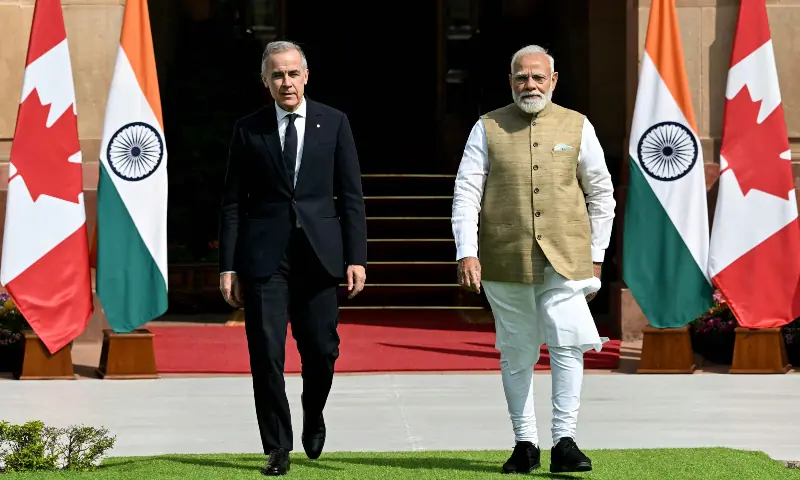
India and Canada earlier this week signed a series of agreements covering cooperation in critical minerals as well as a long-term uranium supply deal aimed at supporting India’s nuclear power programme.
Indian Prime Minister Narendra Modi described the uranium supply agreement as a “landmark deal," saying it would ensure long-term fuel supply for nuclear energy while the two countries would also collaborate on small modular reactors and advanced reactor technologies.
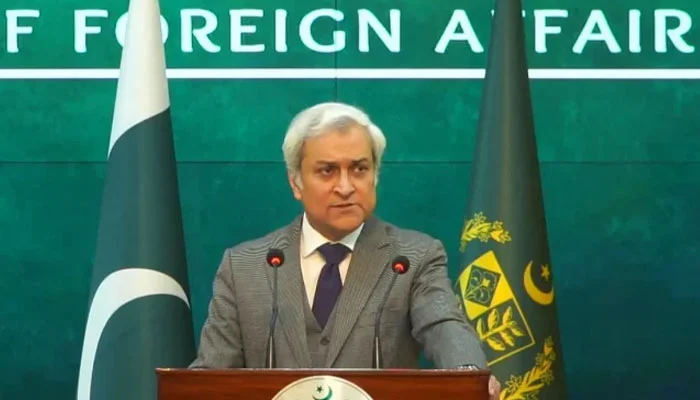
Responding to media queries, Foreign Office spokesperson Tahir Andrabi said Pakistan had taken note of the agreement with concern.
“This arrangement represents yet another country-specific exception in the field of civil nuclear cooperation,” he said.
The spokesperson pointed out the irony of the development, recalling that India’s Smiling Buddha nuclear test—conducted using plutonium produced in a Canadian-supplied reactor meant for peaceful purposes—had directly led to the creation of the Nuclear Suppliers Group.
“A state whose actions necessitated the establishment of global export controls is now being granted preferential access under selective arrangements,” he added.
Andrabi further noted that India had not placed all of its civilian nuclear facilities under safeguards of the International Atomic Energy Agency, nor had it made any binding commitment to do so under the new arrangement.
“Several facilities remain outside international inspection,” he said, adding that it also remained unclear what concrete non-proliferation assurances accompanied the agreement.
The spokesperson warned that the strategic implications of the deal were equally troubling.
He said guaranteed external uranium supplies would allow India to redirect its domestic reserves for military purposes, potentially expanding its fissile material stockpiles and accelerating the growth of its nuclear arsenal—developments that could deepen strategic asymmetry in South Asia.
“Pakistan reiterates that civil nuclear cooperation must be governed by a non-discriminatory, criteria-based approach applicable equally to states that are not parties to the Nuclear Non‑Proliferation Treaty,” he said.
He added that selective exceptions risk weakening the credibility of the global non-proliferation regime and could further destabilise regional and global peace and security.
Comments
No comments yet. Be the first to join the discussion!