The future of non-proliferation norms
The $2.8 billion uranium deal between Canada and India raises significant questions about non-proliferation norms, as Canada shifts its stance on nuclear engagement with a non-NPT state.

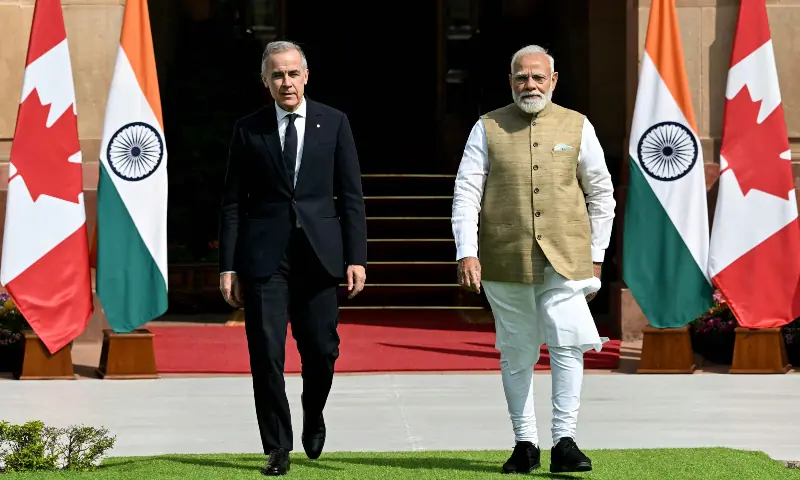
The India–Canada Uranium Deal
In December 2025, the conclusion of a uranium supply agreement worth $2.8 billion between Canada and India sparked a debate on the future of nonproliferation. Canadian company Cameco will supply uranium to New Delhi’s nuclear energy sector, and the broader reopening of bilateral economic engagement signals, including the expected Comprehensive Economic Partnership Agreement. Serious policy and normative questions are raised for Canada, as, once recognized for its principled arms control diplomacy and strong nonproliferation record, it is now departing from that tradition by supplying uranium to a non-NPT nuclear state.
Canada provided a nuclear reactor to India in 1974 for peaceful nuclear application, which India converted into a nuclear programme. Canada criticized New Delhi for the misuse of nuclear technology and suspended nuclear collaborations for 30 years. The recent agreement to export uranium indicates that geopolitical interests and commercial incentives are influencing proliferation concerns, as Canada is playing a significant role in boosting India's nuclear industry.
The civilian reactors would also allow India to develop and exploit its domestic uranium deposits for the production of nuclear weapons and highly enriched uranium stockpiling through Canadian uranium imports. India is a nuclear-armed state that has never signed the NPT, which was meant to guide global efforts against the spread of nuclear weapons. Through the uranium deal, Canada is willing to extend benefits to India that are usually reserved for states that comply with the NPT and accept international inspections of their nuclear reactors.
When considering India’s wider nuclear trajectory, it is continuously developing its strategic capabilities, including upgraded warheads, sea-based deterrents, and missiles with MIRV capability. Its nuclear programme is still not fully protected by IAEA regulations, as out of 22, 8 nuclear facilities are not under IAEA inspection, and the civil-military separation plan of 2008 leaves several nuclear reactors without international oversight, including enrichment complexes and heavy-water facilities, vulnerable. India owns one of the largest civilian plutonium stockpiles in the world, and such plutonium can be converted easily from civilian to military use with limited assurance. The risk of proliferation increased with the approval of the Atomic Energy Bill in December 2025, which, for the first time, allowed the private sector to participate in the country’s nuclear energy sector. India's credibility is already weakened by the lack of independent oversight in its nuclear governance, as New Delhi's primary regulatory body Atomic Energy Regulatory Board is not independent. It is under the Department of Atomic Energy (DAE). India has not made any progress in this regard, despite the IAEA repeatedly recommending that it establish an independent implementing authority to manage nuclear safety and security. Any action that increases India’s weapons potential and proliferation risks cannot be separated from its ramifications for regional security at a time when the deterrence dynamics between India and Pakistan are still precarious, and tensions between China and India have escalated as India desires to counter China, perceiving its increasing influence in the Indian Ocean.
When demand for nuclear energy is steadily increasing in the region, this discriminatory treatment is contributing to regional instability. The agreement also facilitates India’s expansion of both nuclear energy capacity and strategic capabilities with broader implications for global arms control regimes, fissile material production, balance of power and regional stability beyond South Asia. By further weakening the already fragile foundation of global nuclear governance, the deal creates motives for vertical and horizontal proliferation.
India also maintains an active cycle of producing fissile materials, has never signed the Comprehensive Test Ban Treaty or Non-Proliferation Treaty, and continues to obstruct Fissile Materia; Cut-Off Treaty talks. In addition to threatening South Asian stability, such agreements would jeopardise international efforts to revitalize arms-control accords at a time when nuclear politics are being reshaped by great-power rivalry. It is more challenging to implement export limits as India extends its participation in international nuclear markets while remaining a Non-NPT state.
Ironically, after 34 years, the USA paved the way for a special exemption to India, a non-NPT state, for the Nuclear Supplier Group in 2008, which was formed in response to the diversion of peaceful nuclear technology into nuclear weapons by India. In accordance with NSG norms, member states are not allowed to supply uranium to non-NPT states. The core values of the NSG take priority over commercial interests and geopolitical alignments.
When great powers prioritize strategic partnerships and financial benefits ahead of long-standing arms control obligations, the legitimacy and universality of the international non-proliferation framework are also compromised. This challenges the norms that have barred many developing nations from acquiring nuclear weapons and to other countries that are exporting fuel and nuclear technology, no longer depends on obedience with the international nonproliferation framework.
When demand for nuclear energy is steadily increasing in the region, this discriminatory treatment is contributing to regional instability. The agreement also facilitates India’s expansion of both nuclear energy capacity and strategic capabilities with broader implications for global arms control regimes, fissile material production, balance of power and regional stability beyond South Asia. By further weakening the already fragile foundation of global nuclear governance, the deal creates motives for vertical and horizontal proliferation.
The writer is a Research Officer at Centre for International Strategic Studies, AJK. She can be reached at [email protected]
View all articles →Comments
No comments yet. Be the first to join the discussion!