

Whither the PTI?
AT PENPOINT
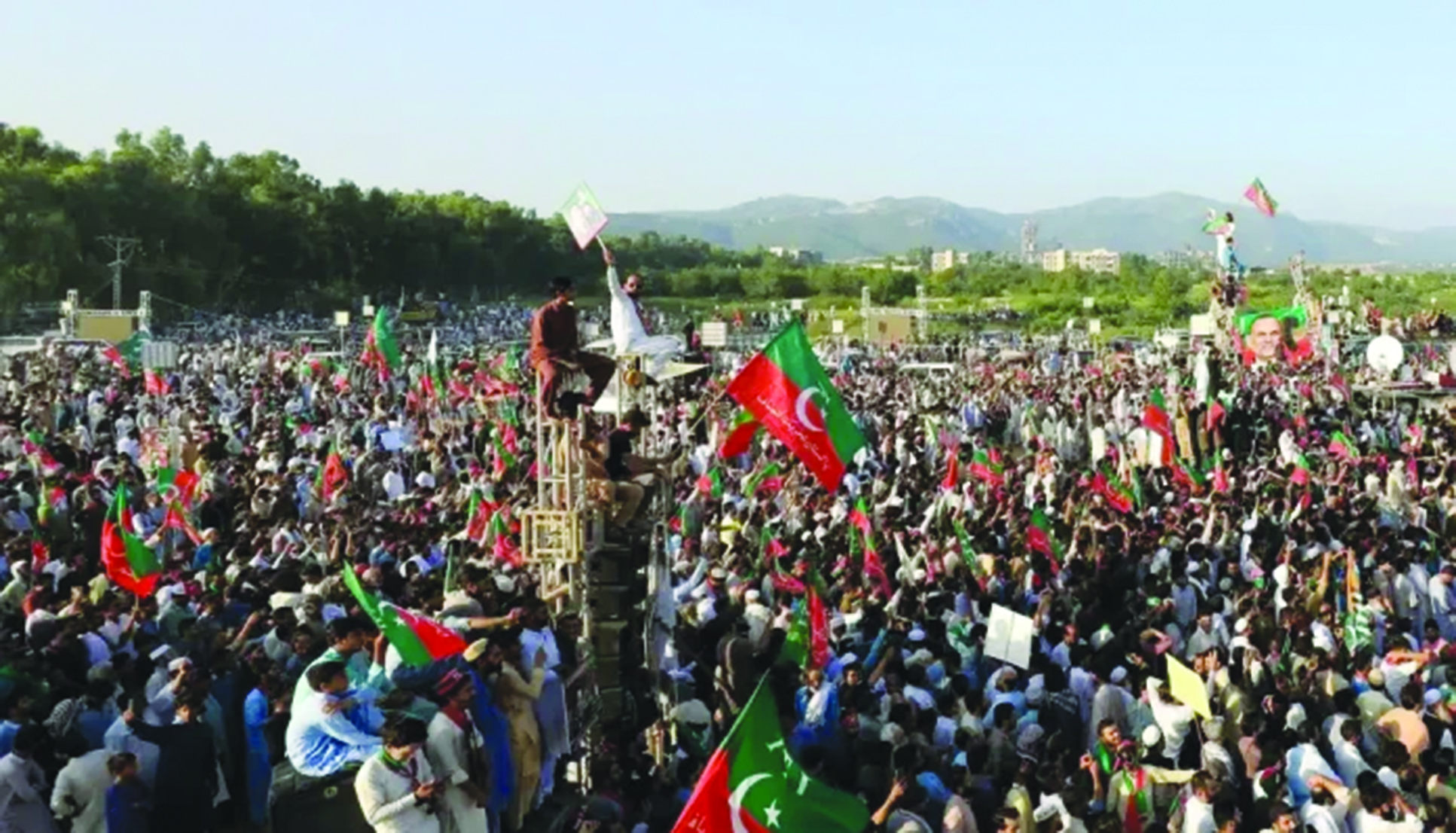
The PTI rally in Peshawar was its first major activity after the D-Chowk rally which ended on 26 October 2026, though it did not end as ignominously at that particular episode. That episode is remembered for way the leader of the rally, then both KP party President and chief minister, Ali Amin Gandapur, showed a clean pair of heels with his excuse of securing the person of party leader’s wife Bushra Bibi, at that point still free.
As events unravelled. Gamdapur lost both the provincial party presidency and the chief ministership. At present. CM Sohail Afridi is not provincial party chief, so he does not have the entire responsibility for the success or failure of any political movement. His first test on taking office was the Abbottabad by-election, on the seat vacated by the disqualification of National Assembly Opposition Leader Umar Ayub. It was considered a safe seat for PTI, but it lost. It was painful for a chief minister to lose a by-election for his party in his province, but it was also appropriate for the theme of the current protest, which marked the second anniversary of the 2024 elections, which the PTI and its allies in the Tehrik Tahaffuz Ain Pakistan claim were stolen.
The second test has come now, in the shape of the rally in Peshawar. It was successful insofar as Peshawar shut down, which a chief minister should be able to do in his own provincial capital, and to that extent showed that Afridi has now got his hands on the levers of control necessary for his job.
But what exactly is his job? Is it to run KP properly? To be loyal? The province after all is the PTI base, and mishandling could cede control of the province. It has ruled there since 2008. Whoever has been chief minister has subordinated himself to the party's needs. Those needs at the moment are the release of Imran from jail, and preferably his installation at the head of the government. However, for their fulfillment without completing the process of elections and lasting out the five-year tenure of the present National Assembly (since 2008, every National Assembly has completed its tenure, with the practice developing of dissolving a day earlier, so that the caretaker government would have a 90-day tenure rather than the 60 days originally contemplated).
The only way this is possible would be if Imran’s assessment of Pakistani politics is correct, that the establishment determines who holds office and who not. At the same, the PTI and the Tahaffuz Ain Pakistan movement. However, the establishment had strongly denied any such trend, and has said it operates strictly according to the Constitution. This was the subject of heated words between Defence Minister Khwajaja Azsif and National Assembly Leader of Opposition Mahmud Achakzai.
It may seem to some PTI supporters that making Achakzai leader of the Opposition in the National Assembly, and Allama Raja Nasir Abbas Leader in the Senate might be taking things too far. Achakzai’s Pakhtoonkhwa Milli Awami Party and well the Allama’s Majlis Wahdatil Muslimeen are parties so small that they do not contest all the seats of the province. Indeed, they tend to contest just seats around Quetta. The PKMAP and the MWM appeal to very specific demographics. The former appeals to Pashtuns, and appeals to them on the ground that Pashtun areas of Balochistan should be hived off into a separate province. This includes the capital, Quetta, which usually sends to the provincial assembly from the Hazara community. How that sole member parlayed that into a Senate seat deserves to be cited as an example of efficient politics.
The Peshawar rally may well mark the PTI’s fading into irrelevance, which may well be its final fate rather than the disintegration that seemed presaged by the May 9 desertions. The only government move seems to have been to allow Basant once again. This may have simply meant that Lahoris cannot be kept away from their kites, but it also meant a tough choice for many PTI diehards, who are also the ones giving Basant an almost religious significance.
It should be noted that the Hazaras have not been conquered along with land, as is the case with the Pashtuns, who were brought into British Balochistan during the First Afghan War. The Hazaras came into the Indian Empire later, mostly fled the various waves of persecution they faced at the hands of the Pushtun Sunni majority in Afghanistan, with the last waves as recent as the 1890s. India, though, offered a safe haven, where the British protected Jains, Buddhists, Shaivites, Vaishnavites, as well as followers of the Arya Samaj, the Brahmo Samaj and Sikhs. They could also preserve the lives of Muslim sectarian followers. This approach did lead to Shia and Sunni Muslims being treated as differing faiths rather than members of the same faith who belonged to different schools of thought.
The result seems to have been to allow Quetta to host not one but two ethnic parties, to the exclusion of the Baloch whose provincial capital it is. These parties are not competitive against one another, but both were needed to bring about the shutdown in Quetta that stood in for the entire province.
Even within its own parameters, the Peshawar protest cannot be called a success. This event shares in common with the last protest the pledge that it would not be over until its objectives were achieved. As the main objective of the protest is Imran’s release, and that has not yet occurred, the protest may be said to have failed. Further, there is no sign of the rally having sparked off a continuing series of protests.
This is even though Imran is now facing perhaps the worst health crisis of his imprisonment. Just after the protest it was revealed by a report to the Supreme Court that he had lost 85 percent of the vision in his right eye. The underlying cause, that central retinal vein occlusion which has directly caused the vision loss, is itself caused by cardiac deficiencies, blood pressure variations and other pathologies caused by old age. It may well go against the grain for Imran to admit to being old, but he is 73, and is living in far from ideal conditions.
The PTI may now have to work out what is going to be its shape in a post-Imran future. The PML(N) and PPP have already worked out succession plans for their own septuagenarian leaders, but the PTI remains undecided about its future. That, some might feel, is the right place to be a party that is so anti-dynastic. However, it now seems to have become as dynastic as the rest of them. In a non-dynastic party, like the UK’s Tory Party or our Jamaat Islami, it would be possible to identify possible successors to the leadership (if the present party chief was to suddenly keel over and pass away, for example), by virtue of their past and present party and parliamentary offices. When this exercise is performed for the PTI, the names of un-related party leaders does not crop up, but of Imran’s relatives. This is consistent with previous party behaviour, where it has moved from the position of being an outsider, a reformist new broom, to just another part of the political process. Its leaders stand accused to having fallen prey to the corruption they came in to to end; of having been as cavalier with public funds as they had accused the other parties of doing; of being as accepting of floorcrossers, ‘winning horses’, toadies and timeservers as other parties.
The Peshawar rally may well mark the PTI’s fading into irrelevance, which may well be its final fate rather than the disintegration that seemed presaged by the May 9 desertions. The only government move seems to have been to allow Basant once again. This may have simply meant that Lahoris cannot be kept away from their kites, but it also meant a tough choice for many PTI diehards, who are also the ones giving Basant an almost religious significance.
Comments
No comments yet. Be the first to join the discussion!


