

















Medical centres are established to treat diseases and serve humanity, yet the plastic pollution generated by these same institutions is becoming a silent threat to both the environment and public health.
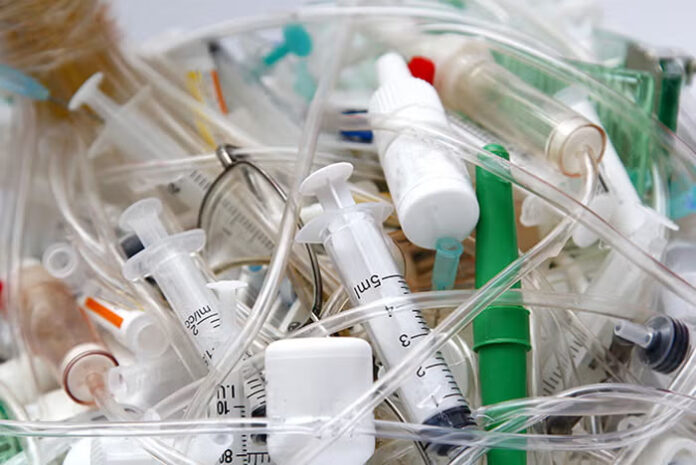
Medical waste produced daily by hospitals and healthcare facilities is very different from ordinary solid waste. Most medical items such as syringes, IV sets, catheters, gloves, masks, testing kits, and medical packaging, are made of plastic and are contaminated with blood, bodily fluids, and chemical residues after use. Research shows that a large hospital generates approximately 300 kg of medical waste daily, of which nearly 71 percent is plastic. Even in general waste streams, plastic makes up about 2.5 percent, contributing significantly to overall pollution.
If this waste is not disposed of safely, it contaminates soil, water, and air. In Pakistan, the number of medical centres has increased rapidly, but waste management systems have not improved at the same pace. As a result, plastic waste from healthcare facilities is becoming a serious environmental problem. According to the World Health Organization, about 25 percent of healthcare waste is hazardous, and a large proportion of it consists of plastic.
Local studies in Pakistan indicate that major public hospitals produce hundreds of kilograms of medical waste daily, with plastic accounting for nearly 70 percent. In cities such as Lahore, Karachi, and Islamabad, plastic waste from hospitals, laboratories, and private clinics is often mixed with municipal garbage. This waste is then transported to landfills or dumped in open areas, where it persists for decades, polluting soil and groundwater.
Another serious issue is the illegal recovery and resale of medical plastic waste. In many places, hospital staff, waste handlers, or contractors collect used plastic items and sell them to scrap dealers. These materials are then recycled into household items such as cups, toys, containers, and decorative products. These items are sold cheaply in markets, and consumers are usually unaware that they were once part of hazardous hospital waste. This practice poses severe risks to public health and environmental safety.
Ultimately, protecting human health is not limited to treating patients; it also requires protecting the environment in which people live. If plastic pollution from medical centres is not controlled, it will become a serious threat to future generations. Governments, healthcare institutions, and the public must work together to adopt responsible practices so that healthcare facilities become symbols of healing and safety rather than sources of environmental and public health risk.
This situation not only degrades the environment but also creates serious health hazards. Used syringes, IV tubing, catheters, and other plastic medical items carry infectious agents. When these materials are reused or recycled without proper sterilization, bacteria, viruses, and other pathogens can survive and be transferred to new products. As a result, diseases such as hepatitis, HIV, and other blood-borne infections may spread through everyday household items made from contaminated recycled plastic.
A study conducted in Lahore found that medical waste from hospitals contains the highest proportion of plastic, including syringe covers, IV tubing, gloves, and medical wrappers. The research also revealed that a large portion of this waste is removed without proper disinfection. This increases the risk of infection and allows contaminated plastic to enter the illegal recycling industry, where it is melted down and converted into household products that are widely used by the public.
In Karachi, a local study reported that many private medical centres do not have proper waste segregation systems. As a result, hazardous plastic waste is mixed with ordinary garbage and transported to municipal dumping sites. From there, plastic waste is carried by rainwater into drainage systems and eventually into the sea. This plastic is extremely harmful to marine life, as fish and other organisms mistake it for food, leading to injury or death. These toxic particles then enter the human food chain.
According to a report by environmental authorities in Islamabad, about 20 percent of medical waste is highly hazardous and contains a large amount of plastic. Incinerators used to burn this waste often fail to meet advanced environmental standards. When plastic is burned under poor conditions, it releases dioxins and other toxic gases into the air. These substances contribute to respiratory diseases, cancer, and other serious health problems.
Another major concern is microplastic pollution. Medical plastic waste gradually breaks down into tiny particles known as microplastics, which enter water and food systems. Recent studies in Pakistan have detected microplastics in both tap water and bottled water. Medical and industrial plastic waste is a major contributor to this contamination. These particles can accumulate in the human body and affect hormonal balance, liver and kidney function, and overall health.
The heavy use of plastic in medical centres is to some extent unavoidable because disposable items are essential for hygiene and infection control. However, the real problem lies in improper waste management. Many medical facilities in Pakistan do not have color-coded bins for separating hazardous and non-hazardous waste. Staff members often lack proper training, making it difficult for them to distinguish between different types of waste. This negligence directly contributes to increasing plastic pollution.
Furthermore, the correct segregation, labeling, safe storage, transportation, and final disposal of medical waste are often not carried out due to lack of manpower, resources, and oversight. Small private hospitals, clinics, and healthcare units are particularly negligent in this regard, making proper waste management extremely difficult.
Environmental authorities in Pakistan, such as the Pakistan Environmental Protection Agency, have introduced laws and run awareness campaigns to control plastic pollution and improve waste management. The government has also introduced Hospital Waste Management Rules, but enforcement remains weak. Monitoring systems at the provincial level are limited, and many private medical centres do not follow the regulations. A local survey showed that many private clinics openly dump medical waste into municipal garbage, creating a serious risk of disease transmission and promoting the dangerous cycle of plastic reuse.
The effects of plastic pollution go beyond environmental damage. Contaminated water and soil affect agricultural productivity, threatening food security. Health problems caused by pollution increase healthcare costs and place a heavy burden on poor communities. In this way, plastic waste from medical centres becomes a national social and economic issue.
To address this problem, it is essential to reduce the use of plastic in healthcare where possible and invest in alternative materials. Biodegradable and reusable products should be promoted. At the same time, strict waste segregation, safe storage, proper transportation, and the use of modern incineration or autoclave systems must be ensured. Regular training of staff and strict regulatory monitoring are crucial.
Public awareness is equally important. People should be educated about the dangers of medical plastic waste and discouraged from purchasing cheap recycled plastic products such as utensils and toys that may be made from contaminated material. If consumers question the source of these products, illegal recycling can be discouraged. Media and educational institutions also have a key role to play in spreading awareness about plastic pollution.
Ultimately, protecting human health is not limited to treating patients; it also requires protecting the environment in which people live. If plastic pollution from medical centres is not controlled, it will become a serious threat to future generations. Governments, healthcare institutions, and the public must work together to adopt responsible practices so that healthcare facilities become symbols of healing and safety rather than sources of environmental and public health risk.