














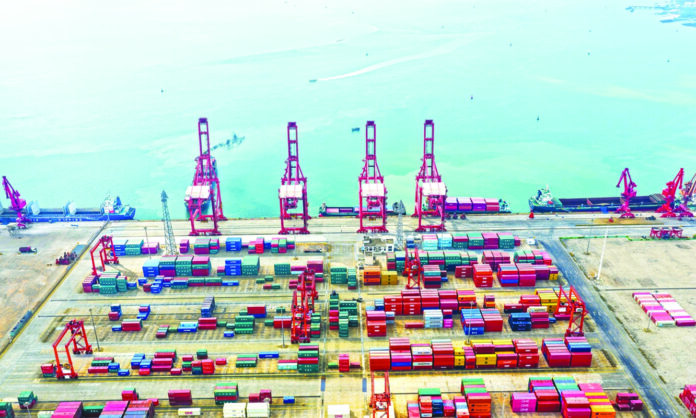
On December 18, exactly 47 years after the landmark plenum that launched China’s reform era, Beijing drew a definitive line around the island of Hainan. By midnight, this tropical province, roughly the size of Belgium, was severed from the mainland’s customs territory. The launch of island-wide independent customs operations is not merely a technical adjustment to trade routes; it is a calculated geopolitical statement. In an era where the old guardians of globalization in the West are retreating behind walls of subsidies and tariffs, China is attempting to build a gateway in the South China Sea that functions on an entirely different logic.
The timing of the Hainan move is as significant as its geography. For years, the global conversation has been dominated by talk of decoupling and de-risking. The conventional wisdom in Washington and Brussels suggests that the era of deep economic integration is over, replaced by a more fragmented world of rival trading blocs. Yet, by turning Hainan into a free trade port of this scale, Beijing is betting that the world’s appetite for market access still outweighs the political desire for isolation.
The mechanics of the new Hainan regime are designed to test the limits of what institutional openness can achieve within a socialist market economy. Under the new rules, the share of goods eligible to enter the island tariff-free has jumped from 21 percent to 74 percent. More importantly, the value-added processing rule allows goods with 30 percent local content to enter the rest of the Chinese mainland duty-free. This is a powerful incentive for international firms to treat the island as a manufacturing hub for the vast domestic market, effectively bypassing the traditional barriers that often frustrate foreign capital.
For those who track the shifting balance of power in Asia, Hainan’s transformation serves a dual purpose. First, it is a clear bid to anchor the Regional Comprehensive Economic Partnership (RCEP) and the burgeoning China-ASEAN trade corridor. By positioning Hainan as a bridge between Southeast Asia and the Chinese heartland, Beijing is reinforcing its role as the indispensable economic sun around which the regional planets orbit. If the project succeeds, the island will become a laboratory for the kind of high-standard trade rules required for China’s ultimate goal of joining the Comprehensive and Progressive Agreement for Trans-Pacific Partnership (CPTPP).
However, the challenges are as significant as the ambitions. Skeptics often point out that while Hainan has the scale and the support of the central government, it lacks the deep-seated legal traditions and financial sophistication that made Hong Kong a global icon. Creating a free trade port is about more than just lowering tariffs; it requires a predictable regulatory environment and a level of transparency that satisfies international investors. The 15 percent flat tax for talent and corporations is a start, but the real test will be whether the island can develop the soft infrastructure of trust that global commerce demands.
The strategic dimension is also hard to ignore. Hainan sits at the edge of the South China Sea, a region fraught with maritime disputes and naval posturing. By emphasizing “blue partnerships” and ocean governance, as seen in the recent symposiums in Sanya, China is trying to frame its maritime presence through the lens of cooperation and shared development. The message is that the South China Sea should be a theater of trade rather than a theater of conflict. Whether this economic charm offensive can quiet the geopolitical anxieties of neighboring capitals remains an open question.
The world will be watching to see if Hainan can live up to the hype. If it does, it will not only reshape the geography of Asian trade but also provide a new template for how a major power can use institutional innovation to navigate a fractured global order. For now, the island stands as a testament to a simple but powerful idea: that even in a world of rising barriers, the logic of the market and the lure of connectivity remain the most potent forces in international affairs. Beijing has placed a massive bet on Hainan; the payout could redefine the next decade of globalization.
In many ways, Hainan is the ultimate pilot project for the next phase of the Chinese economy. The old model of growth, fueled by property and infrastructure, is being replaced by a drive for high-tech innovation and modern services. By opening sectors like healthcare and telecommunications on the island, Beijing is using Hainan to see how much liberalization the domestic system can absorb without losing its core characteristics. If the experiment works, the Hainan model could eventually be exported to other parts of the country, signaling a broader reopening just when many thought China was turning inward.
The broader international context makes the Hainan project particularly poignant. We are living through a period of profound disillusionment with the liberal international order. In the United States, both sides of the political aisle have embraced protectionism as a tool of national security. In Europe, the struggle to maintain industrial competitiveness has led to a flurry of anti-subsidy investigations. In this landscape, China is positioning itself as the unlikely champion of the open world economy. The rhetoric from Haikou and Beijing emphasizes “certainty” in an uncertain world.
There is, of course, a risk that Hainan becomes an island in more ways than one. If the “second line” of customs between the island and the mainland remains too rigid, the benefits of the free trade port could be bottled up. If the global trade war intensifies, even the most generous incentives might not be enough to lure companies wary of secondary sanctions or supply chain disruptions. The success of the project depends not just on what happens in the customs halls of Yangpu Port, but on the broader health of the relationship between China and the West.
Yet, as of December 2025, the momentum is undeniably with the builders. The arrival of the first intercontinental shipping lines and the expansion of visa-free access to dozens of countries suggest a region that is looking outward. The decision to launch these operations on the anniversary of the 1978 reforms is a deliberate nod to history. It is a reminder that China’s rise was built on a willingness to experiment and a refusal to accept the status quo.
The world will be watching to see if Hainan can live up to the hype. If it does, it will not only reshape the geography of Asian trade but also provide a new template for how a major power can use institutional innovation to navigate a fractured global order. For now, the island stands as a testament to a simple but powerful idea: that even in a world of rising barriers, the logic of the market and the lure of connectivity remain the most potent forces in international affairs. Beijing has placed a massive bet on Hainan; the payout could redefine the next decade of globalization.