
















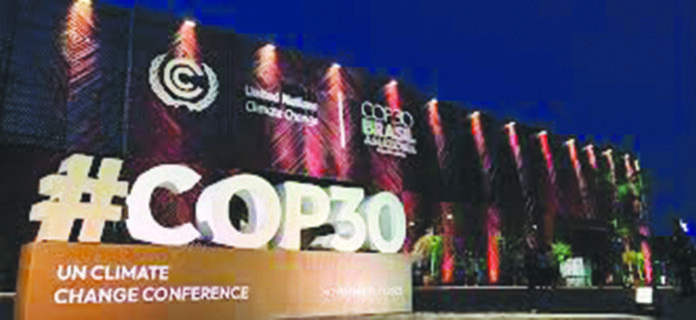
What happened at COP30 in Brazil has left people not just disappointed but genuinely alarmed. The world arrived in Belém carrying a sense of urgency shaped by record heat, unprecedented disasters, and an accelerating loss of trust in global climate cooperation. Yet what we witnessed was another summit where political comfort was chosen over scientific truth, and where the biggest emitters and fossil-fuel aligned states quietly celebrated a diluted deal dressed up as progress. One had hoped that this COP would finally deliver a clear roadmap for phasing out fossil fuels, something millions of people across vulnerable countries have been demanding for years. Instead, leaders crafted a document full of encouraging verbs but empty obligations. The repeated call to “accelerate” or “enhance” action sounds pleasant, but is without timelines, penalties, or binding commitments, so these words amount to nothing more than polite intentions. It feels as if political leaders have mastered the art of appearing ambitious while doing almost nothing that would threaten the interests of powerful oil and gas states and corporations.
What was most troubling was how the final text avoided even naming coal, oil, or gas, as if removing the words could somehow erase the crisis they cause. Many countries had pushed for a strong, unambiguous fossil-fuel phase-out package, but resistance from a handful of vested-interest states led to a soft compromise. This is not just a technical failure; it is a moral one. The UN High Commissioner for Human Rights called the results “meagre” and even warned that history might judge this inaction as a crime against humanity.
When a senior global figure uses language that is so severe, it should shake leaders from their comfort— but it didn’t. The truth is that the burden of climate impacts falls on people who hold the least power in these negotiations, and yet the process continues to privilege those who profit from continued extraction. Every delay enriches a few and impoverishes many.
Yes, COP30 produced some positives. Tripling adaptation finance is meaningful, and vulnerable countries have long demanded that the world respond not only to emissions but also to the destruction already taking place. But even here, the celebration feels hollow. Every climate summit promises increased funding; every year the money arrives late, arrives partly, arrives with conditions, or never arrives at all. Adaptation gains are important, but they cannot substitute for the bold mitigation commitments that would make adaptation less necessary. It feels like asking firefighters to improve their helmets instead of stopping someone from setting the house on fire. The world does not need another fund as much as it needs the courage to finally confront what drives the crisis.
The deal on a Just Transition Mechanism is a step forward, but it lives in the shadow of the summit’s biggest failure: refusing to agree on when and how fossil fuels will be phased out. Without a defined endpoint, the idea of a “just transition” loses meaning. How can workers, communities, or developing countries plan their economic futures if the world cannot even say when the fossil-fuel era will actually end? The compromise pact, celebrated by some negotiators as a diplomatic achievement, looks more like an evasion. Diplomacy should not be measured by how effectively leaders avoid conflict with oil-rich states but by how boldly they face the threat that affects the entire planet.
In the end, what happened at COP30 is more than a disappointment— it is a warning. If the world keeps choosing compromise over courage, and symbolism over substance, then the next generation will inherit not a climate system in recovery but one in collapse. The meagre results of this summit are not just inadequate; they are a reminder of how easily fatal inaction can be masked as progress.
What makes this failure feel even worse is that the science could not be clearer. The window for limiting warming to 1.5°C is nearly shut. Every month brings new records— hottest month, hottest year, strongest storms, deadliest floods. Yet the global community continues to treat climate action as if it were a matter of convenience, something that can be balanced against short-term economic gain or geopolitical bargaining. COP30 exposed a deep disconnect between the urgency of the crisis and the behaviour of those entrusted with solving it. And while Brazil hosted the summit with sincerity and goodwill, the real obstruction came from states whose economies and political power depend on exporting oil and gas. Their presence dominated the negotiations, shaping the tone and weakening the outcomes. It is a tragedy that those profiting from the problem have gained greater influence than those suffering from it.
I fear that COP30 will be remembered not for its small achievements but for its missed opportunity. This summit offered a moment to set a clear global direction— an uncompromising commitment to leave fossil fuels behind. Instead, we leave with a document that allows every country to continue business as usual while pretending to act. The lack of courage, the lack of honesty, and the lack of accountability are painfully obvious. The world is richer than ever in renewable alternatives, science, and public awareness, yet poorer than ever in political will. And that gap is what makes the inaction truly fatal.
Going forward, it is essential that the countries that demanded a real phase-out plan do not let the issue fade. They must push even harder at COP31, because the fossil-fuel lobby will not rest. The world needs louder public pressure, stronger citizen movements, and far less tolerance for diplomatic ambiguity. We must insist that future agreements use clear language, set real deadlines, and hold countries accountable. Otherwise, these summits will continue to produce warm words while the world itself grows dangerously warmer.
In the end, what happened at COP30 is more than a disappointment— it is a warning. If the world keeps choosing compromise over courage, and symbolism over substance, then the next generation will inherit not a climate system in recovery but one in collapse. The meagre results of this summit are not just inadequate; they are a reminder of how easily fatal inaction can be masked as progress.