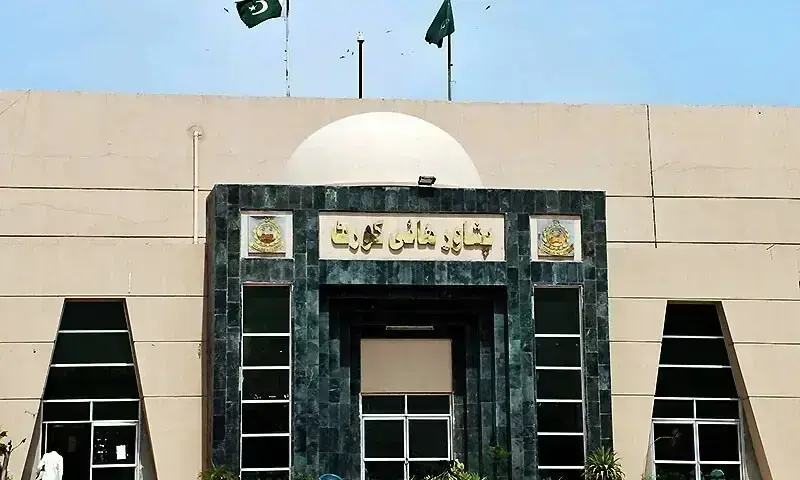
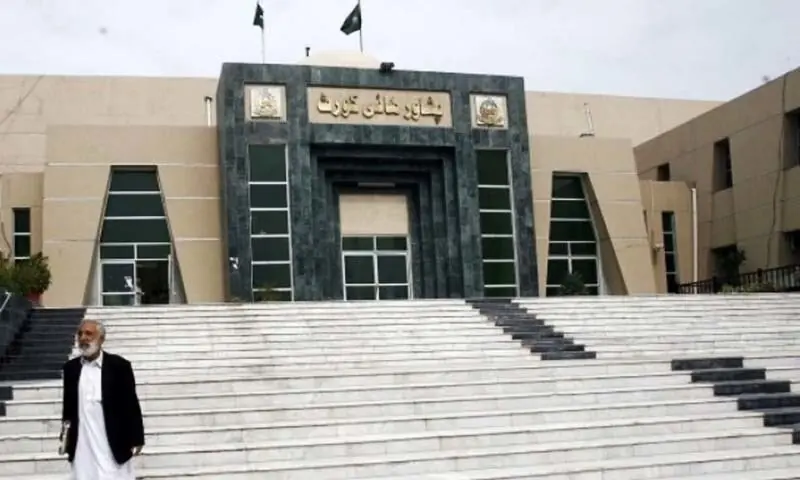
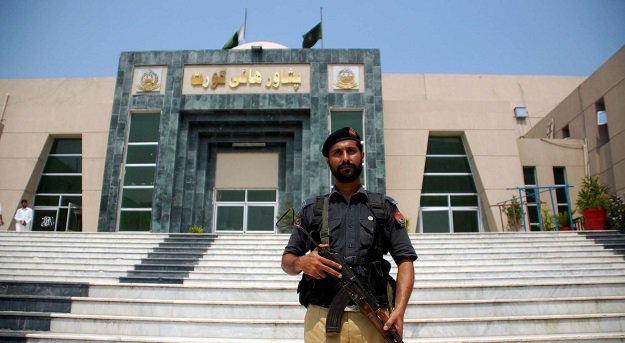
PHC directs Centre to decide Afghan asylum cases under non-refoulement
The Peshawar High Court has ordered the federal government to decide around 140 Afghan asylum and temporary stay cases within 60 days. It also barred the arrest or deportation of the petitioners until a final decision is made.

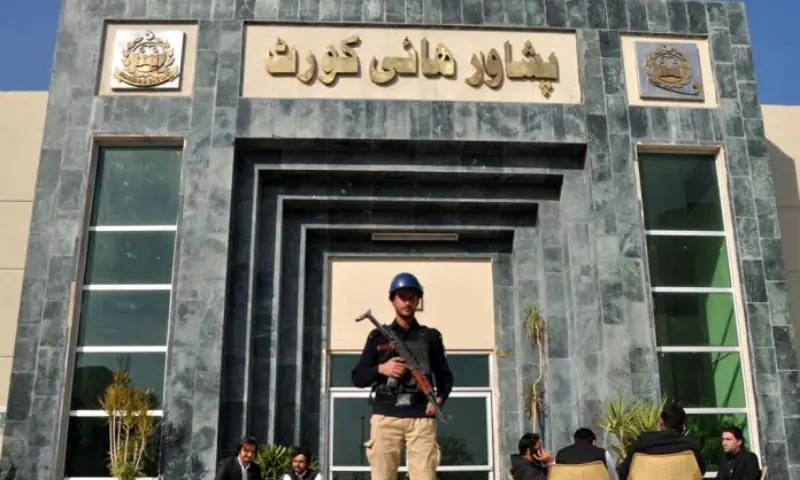
PESHAWAR: The Peshawar High Court has directed the federal government to decide the cases of around 140 Afghan families and individuals seeking asylum, temporary stay or sojourn in Pakistan within 60 days, while restraining authorities from deporting them until a final decision is made.
A bench comprising Justice Wiqar Ahmad and Justice Inamullah Khan disposed of around 140 petitions filed by Afghan nationals who said they feared persecution if forcibly returned to Afghanistan. In a two-page short order, the court referred all cases to the federal government for consideration under the principle of non-refoulement, with a detailed judgement to be issued later.
The short order said the federal government must determine whether the essential requirements for granting asylum, sojourn or temporary stay exist in favour of each petitioner. If the government is satisfied that the necessary conditions are met in any case, it should grant the relevant relief for a period to be fixed by the federal government.
The bench also ruled that the entire exercise must be completed within two months. It further ordered that until the federal government reaches a final decision, the petitioners are not to be deported to Afghanistan.
The court said that if the federal government is unable to decide the cases within 60 days, the secretary of the Ministry of Interior must issue temporary permits allowing the petitioners to remain in Pakistan for any further period required to complete the process. It also directed that during the 60-day period, or any extended period covered by such permits, federal and provincial law-enforcement agencies must neither arrest nor deport the petitioners merely because of their stay in Pakistan.
Petitioners sought protection from return
The petitions, including those filed by Baryalai Miankhel and many others, stated that most of the applicants had approached the United Nations High Commissioner for Refugees for international protection and for resettlement in a third country. They asked the court to direct the interior ministry not to deport them to Afghanistan, arguing that they would face persecution there at the hands of the current Afghan regime.
The petitioners also sought directions to law-enforcement agencies and the government to allow them to stay in Pakistan and not subject them to harassment while their resettlement and relocation processes were pending.
The petitioners came from a range of professional backgrounds. They included former employees of the US-backed Afghan government and related institutions, members of the defence and security sectors, judges, prosecutors, lawyers, teachers, journalists, NGO and civil society workers, as well as women who had worked in Afghanistan’s private sector.
Federal government opposed the pleas
The federal government opposed the petitions and asked the court to dismiss them as not maintainable. In its comments, the government said the Ministry of Foreign Affairs had also given its view, maintaining that after the start of the final phase of the Illegal Foreigners Repatriation Plan on Sept 1, 2025, and after what it described as sufficient time given to third countries since 2021 to process resettlement cases, any Afghan national living in Pakistan without a valid passport and visa was liable to be repatriated regardless of inclusion in any third-country resettlement programme.
The government also argued that the stay of foreigners in Pakistan was governed exclusively by the Foreigners Act, 1946, and fell within the exclusive domain of the federal government.
The petitioners were represented by lawyers Saifullah Muhib Kakakhel, Kashif Jan, Faheem Marwat, Malik Shehbaz, Nazir Ahmad, Qaiser Ali Shah, Osama Khalil, Raees Mohammad, Yousaf Khan, Muazzam Butt and others. They argued before the court that the principle of non-refoulement, recognised as a fundamental principle of international law, barred the return of any person to a country where that individual’s life, liberty or freedom would be at risk. They further contended that although Pakistan is not a signatory to the 1951 Refugee Convention, it has consistently observed humanitarian principles and remains bound by constitutional protections relating to life, dignity, liberty and due process.
Order comes amid repatriation drive
The proceedings have gained significance after the Ministry of Interior issued an order on June 28 directing the arrest of illegal Afghan nationals from July 10. The decision was taken during a June 1, 2026 meeting on the Illegal Foreigners Repatriation Plan, after which provincial governments and administrations in other areas were told to speed up the repatriation or deportation of Afghan nationals who either lacked valid visas or had overstayed them.
The ministry’s order stated, "With effect from 10th July, 2026, any Afghan national found residing in Pakistan without a valid visa shall be arrested immediately."
Comments
No comments yet. Be the first to join the discussion!