LEAs restrained from deporting Afghan siblings pursuing asylum in Canada
The Peshawar High Court has stopped the deportation of two Afghan brothers who say they worked with US forces and are seeking asylum in Canada. The court also extended relief for Afghan forensic expert Dr Khalil Ahmad Pashtunyar and his family.

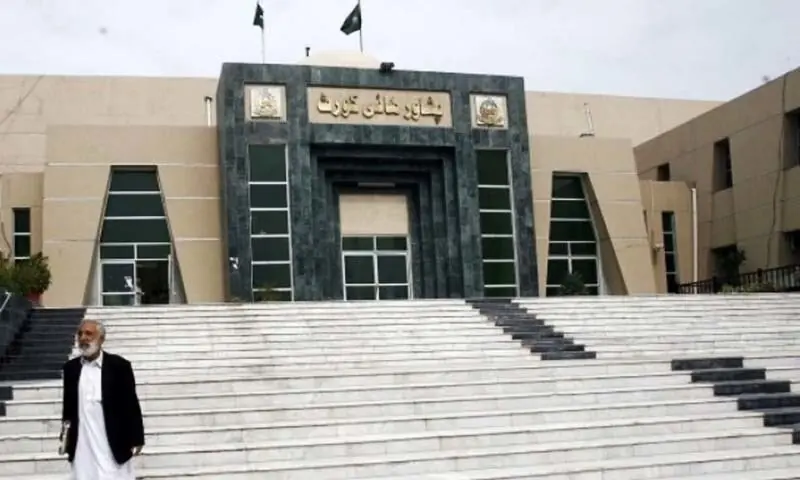
PESHAWAR: The Peshawar High Court has restrained law enforcement agencies from deporting two Afghan brothers who told the court they had worked with US forces in Afghanistan and are now pursuing asylum in Canada.
A bench comprising Justice Wiqar Ahmad and Justice Babar Sattar sought replies from the respondents, including the federal interior ministry, on a joint petition filed by the brothers, Masihullah and Ghobar. In their plea, they asked the court to stop police and other law enforcement agencies from deporting them while their resettlement process in Canada is under way.
Advocate Malik Shahbaz Khan, appearing for the petitioners, told the court that his clients are Afghan nationals currently living peacefully in Mansehra district. He said that before the fall of the previous Afghan government in 2021, the two brothers had worked with American forces in Afghanistan and now faced serious threats to their lives because of that association.
Their counsel argued that if they were sent back to Afghanistan, they would face persecution at the hands of the Taliban, which is now in power there. He further told the court that the brothers had approached the Canadian embassy for protection and resettlement and had already completed the initial processing and interview stage.
According to the petitioners’ lawyer, they are now waiting for confirmation regarding their resettlement. He also referred to email exchanges between the brothers and the Canadian embassy. The counsel contended that any coercive action at this stage, including deportation, would not only put their lives at risk but also undermine their ongoing protection process.
Relief extended in separate petition
In a separate but related matter, the same bench extended interim relief earlier granted to a prominent Afghan forensic expert and his family until June 1, directing law enforcement agencies not to deport them until that date.
The bench also instructed Assistant Attorney General Barrister Rahat Ali Khan and Nadra law officer Mohammad Mubarak Jan to submit comments on behalf of the respondents.
Advocate Osama Khalil appeared for the petitioners in that case, including Dr Khalil Ahmad Pashtunyar, a former head of Forensic Medicine Services in Afghanistan, along with six family members — his wife and five children. They sought court directions to prevent law enforcement agencies and the government from harassing them and to allow them to remain in Pakistan until their resettlement process, initiated through the UNHCR, is completed.
The petitioners asked the court to declare that they are entitled to protection under a federal interior ministry notification issued on Nov 3, 2023, which, they said, announced a clear policy exempting Afghan nationals awaiting resettlement.
Their lawyer told the court that Dr Khalil is a distinguished medical professional who served as head of forensic medicine and was also known as a human and women rights defender. He said Dr Khalil had also been a member of the Anti-Torture and Human Rights Committee and other panels of the Afghanistan Independent Human Rights Commission.
According to the petition, after the Taliban takeover of Afghanistan, Dr Khalil entered Pakistan on valid travel documents to avoid persecution linked to his professional work and human rights activities. In Pakistan, he applied for asylum through the United Nations High Commissioner for Refugees and the French embassy for relocation to a third country.
The counsel stated that as the cases of petitioners were actively documented with both the UNHCR and the French embassy, they fell within the protected category and couldn’t be treated as illegal foreigners.
The court proceedings focused on whether Afghan nationals with pending resettlement cases can be protected from deportation while those processes remain unresolved.
Comments
No comments yet. Be the first to join the discussion!