AJK High Court bars detention and deportation of Afghans without due process
The AJK High Court has ruled that Afghan nationals in the region cannot be detained or deported without due process. It also directed the government to immediately establish a legal mechanism for handling such cases.

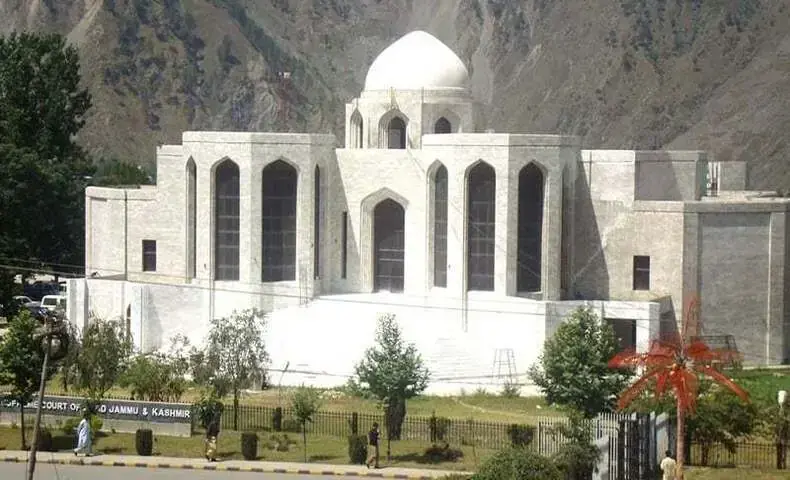
MUZAFFARABAD: The Azad Jammu and Kashmir High Court has ruled that Afghan nationals living in the region cannot be detained or deported without due process, even if they fall within repatriation policies, and has directed the government to put in place an immediate legal mechanism to regulate such matters.
In a detailed judgment written by Justice Syed Shahid Bahar, the court disposed of three identical constitutional petitions that challenged the detention of Afghan nationals who were allegedly taken into police custody for repatriation.
The petitioners argued that they had been living lawfully in AJK for decades and possessed valid documents, but were nevertheless taken into custody by police without lawful grounds and were facing possible deportation.
In its reply, the government said Afghan nationals were being detained as a precaution under a broader repatriation policy. However, it also acknowledged that no specific criminal charges had been framed against them.
The court observed that although foreign nationals do not have a vested right to permanent residence, they are still entitled to legal protection and due process for as long as their stay remains valid. It held that a valid visa gives a limited but lawful right of residence, and that action before the expiry of such a visa can only be taken on specific grounds, including fraud, breach of visa conditions, or threats to public order.
The judgment further said deportation, where applicable, must be preceded by cancellation of the visa and carried out strictly under the law. It declared that arbitrary detention or informal
pushbackwithout formal legal proceedings was unlawful.
Legal gaps highlighted
Justice Bahar pointed to shortcomings in the implementation of the law, noting that under the AJK Foreigners Act, 1952, proceedings against foreign nationals must begin through a duly appointed
civil authority. The government’s law officer conceded before the court that no such authority had yet been formally appointed, which the court said made the initiation of proceedings legally deficient.
Calling the issue one of
first impression
The judgment also stressed that family relationships, including marriages between Afghan nationals and local residents, deserved protection under constitutional principles relating to family life. It said such cases required a more nuanced and humane approach instead of blanket repatriation measures.
Directions to the government
While affirming the government’s authority in matters concerning foreign nationals and repatriation, the court urged a structured and differentiated approach. It observed that undocumented entrants could be dealt with strictly under policy, while long-term residents with family and business links in local society required humanitarian consideration.
The court said cases involving visa holders or those who entered lawfully should be examined separately, including in situations of overstay. It also observed that where deportation is considered necessary, affected individuals should be given reasonable time, on a case-to-case basis, to wind up businesses and settle their affairs.
In disposing of the petitions, the court directed the government to immediately appoint civil authorities in all districts for cases under the Foreigners Act, ensure that arrests are reported to the government within five days, and make expeditious case-by-case decisions regarding the status of detained Afghan nationals.
Comments
No comments yet. Be the first to join the discussion!