Residents warn of flooding risk as monsoon lays bare drainage problems in Wah Model Town
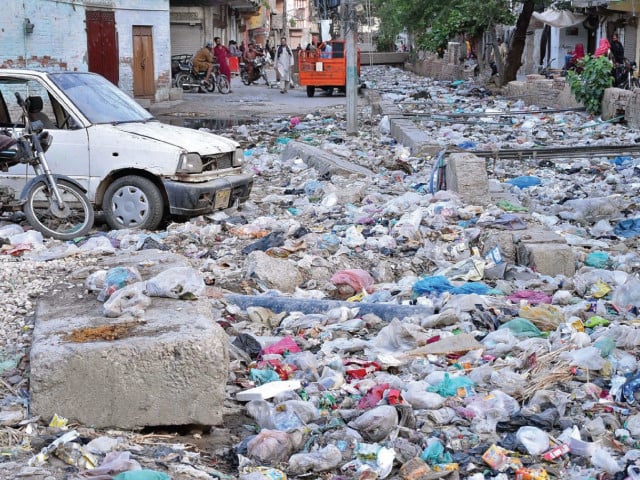
Residents of Wah Model Town say blocked drains and weak sewerage infrastructure are again exposing the area to flooding as the monsoon season intensifies. Social workers have also raised concerns about sanitation and unclear civic responsibility.

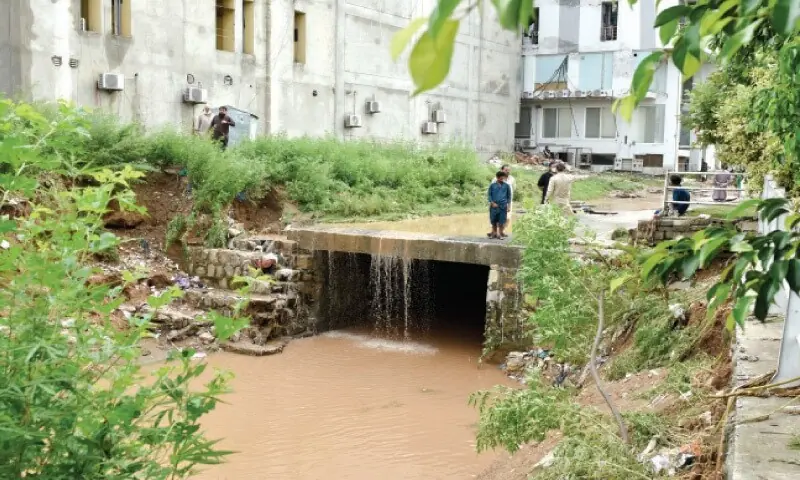
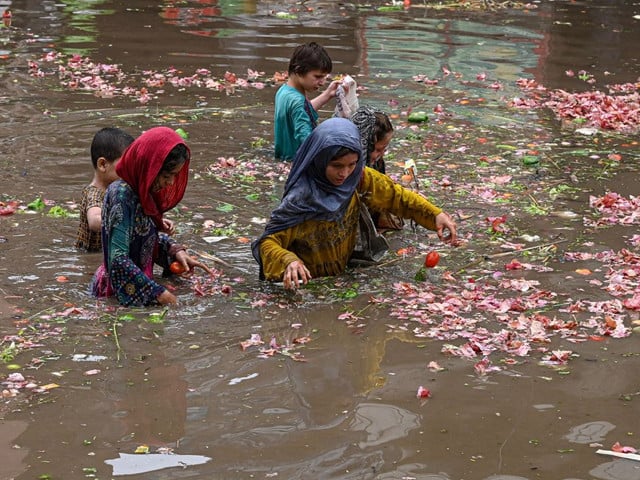
TAXILA: With the monsoon season intensifying, residents of Wah Model Town say they are again bracing for flooded streets, overflowing drains and sewage-laden roads, blaming what they describe as long-running official neglect and worsening civic infrastructure.
People living in the densely populated private housing scheme, which falls under the jurisdiction of the Wah Cantonment Board along the Grand Trunk (N-5) Highway, say the rains no longer bring only relief from summer heat. Instead, they mark the return of a yearly disruption that affects routine life, raises health concerns and leaves several neighbourhoods exposed to urban flooding.
Residents say the locality, despite its location on one of the country’s busiest highways and its expansion into an important residential and commercial area, continues to face serious shortcomings in drainage and sewerage facilities. According to them, stormwater drains and sewer lines in various parts of the town have remained choked, neglected or obstructed for years. They say even ordinary rainfall can submerge roads and streets within minutes, making it difficult for pedestrians, motorists, schoolchildren and emergency responders to move around.
Rain exposes infrastructure weaknesses
Residents said the latest spell of rain once again highlighted the weak state of local civic infrastructure. They reported that roads were submerged in stagnant rainwater after blocked drainage channels failed to carry runoff away. They also warned that if the situation remains unaddressed, it could lead to damage to homes and property, electrical safety risks, traffic problems and the spread of water-borne illnesses.
Local social worker Abdul Saboor said the situation becomes worse because of cattle farms in the neighbouring Khanabad area. He said rainwater washes animal waste onto nearby roads and streets, creating unsanitary conditions and increasing environmental and public health concerns for both residents and visitors.
According to Abdul Saboor, the issue affects a large number of people in Phase-I, Phase-II and the Phase-I Extension of Wah Model Town, where hundreds of houses, markets and commercial plazas have been built over the last three decades.
Questions over civic responsibility
Another social worker, Ulfat Hussain, said the roots of the problem date back to the early 1990s, when the private housing scheme was established within Wah Cantonment’s territorial limits. He said the developer sold residential and commercial plots and later gradually stepped back from municipal obligations.
Ulfat Hussain said residents continue to pay property tax, transfer fees and other government charges, but there is still no clear understanding of which institution is responsible for maintaining the roads, drains and sewerage network in the area.
Comments
No comments yet. Be the first to join the discussion!