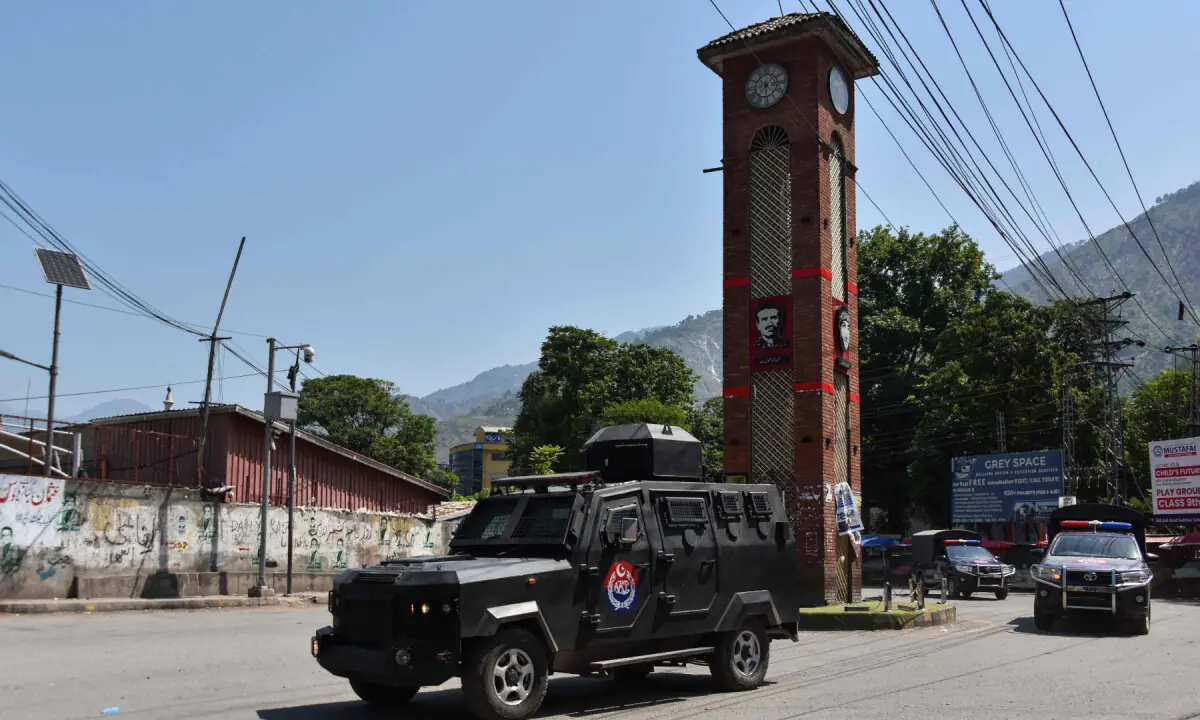
AJK official claims state agencies have evidence of Indian funding behind banned JAAC
An AJK information secretary has claimed state institutions hold evidence of Indian funding behind the banned JAAC’s agenda. Officials also accused the group of violent activity, road blockades and disrupting supplies in the region.

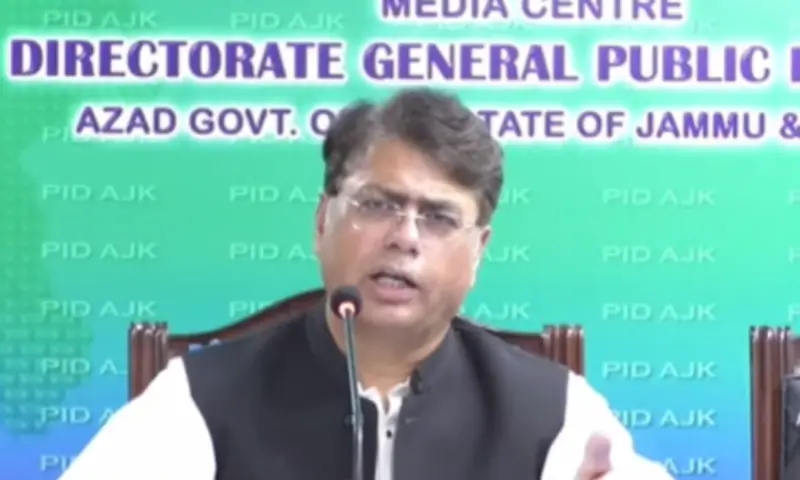
MUZAFFARABAD: Azad Jammu and Kashmir (AJK) Information Department Secretary Muhammad Rashid Hanif on Monday claimed that state institutions possessed evidence linking Indian funding to the agenda of the banned Joint Awami Action Committee (JAAC) in the region.
Speaking at a press conference in Muzaffarabad, Hanif said state institutions had what he described as credible information about foreign financing behind the group’s ongoing activities. He alleged that Indian funds were being used to mobilise overseas Kashmiris, including UK-based Amjad Ayub Mirza, in support of what he called an anti-Pakistan agenda.
He urged residents of AJK to reject what he termed a baseless disinformation campaign on social media and to take part in the due political process for the restoration of peace and order in the region.
Claims about JAAC activities
Hanif said members of the proscribed organisation had, over the past month, engaged in what he described as illegal and violent acts while presenting themselves as part of a human rights movement. He said the campaign had disrupted life across the region, particularly in the Poonch belt, where he alleged that JAAC members had harassed the public and spread fear.
According to Hanif, the movement had initially emerged after Covid-19 in 2023 around public issues such as increases in flour and electricity prices, and the government had responded seriously to those concerns. He said that over time, however, individuals with what he called a pronounced agenda joined the movement, changing its direction towards violent, illegal and anti-democratic activity.
He further claimed that the organisation had never been registered in the region and was now promoting civil disobedience and encouraging people to revolt. Hanif also alleged that the idea of an independent AJK formed part of the group’s agenda and said this narrative was being pushed by leaders of the banned organisation based abroad.
During the press conference, Hanif shared visuals with journalists that he said showed JAAC members blocking roads by cutting trees, targeting hospitals and making anti-Pakistan remarks. He said business and economic activity in the region had been halted, causing losses of Rs15 billion to the government, which he said already had limited resources.
Hanif also claimed that JAAC activists were using people, including women and children, as human shields. He said recent activities by the group included road blockades, hooliganism and the creation of artificial shortages by stopping vehicles dispatched by the government.
Police spokesperson’s statement
Separately, an AJK police spokesperson alleged that JAAC miscreants were looting goods vehicles and physically assaulting drivers, leaving many transporters afraid to enter the region. The spokesperson also said members of the banned group in Poonch division were harassing members of the public, including government officials.
He cited what he described as several incidents involving lawlessness and violence by JAAC members and alleged that on July 4 they used firearms to intimidate the public while spreading a narrative that the state had begun a crackdown.
The spokesperson said the JAAC leadership now had only one option: to surrender to law enforcement agencies, adding that the law would then take its course.
Background to the ban
On June 5, the regional government declared JAAC a proscribed organisation and placed it on the First Schedule of AJK’s anti-terrorism law. A day later, authorities began a crackdown on the group, arresting scores of its leaders. Later, 147 of its activists were placed on the Fourth Schedule of the anti-terrorism law.
Comments
No comments yet. Be the first to join the discussion!