UN chief urges global AI rules as he warns technology is outpacing oversight
UN chief Antonio Guterres has called for globally harmonised AI rules, warning that the technology is advancing faster than oversight systems can respond. He said child safety must be prioritised and raised concerns over the concentration of AI power in a few countries and companies.

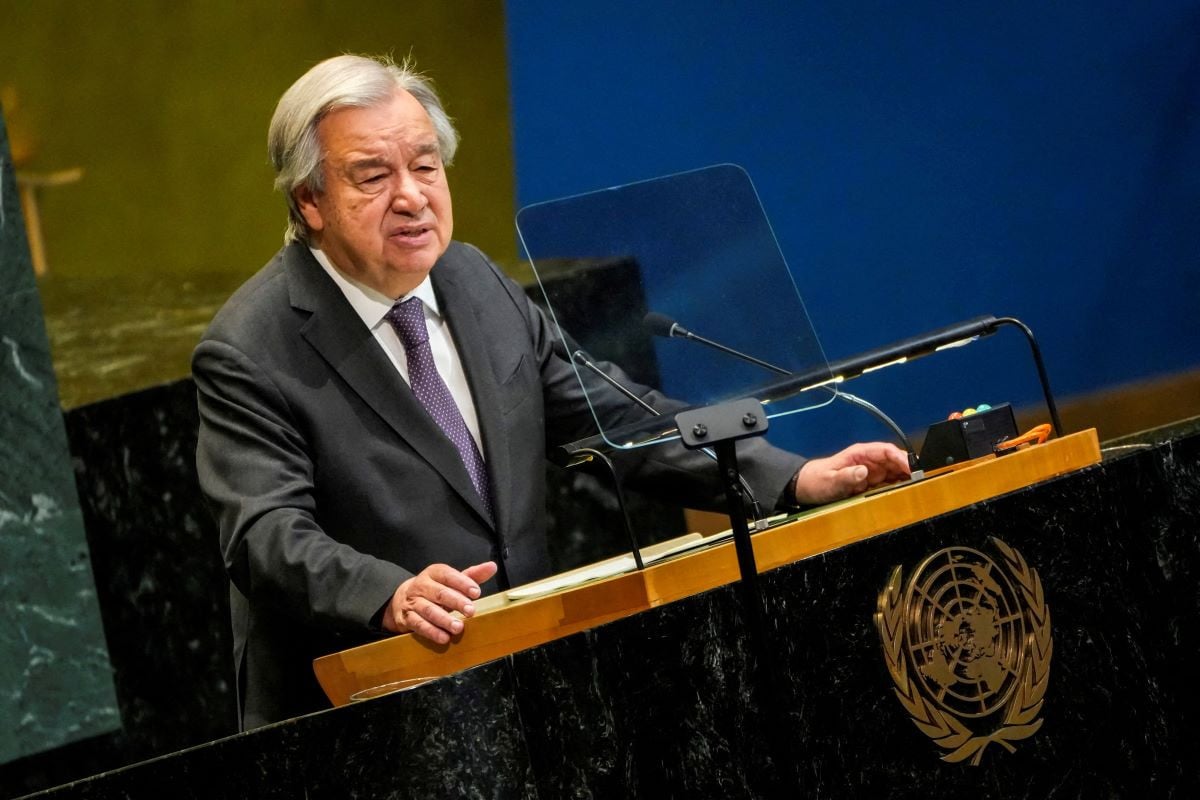
GENEVA: United Nations Secretary-General Antonio Guterres warned on Monday that artificial intelligence is advancing faster than regulatory systems can keep up, and called for globally aligned rules to limit its risks, particularly for children.
Speaking at the first government-level global dialogue on AI in Geneva, Guterres told delegates that the technology was moving at a pace that even its creators were struggling to match. He said AI was being deployed in ways that could reshape economies, alter the world of work, influence elections and affect security balances, while oversight remained insufficient.
Addressing the meeting, he said innovation required safeguards and argued that powerful AI systems must be subject to governance. The two-day inaugural UN Global Dialogue on AI Governance is not meant to negotiate a treaty, but to examine how rules can be developed to reduce potential harm from AI while also making use of its benefits.
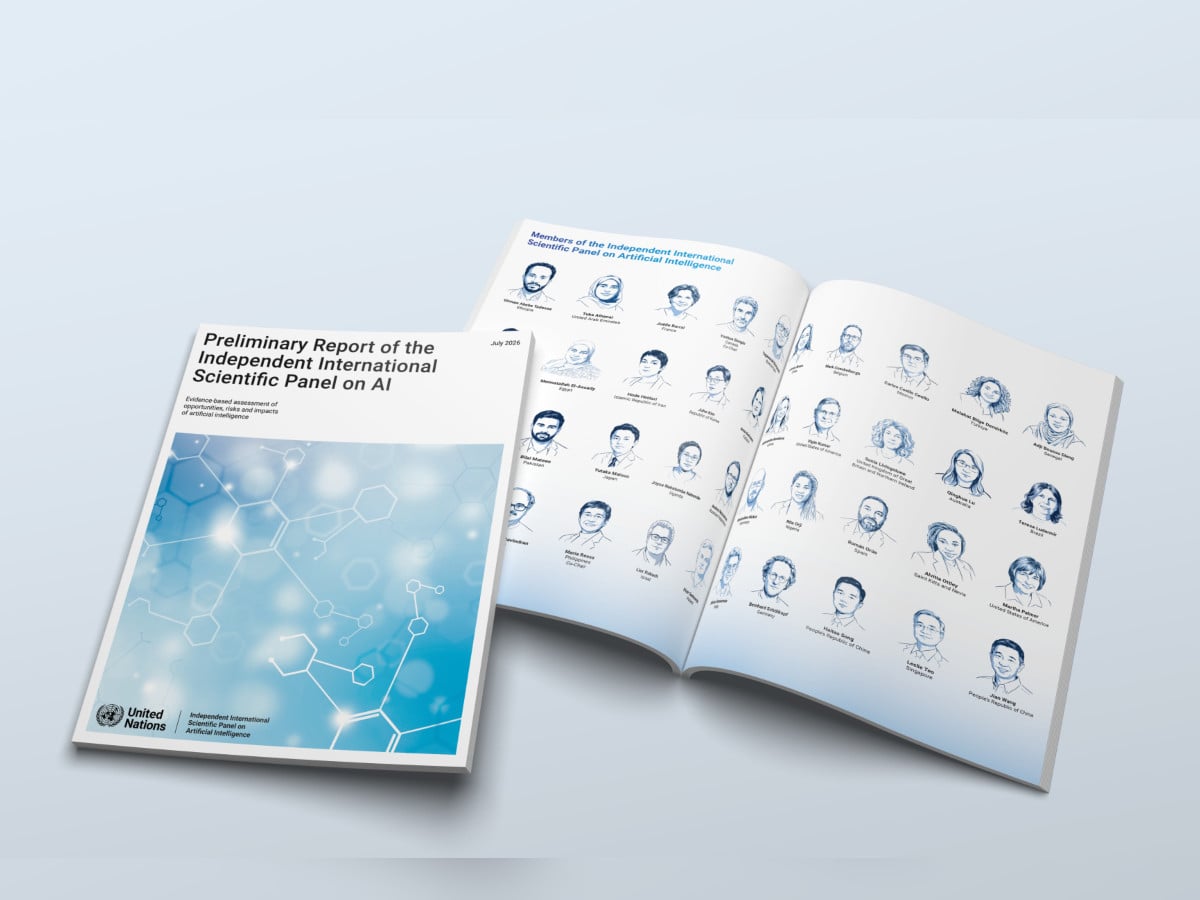
Delegates are considering a report prepared by a UN-backed independent scientific panel of 40 experts, which is set to present findings from what was described as the first global, independent scientific assessment of AI. A broader report is due next year, along with a second global meeting in New York.
Child safety at centre of call
Guterres said globally harmonised AI rules should place children’s safety at the forefront, citing cases in which minors had been guided towards self-harm or misled by machines pretending to be friends.
He said children were already encountering AI in learning, friendships and highly personal interactions before adequate questions had been asked about its effects on them. He proposed an AI Child Safety Pledge under which companies developing such systems would be required to demonstrate they are safe before allowing children to access them.
He also said AI systems should not be permitted to create sexual images of children. In addition, he said that if a child shows signs of distress, the system should stop interacting and connect the child to a human who can help.
Guterres told delegates that while AI could offer major opportunities, including in healthcare, current institutions were not built for machines that make decisions. He said the speed of AI development meant such systems were increasingly making choices with limited human or government supervision.
He contrasted the pace of adoption with the spread of the internet, saying the internet took 15 years to reach one billion people, while AI reached that level in two years.
Concerns over concentration of power
The UN chief also raised concern over the concentration of the most advanced AI systems in a small number of companies and countries, warning that developing countries had little influence over AI’s direction and faced the risk of falling behind.
According to the independent scientific report, AI development is even more heavily concentrated than many assume. The United States accounts for 75% of the computing power among the world’s top 500 AI supercomputers, while China accounts for 15%. Although more than a billion people globally now use conversational AI every week, uptake in developing countries remains slower.
Calls to narrow the global AI divide
Guterres said AI, if used properly, could compress decades of development into years and potentially become the great equalizer of the twenty-first century.
Libyan Presidential Council head Mohamed al-Menfi called for the AI gap in Africa to be narrowed. He said the continent represents 10% of the world’s population but has fewer than 2% of global data centres, and argued that AI could not be regarded as a legitimate resource if African countries were unable to benefit from it. He also called for broader participation by African states in shaping AI rules.
Georgian President Mikheil Kavelashvili told delegates that world leaders shared responsibility for creating strong international laws to ensure AI power did not become an instrument of totalitarian control or a new form of digital tyranny.
Comments
No comments yet. Be the first to join the discussion!