June 23, 2026
AJK govt rejects blanket amnesty for banned JAAC leaders amid continuing standoff
The AJK government has ruled out any blanket amnesty for banned JAAC leaders, blaming them for recent violence and deaths. Officials also said legal action would continue as the group’s strike disrupted parts of the region.

June 23, 2026
MUZAFFARABAD: The Azad Jammu and Kashmir (AJK) government on Tuesday said there would be no across-the-board amnesty for leaders of the proscribed Joint Awami Action Committee (JAAC), blaming them for recent deaths and violence and saying legal proceedings would continue against them.
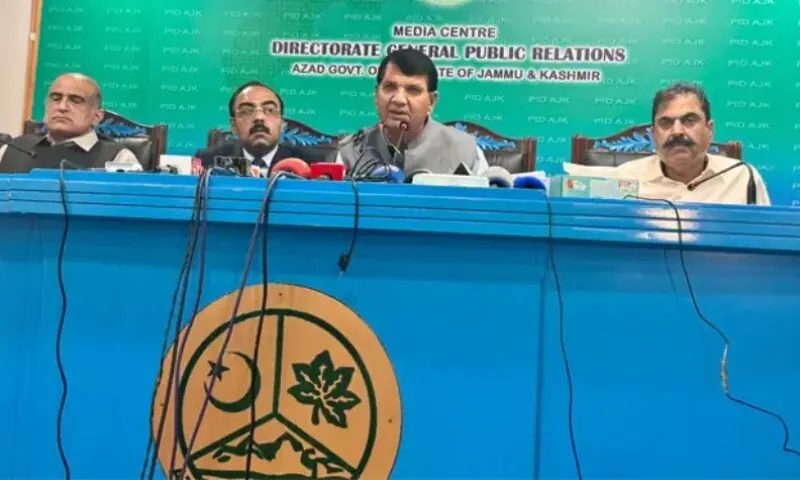
At a joint press conference with Inspector General of Police (IGP) Liaqat Ali Malik, Chief Secretary Khushal Khan said the JAAC leadership had split over the ongoing negotiation and mediation process. He said the government had kept communication channels open, but insisted the organisation’s leadership would have to answer for violence linked to its campaign.
The standoff between the administration and JAAC has centred mainly on the group’s demand for the abolition of 12 seats in the AJK Legislative Assembly reserved for refugees from Indian-occupied Jammu and Kashmir who settled in mainland Pakistan after 1947. Khan said the government had offered several constitutional avenues on the issue, including an all-parties conference, an assembly session and recourse to the courts. He further claimed that JAAC had widened its charter of demands from two points to 38 and then added more demands. Parliamentary Affairs Minister Tariq Fazal Chaudhry has said 35 of the 38 demands agreed between the government and JAAC last October had already been met.
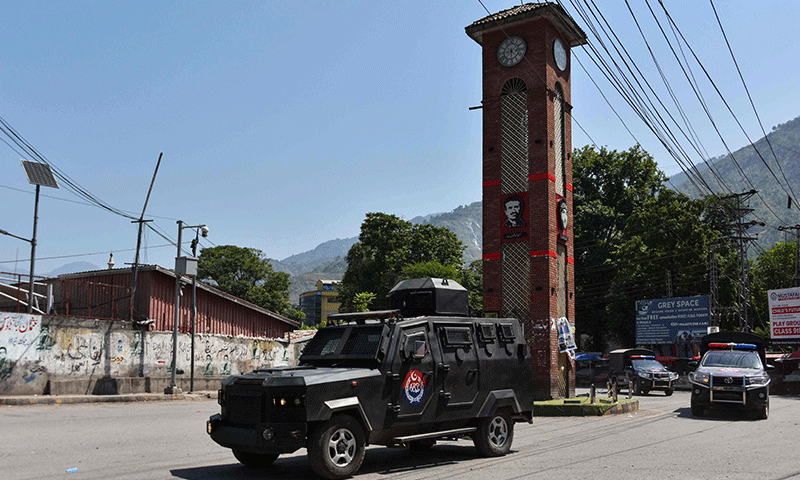
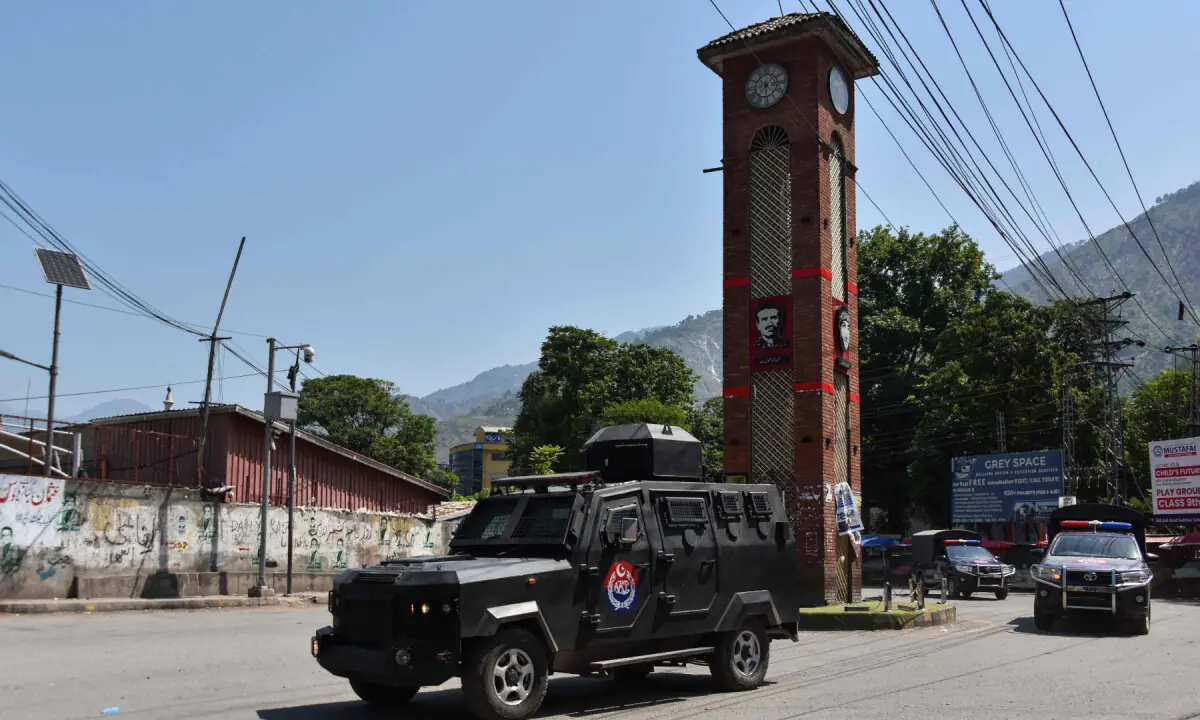
A strike called by JAAC continued in parts of the region on Tuesday. Muzaffarabad and Poonch divisions observed a partial shutdown, while most everyday activity resumed in Mirpur. Some banks reopened in different parts of AJK, but internet services remained suspended, causing connectivity problems. Public transport also stayed off the roads in many areas.
Government allegations over protest tactics
The chief secretary said road closures and violent actions were unacceptable, alleging that highways had been blocked by cutting down trees and that trucks carrying goods had been stopped and set on fire in some places. He also said there had been an attempt in Rawalakot to seize trucks transporting relief supplies, which law enforcement agencies later recovered.
Khan said the continuation of subsidised flour and electricity rates had placed a major burden on the government. According to him, bringing electricity tariffs down to Rs2.75 per unit could cause yearly losses of Rs8 billion to Rs10bn, while flour and electricity subsidies had required allocations of Rs20bn to Rs25bn from federal and AJK resources.
Referring to the presence of women and children at some recent sit-ins, Khan alleged that JAAC leaders were trying to use them as human shields. He also alleged that overseas activists associated with the group were raising anti-state slogans. He said the government would continue taking constitutional and legal steps to preserve peace and stability. He added “Negotiations will never be held at gunpoint.”
Police account of recent violence
IGP Malik alleged that JAAC activists opened fire on police during a routine checkpoint inspection on June 5, leading to the death of one activist and injuries to JAAC leader Umar Nazir and two police personnel. He said a post-mortem examination of the deceased driver showed he had been shot in the back of the neck, which, according to the police chief, suggested the fatal bullet had come from inside the vehicle rather than from security personnel.
The IGP also alleged that JAAC activists attacked the Rawalakot Combined Military Hospital, where three policemen assigned security duties were killed and patients and medical staff were assaulted. He said law enforcement agencies would continue action against people involved in what he described as anti-state activity and would uphold the writ of the state. Describing the protest movement, he said “This is not a long march but an organised mobilisation.”
Malik further alleged that women and children were being used as human shields and said there were reports of weapons being hidden under burqas. He did not provide further information in support of that claim. He also said those who surrendered unconditionally would be dealt with fairly under the law.
Prime minister cites mediation move
Separately, AJK Prime Minister Faisal Mumtaz Rathore said reports that JAAC had approached Jamiat Ulema-i-Islam-Fazl chief Maulana Fazlur Rehman for mediation supported the government’s longstanding position that the deadlock should be resolved through dialogue.
In a video message, Fazlur Rehman said he had accepted an invitation from JAAC leaders to mediate in order to resolve what he called the crisis and tense situation in AJK. However, he said he had been approached when JAAC was considering its next course of action and that he needed time to persuade the government to enter talks. He also urged JAAC to defer its sit-in and avoid escalating its protest so space for negotiations could be created.
Commenting on the video in a post on X, Rathore said the government had asked JAAC from the beginning not to abandon negotiations and to return to the table. He wrote “Isn’t this what we’ve been asking from them since Day 1?”
He said the group had shown zero flexibility despite repeated calls to end its lockdown and agitation campaign. In the same post, he added “They ignored us.”
Rathore also criticised the move to seek mediation from a Pakistani political leader after, he said, slogans had been raised against so-called political interference in AJK affairs. In a post on Monday, he said he was concerned about difficulties faced by residents in areas hit by the standoff and had instructed relevant officials to provide immediate relief. He also alleged that videos circulating online showed miscreants threatening and in some cases beating traders who kept their businesses open.
The prime minister said the government had repeatedly called for meaningful dialogue, welcomed third-party mediation and even opened backchannel contacts, but those efforts had not succeeded. Referring to reports that JAAC had issued another ultimatum and threatened a march on Muzaffarabad, he warned that any further attempt to worsen the situation would be handled with the full force of law.
On June 9, when JAAC was due to begin its strike, Rathore had called for the issue to be settled through talks. A week ago, as strikes affected routine life in some areas, he said JAAC bore the primary responsibility for the situation reaching a point where lives were lost. He had also said that if the group had public support, it should enter the system and pursue reform from within. Pakistan Peoples Party Chairman Bilawal Bhutto-Zardari has likewise called for the matter to be addressed in a democratic and peaceful way.
Background to the dispute
Ahead of the July 27 elections in AJK, JAAC had called for broad protests seeking the removal of 12 seats in the Legislative Assembly reserved for refugees from occupied Kashmir who settled in mainland Pakistan after 1947. Elections for those seats are held separately from the 33 general seats in the region.
0 Comments
No comments yet. Be the first to join the discussion!