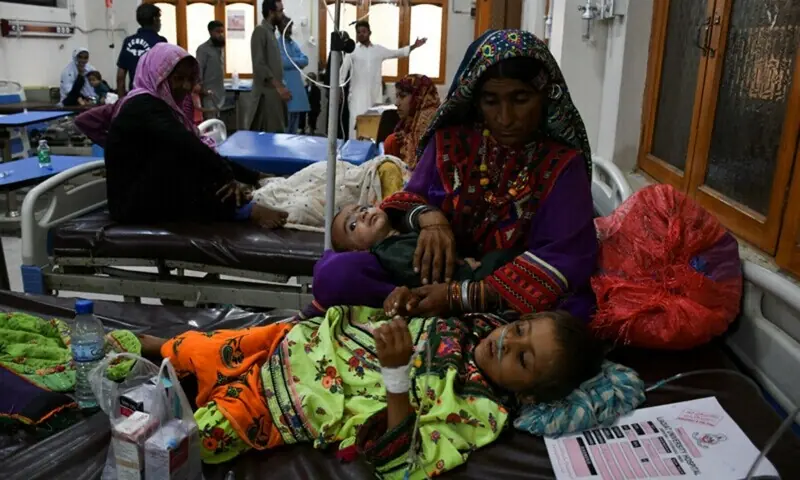
Flooding and treatment gaps deepen monsoon fears for people living with HIV
People living with HIV in Pakistan fear this year’s monsoon could again cut off access to life-saving treatment as flood risks rise. Health experts say treatment disruption, stigma and a surge in infections are compounding the threat.

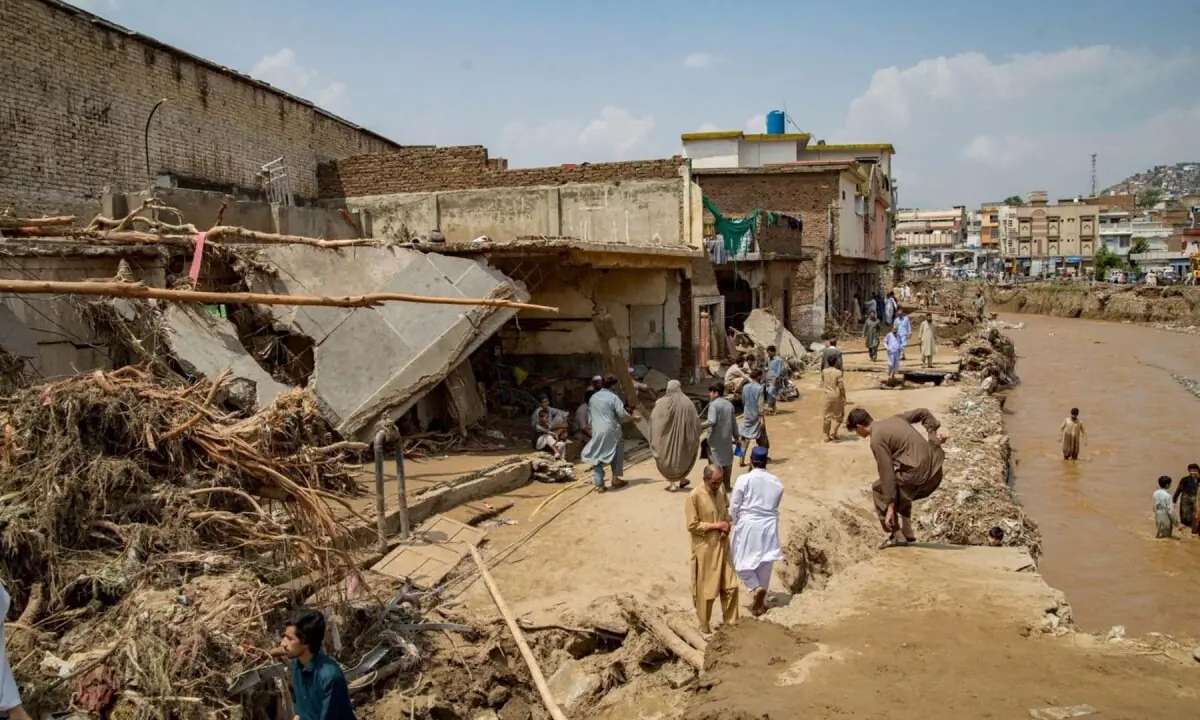
ISLAMABAD: With the monsoon season setting in and flood warnings already issued in parts of the country, concerns are rising among people living with HIV who fear that disrupted transport, damaged infrastructure and isolation from treatment centres could again interrupt access to life-saving medicines.
The concern is shaped by recent experience. In Buner last August, when floodwater entered his home, Khalid, whose name was changed, said he and his wife moved their three children to safety and focused on saving their antiretroviral medicines before anything else. He recalled that floodwaters and the mud left behind cut off their village for more than eight days. Speaking about the episode, he said the couple managed to keep their HIV medication with them despite the destruction.
"The waist-deep mud left behind by floodwaters had cut off our village for more than eight days,"Khalid, a daily wage worker, said he had contracted the virus while working abroad five years earlier. Last year’s monsoon flooding hit areas including Buner in Khyber Pakhtunkhwa and parts of Punjab. The floods killed more than 1,000 people, including 808 in the two provinces, displaced 3 million people and damaged nearly 230,000 houses.
Risks linked to disrupted care
Asma Nasim, head of the Department of Infectious Diseases at the Sindh Institute for Urology and Transplantation, said many people with HIV became ill during last year’s floods after being cut off from antiretroviral therapy centres and losing access to medicines. In Pakistan, antiretroviral treatment is provided free through dedicated centres.
Asghar Ilyas Satti, national coordinator for the Association of People Living with HIV-Pakistan, said such treatment allows people with HIV to maintain their health by suppressing the virus and preserving immune function. He also warned that interruptions in treatment can carry serious consequences, including viral rebound, immune damage and progression to AIDS.
Waheed, a teacher from Swat whose name was also changed, described similar anxiety ahead of this year’s monsoon. He said that during last year’s flooding he returned to his inundated home to retrieve his remaining tablets while helping his elderly mother, wife and three children reach safety. He said stigma had led him to keep his condition hidden even from his spouse.
He said he had only nine tablets left and feared a treatment break if he could not reach the antiretroviral centre.
Warnings as monsoon begins
Pakistan has entered the new monsoon season under heightened alert. On July 1, the National Disaster Management Authority issued a glacier lake outburst flood alert for two valleys in Gilgit-Baltistan. Rising river levels damaged roads and bridges in several parts of the region. Soon afterwards, heavy rains struck different parts of the country, with at least 14 deaths.
The flood threat comes as Pakistan is also recording a sharp rise in HIV infections. On World AIDS Day in December 2025, the World Health Organisation said new infections in Pakistan had increased by 200 per cent over 15 years, from 16,000 in 2010 to 48,000 in 2024.
Nasim said hospitals in Karachi had recently seen a sharp rise in paediatric HIV cases and added that the increase could not be explained only by greater testing.
"During the last three months, I have seen more children who are HIV positive than I have seen in the last ten years,"She added that more infections were occurring and later described the spread as having reached epidemic proportions in Pakistan.
Unsafe medical practices and missing patients
Unsafe medical practices appear to be a major driver of the recent increase in cases. Samreen Sarfaraz, chair of infection control services and consultant infectious diseases at Indus Hospital, said unsafe practices were the main cause behind the spike. A BBC story from April said 331 children tested positive for HIV between November 2024 and October 2025 in Taunsa, Punjab, with undercover filming linking the outbreak to a hospital where reused syringes were allegedly being used on children.
Waheed said he believed he contracted HIV during dental treatment involving non-sterile instruments. After the 2019 Larkana outbreak, auto-disable syringes were introduced, but Nasim said fake or substandard versions had more recently been found in some areas.
Officials have also raised concern about patients who have dropped out of care. Robina, the Sindh head of the Association of People Living with HIV-Pakistan, said the 2022 floods disrupted contact with many HIV patients in the province. She said that after six months of efforts to trace patients lost to follow-up, many eventually returned to treatment, while others were believed to have disappeared after drowning or treatment interruption in flood-hit areas of interior Sindh that remained submerged and cut off for months.
As of May 2026, nearly 20,000 patients who had started treatment at antiretroviral therapy centres were considered missing by the health ministry. A press release from the Standing Committee on National Health Services, Regulations and Coordination said the figure raised serious questions about follow-up, counselling and patient retention.
Against that backdrop, NDMA chairperson Inam Haider Malik said at a November press conference that the 2026 monsoon could bring 22 to 26 per cent more rainfall than last year. At the same event, Prime Minister Shehbaz Sharif endorsed a five-year flood preparedness plan, and in May he directed authorities to strengthen monsoon preparedness and ensure comprehensive screening of all patients in public hospitals for hepatitis and HIV.
Comments
No comments yet. Be the first to join the discussion!