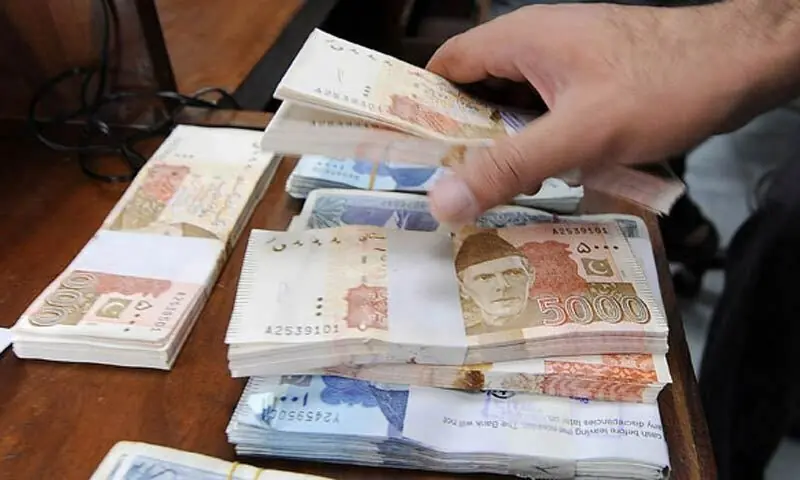
Gulf tensions weigh on Pakistan’s investment outlook as FY26 ends
Regional instability in the Gulf has weakened investor sentiment toward Pakistan, contributing to lower foreign direct investment and continued capital outflows. Analysts say external account vulnerabilities remain a key concern despite strong remittance growth.


KARACHI: Continuing instability in the Gulf has hurt investor confidence in Pakistan, weighing on domestic bonds, equities and foreign direct investment at the close of FY26, according to market participants and analysts cited in the latest assessments.
Several economic stakeholders said it remained unclear whether the recent pause in the Gulf turmoil would hold for long. They noted that while countries other than Israel were seeking a lasting end to the conflict involving Iran, businesses were viewing the broader situation through the lens of prolonged uncertainty and its economic fallout.
A senior banker said the uncertainty alone was enough to deter overseas investors from markets such as Pakistan, which is already under pressure because of its external financing needs and reliance on support from friendly countries and international lenders to avoid default.
“Even if the war does not start in the near future, the uncertainty is high enough to keep foreign investors away from the country, such as Pakistan, which faces serious problems with its external account and depends largely on friendly countries and international donors to avoid default,” said a senior banker.
Capital flows under pressure
Foreign direct investment fell 28 per cent during the first 11 months of outgoing FY26. In the domestic bond market, net outflows stood at $550 million, while total outflows from domestic bonds exceeded $2 billion.
The Pakistan Stock Exchange posted a strong performance, but it did not succeed in drawing foreign investment during the outgoing fiscal year. State Bank data showed that between July 1, 2025 and June 19, 2026, inflows into the equity market were $308 million, while outflows were more than $1 billion.
Analysts said investment risks in Pakistan were still seen as elevated despite stronger foreign exchange reserves and solid remittance growth. Pakistan is expecting to receive $41 billion in remittances in FY26, which remains its largest source of foreign earnings.
External account concerns
S.S. Iqbal, an expert on investment and money markets, said that despite robust remittance inflows, the country faces more than $26 billion in payments in 2026-27. He said that, combined with a $35 billion trade deficit recorded in the first 11 months of FY26, leaves the external account exposed and is enough to worry foreign investors.
“Despite these high inflows of remittances, the country needs to pay over $26bn in 2026-27, making the external account vulnerable, with a $35bn trade deficit in 11MFY26, which is enough to alert foreign investors,” said S.S. Iqbal, an expert on investment and money markets.
Another analyst said Pakistan was not a party to the Gulf war but had become part of the peace arrangement, underlining how much was at stake for the country in the regional situation. The analyst added that if the agreement did not hold, Pakistan could face adverse effects.
At the same time, some market observers said Pakistan’s expanding role in the Gulf could eventually support the economy. They pointed to relations with Iran, Saudi Arabia, Oman and now Qatar as possible channels for economic gains if the peace arrangement succeeds.
No details were made public on any business agreements reached during the recent visit of the Iranian president to Pakistan, who was accompanied by a 70-member delegation. However, industry sources said economic activity, especially trade with Iran, could receive a major boost.
Comments
No comments yet. Be the first to join the discussion!