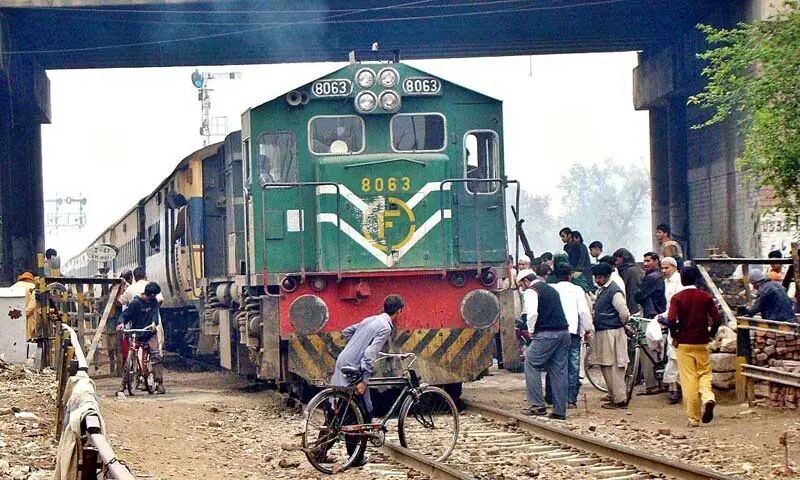
Attock’s Seven Sisters tunnels preserve a rare railway heritage
The Seven Sisters railway tunnels in Attock’s Kala Chitta range remain a rare example of colonial-era engineering and heritage. Officials, historians and visitors say the site also holds strong potential as a tourism destination.

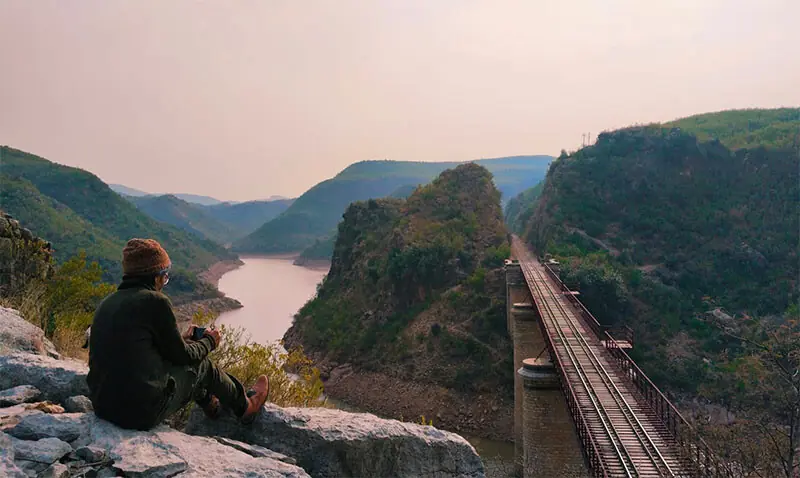
ISLAMABAD: The chain of seven railway tunnels in the Kala Chitta mountain range in Attock continues to stand as a distinctive reminder of colonial-era railway engineering, stretching between the historic stations of Kanjur and Jhalar on the Attock–Mari Indus branch line.
The tunnels, popularly known as the Seven Sisters because they number seven, run through the mountains over a span of five kilometres. According to Jhalar Railway Station master Asghar Ali Mirza, travellers heading from Attock Railway Station to Jand first reach Kanjur Railway Station after about seven kilometres and then arrive at Jhalar. He said only three trains currently operate on this route, while the distance between Kanjur and Jhalar stations is about 10 kilometres.
Mirza said the seven tunnels have a combined length of 9,046 feet, or roughly three kilometres. He listed their lengths as 892 feet, 1,180 feet, 855 feet, 1,776 feet, 1,131 feet and 1,616 feet, while the seventh tunnel measures 1,596 feet. He said work on the tunnels began in 1896 and was completed in 1898, adding that each entrance still bears a plaque showing the year of completion.
Historic stations and engineering details
Jhalar Railway Station still carries markers of its early construction period, including a plaque dated 1880 on its facade. The railway quarters stand along the riverbank, and the station is surrounded by white willow trees. Mirza said an iron fence was installed because the station is situated at an elevated point.
At the eastern end, Kanjur Railway Station also retains the character of the Victorian era. The name Kanjur is believed to be linked to the soft limestone found widely in the area, although that stone was not used in building the station. The station was instead named Conjur, possibly by coincidence.
Before Shakardara Bridge lies Nandana Bridge, about half a kilometre from Kanjur Railway Station. The bridge was described as another notable engineering structure because, unlike other bridges in the area, its pillars were constructed with bricks rather than cut stone. It stands around 100 feet high.
What makes the tunnels unusual
Senior archaeologist Dr Abdul Ghafour Lone said the site’s importance lies partly in the rare sequence of seven consecutive railway tunnels over such a short distance. He also said the third and seventh tunnels have continuous natural springs, with water flowing along the sides before entering channels built beside the railway track and continuing downhill, where shepherds and livestock use it.
Historian Raja Noor Muhammad Nizami highlighted the fourth tunnel as especially unusual. He said most railway tunnels are built in straight lines, but this one creates a visual effect for pedestrians because its alignment prevents a clear view of the next section.
Nizami said, "If you walk through this tunnel, its alignment creates an optical illusion. As you cannot clearly see the next section, it feels as though you are standing still while moving your feet."
Tourism appeal
The area has also drawn interest from visitors and adventure groups. Arif Khan, who organises expeditions there, said trains travelling north and south on the branch line used to stop briefly at the hill station before entering the tunnels with loud whistles, while engine smoke would linger near the entrances.
Describing the setting at night, he said, "Looking around, it feels as if night watchmen are patrolling with lanterns, while the calls of owls add to the feeling of staying awake."
Tariq Khan, a visitor to the area, said that developing Jhalar as a tourist destination could help more people discover the site. He proposed facilities such as hotels and restaurants, student visits and annual walking competitions, saying such steps could support heritage preservation, peaceful tourism and additional revenue for Pakistan Railways.
Comments
No comments yet. Be the first to join the discussion!