

June 24, 2026
Psychiatrists move Supreme Court against FSC ruling on suicide attempts
The Pakistan Psychiatric Society has challenged the Federal Shariat Court’s ruling against the decriminalisation of suicide attempts. Its appeal says Islamic sources do not prescribe worldly punishment for a failed suicide attempt and argues for a public health-based approach.

June 24, 2026
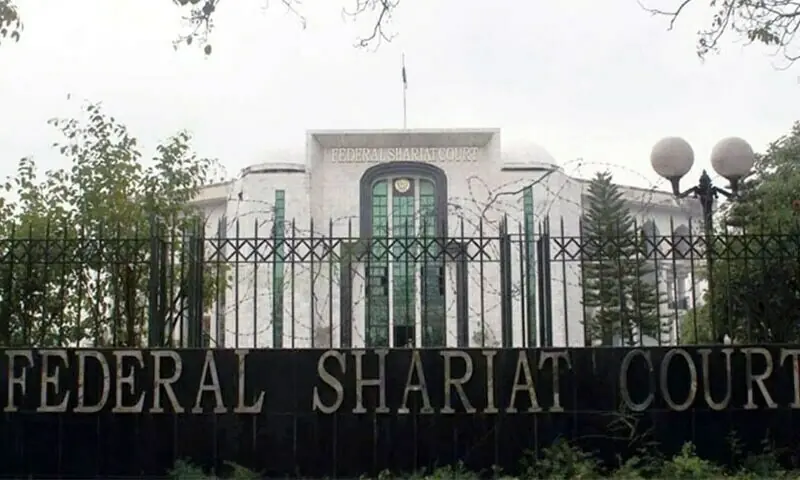
ISLAMABAD: The Pakistan Psychiatric Society (PPS) has approached the Shariat Appellate Bench of the Supreme Court, seeking to overturn a Federal Shariat Court ruling that declared the decriminalisation of suicide attempts contrary to the injunctions of Islam.
The challenge relates to the FSC’s May 18 judgement, which held that the government’s decision to remove criminal penalties for attempted suicide was repugnant to Islamic injunctions. The FSC had also struck down the Criminal Laws (Amendment) Act, 2022, to the extent that it omitted Section 325 of the Pakistan Penal Code, and declared the deletion of that offence from the PPC to be repugnant to Islam.
The appeal was filed under Article 203-F(2B) of the Constitution by Advocate Barrister Muhammad Mumtaz Ali on behalf of the PPS. It asks the Supreme Court’s Shariat Appellate Bench to set aside the FSC judgement.
Arguments in the appeal
According to the petition, the FSC wrongly concluded that omitting Section 325 from the PPC was against Islamic injunctions despite there being no explicit provision in the Holy Quran, Sunnah or authoritative Islamic jurisprudence that requires the criminalisation of attempted suicide or prescribes a temporal punishment for it.
The appeal says the FSC did not distinguish between decriminalisation and legalisation. It argues that removing criminal punishment for a suicide attempt does not make suicide lawful, and that suicide remains prohibited and a grave sin under Islamic law. It further states that the Quranic and Prophetic references relied upon by the FSC establish the prohibition of suicide and accountability before Allah, but do not set out any specific worldly punishment for a failed attempt.
The PPS also argues that the ruling failed to recognise the difference between religious culpability and the state’s decision to impose criminal sanctions. The petition maintains that while Article 227 of the Constitution requires laws to conform to Islamic injunctions, it does not compel the legislature to criminalise every sinful act where no worldly punishment has been prescribed in the Holy Quran or Sunnah.
Mental health and legal concerns
The appeal contends that criminalising attempted suicide does not serve the accepted purposes of punishment and does not help preserve life. Instead, it argues, the risk of prosecution can deter vulnerable people from disclosing suicide attempts and from seeking medical help or mental health treatment.
It further says the FSC did not sufficiently consider established medical and scientific understanding that suicidal behaviour is often linked to mental illness, psychological distress, domestic violence, trauma, or severe socio-economic pressures. In such circumstances, the petition argues, treatment, counselling and rehabilitation are more appropriate responses than penal action.
The PPS also submits that existing legal provisions, including Section 84 of the PPC and other statutory safeguards, already provide a framework for dealing with issues connected to mental incapacity and diminished responsibility.
Jurisdiction and existing laws
The appeal states that the FSC did not identify any binding juristic consensus, or Ijma, requiring the criminalisation of attempted suicide. It also says the court did not account for contemporary legislative developments in a number of jurisdictions, including Muslim-majority countries, that have adopted a public health-based approach to suicidal behaviour.
According to the petition, restoring criminal liability for survivors of suicide attempts runs counter to the objectives of rehabilitation, human dignity, compassion and public welfare, which it describes as recognised principles of Islamic jurisprudence underpinning modern suicide-prevention strategies. It also says the judgement undermines internationally recognised, evidence-based therapeutic and rehabilitative approaches to mental healthcare and risks discouraging people facing psychological distress, mental illness or suicidal thoughts from seeking timely professional assistance because of fear of prosecution.
The appeal further argues that the FSC was wrong to conclude that decriminalisation required the restoration of penal liability for survivors of suicide attempts. It says concerns about abetment or cyber-incitement to suicide can be addressed through separate offences and existing legal mechanisms, including the Prevention of Electronic Crimes Act, 2016.
The petition maintains that the FSC exceeded its jurisdiction under Article 203D by deciding what it describes as a matter of public policy relating to the repeal of a Ta’zir punishment, despite the absence of any express Quranic or Prophetic injunction requiring its continuation. On that basis, it argues that no question of repugnancy under Article 203D arose.
0 Comments
No comments yet. Be the first to join the discussion!


