June 24, 2026
Mamdani-backed candidates win three New York Democratic primaries
Zohran Mamdani-backed candidates won three Democratic primaries in New York, bolstering his effort to expand the party’s democratic socialist wing. The results also highlighted internal Democratic tensions over strategy and ideology ahead of national contests.

June 24, 2026
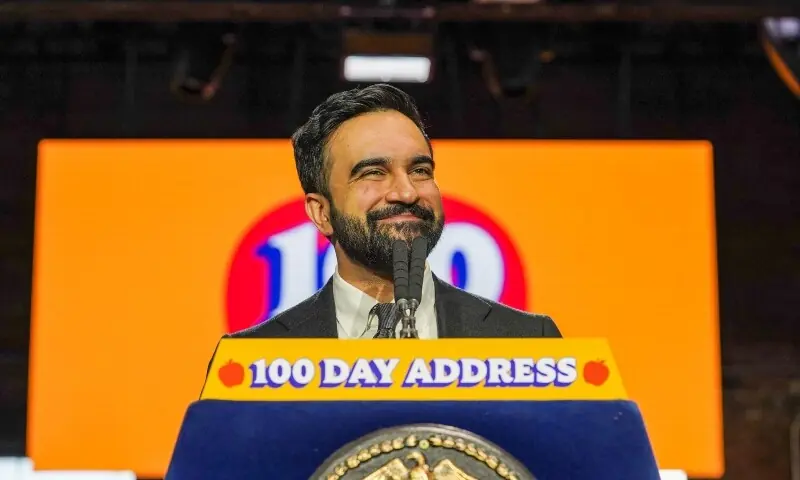
WASHINGTON: New York City Mayor Zohran Mamdani notched three significant primary victories on Tuesday as candidates he endorsed won key Democratic contests, strengthening his push to move the party in a democratic socialist direction.
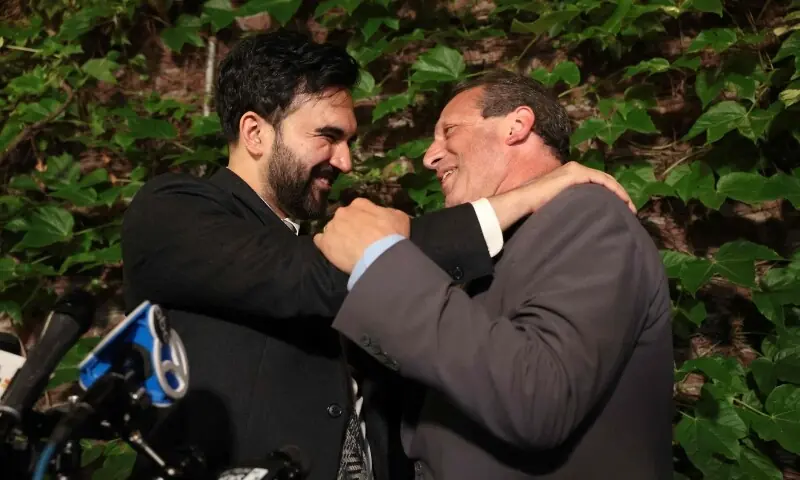
According to the reported results, former city Comptroller Brad Lander defeated two-term Representative Dan Goldman, Assembly member Claire Valdez overcame Brooklyn Borough President Antonio Reynoso in an open congressional race, and activist Darializa Avila Chevalier narrowly unseated five-term Representative Adriano Espaillat, who chairs the Congressional Hispanic Caucus.
Taken together, the outcomes were presented as a major boost for Mamdani, 34, whose 2025 election as mayor had surprised many observers and who is now seen as further consolidating his influence. The New York results came after democratic socialist mayoral hopefuls won a primary in Washington, DC, and advanced to a runoff in Los Angeles.
Mamdani’s effort to widen the democratic socialist base in the United States follows a years-long movement that gained momentum after Senator Bernie Sanders’ 2016 presidential campaign and his push to cultivate a new generation of democratic socialist leaders. Some analysts and former officials also linked the trend to frustration among progressive Democratic voters over President Donald Trump’s agenda and style of governance, as well as the Biden administration’s support for Israel’s war in Gaza. Israel has killed more than 73,000 Palestinians since October 2023.
Former US House member Steve Israel said political momentum on the right was helping energise the left.
“Energy on the far right ignites energy on the far left. Politics is reactive,” said Steve Israel, a former US House member from New York who, late in his congressional career, ran an operation to elect more Democrats.
Party tensions and national implications
The results also underscored strains inside the Democratic Party. For months after Mamdani won his 2025 primary, House Democratic Leader Hakeem Jeffries faced repeated questions from reporters over whether he would endorse him. Jeffries eventually did so, but only 11 days before the general election. Senate Democratic Leader Chuck Schumer of New York, meanwhile, remained silent on Mamdani during the campaign.
Jeffries could become US House speaker, and therefore second in line to the presidency, if Democrats win the November midterm elections. But it also said Democratic success nationally depends less on solidly Democratic districts and more on competitive swing seats.
Matt Bennett, co-founder of the centrist Democratic consultancy Third Way, said Avila Chevalier’s victory could carry consequences beyond New York. He pointed in particular to positions she had promoted on social media, including support for abolishing police and border controls and statements questioning Israel’s right to exist.
“If a [Democratic Socialists of America (DSA)] member could knock off the chair of the Congressional Hispanic Caucus, that could matter,” said Matt Bennett, co-founder of Third Way, a centrist Democratic consultancy.
“This is precisely the kind of person that they (Republicans) love to use to weaponise against other Democrats” running for office in competitive races, Bennett said.
Steve Israel also voiced concern that gains by democratic socialists in strong Democratic areas could distort perceptions of where the party stands nationally.
“I do worry that the strength of democratic socialists in places like New York and California will be misread as the center of gravity for Democrats across the country” this November or in the 2028 presidential election.
Debate over messaging
Avila Chevalier later deleted the social media posts and apologised for some of the language she had used. In an interview with a consortium of editors last week, she reiterated her opposition to deportation.
“I think that we just should not have a system that allows (migrant) deportation to happen at all,” saying it “is rooted in deeply racist ideology.”
Espaillat responded by saying the issue could not simply be brushed aside. “Darializa has taken very extreme positions as reflected in her comments on social media not too long ago,” he said in a June 16 post on X. “She is unfit for office and voters are smart enough to see that.”
Alex Jacquez, a progressive strategist and former senior adviser to Sanders’ 2020 presidential campaign, said focus groups and polling suggested deep dissatisfaction among Democratic voters with current party leaders. He said the divide centred on whether politicians were prepared to challenge wealthy interests, corporations and the existing order in order to deliver results.
At the same time, Democrats are fielding more moderate candidates, including women with strong military backgrounds, in competitive districts in states such as Florida and Colorado. Steve Israel said many of the party’s most important races are in red and pink districts where moderate positions are more effective against incumbent Republicans, adding that presidential elections are decided not in blue states but in seven moderate battleground states.
0 Comments
No comments yet. Be the first to join the discussion!