June 24, 2026
Karachi funding, corruption claims and ethnic politics dominate Sindh post-budget debate
The Sindh Assembly’s post-budget debate saw fresh clashes over Karachi’s development share, governance and ethnic politics. Ministers defended sectoral reforms while opposition members questioned allocations, local bodies and delivery of public services.

June 24, 2026
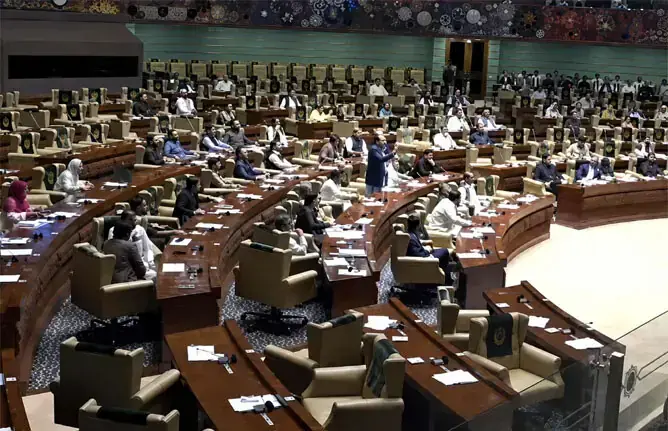
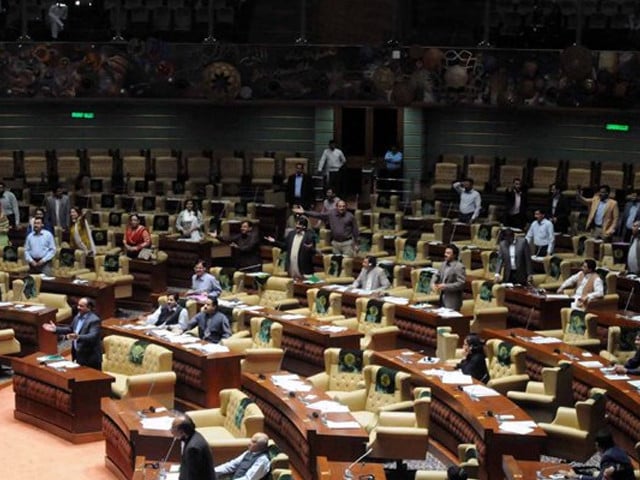
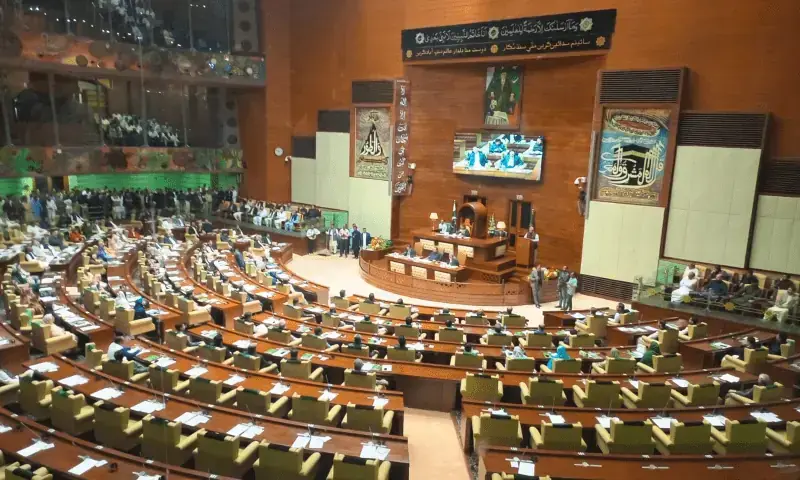
KARACHI: Karachi’s share in development spending, allegations of corruption, ethnic politics and complaints about administrative failures remained at the centre of discussion in the Sindh Assembly on Tuesday as treasury and opposition members continued the post-budget debate.
According to proceedings reported from the House, 15 more lawmakers, including six ministers, spoke on the provincial budget, taking the total number of participants in the debate over four consecutive days to 127. Despite sharp criticism from both sides, the sitting remained calmer than some previous sessions.
Education Minister Syed Sardar Ali Shah urged lawmakers to move away from divisive rhetoric and called for what he described as a revision of the curriculum of hate. He said Sindhi-speaking and Urdu-speaking communities were both integral to Sindh.
The minister said attempts had been made to promote hatred-based politics and added that talk of dividing Sindh predated the formation of the MQM. He said Chief Minister Murad Ali Shah had also referred to similar arguments being made by Mahmood-ul-Haq Usmani in 1951 and later by Nawab Muzaffar. Ali Shah added that Karachi was and remained an inseparable part of Sindh, and said the city collected tax rather than generated it. He also said the number of out-of-school children had fallen, that a Student Attendance Monitoring System was being launched with World Bank support, and that the education department was working with Nadra to obtain B-Form data of all children.
Karachi allocation questioned
MQM-P lawmaker Abdul Waseem criticised the PPP, saying it had ruled Sindh for 18 years, and questioned how earlier allocations had been used. He said World Bank funding was being spent on projects in Karachi and asked where the tax money collected from the city was going.
Jamaat-i-Islami member Muhammad Farooq said the Federal Board of Revenue and other agencies were collecting Rs7,000 billion in taxes in 2025-26, with Karachi contributing 85 to 90 per cent. He said Karachi was not being treated as a priority by either the provincial or federal government.
Farooq said that out of the Rs720 billion Annual Development Programme, Karachi had received only Rs100 billion, while its population-based share should have been Rs400 billion. He said the K-IV project required Rs40 billion and warned that old water pipelines would not be able to carry K-IV water. He added that the S-III project was valued at Rs32 billion but had received only Rs1 billion in allocation. He said an empowered city government was the only answer to the city’s civic difficulties and demanded implementation of Article 140-A for local bodies. He also called for the immediate abolition of the quota system, saying it had denied jobs to Karachi’s youth.
Ministers cite health, agriculture and infrastructure measures
Health Minister Dr Azra Pechuho said reforms introduced this year would show their full impact within two years. She said vascular surgery had started at the Karachi Trauma Centre, while 50-bed hospitals had been expanded in Ancholi, Gulberg and Gulshan-i-Hadeed. She added that work was under way to establish a maternity home at the Children’s Hospital in Korangi No 5. The minister also said SIUT was delivering strong services in Karachi and Sukkur and that chest pain units were being set up in all districts.
Agriculture Minister Sardar Muhammad Bux Mahar said the farm sector needed to be developed on scientific lines. He said Sindh had recorded wheat production of 4.9 million metric tons due to subsidies on fertiliser and seed.
Prisons Minister Ali Hassan Zardari said 80 kilometres of roads in Tando Muhammad Khan, 120 kilometres in Thatta, and 26 kilometres from Naushahro Feroze to Padidan had been completed, along with the Talhar-Tando Bago road. He said five major schemes had been included in the next budget and that Rs32 billion would be spent on ongoing projects.
Livestock Minister Muhammad Ali Malkani said Sujawal was among Sindh’s most underdeveloped districts and required faster development. He said the province’s livestock population had crossed 60 million and that 23.3 million small animals had been vaccinated.
Adviser on Rehabilitation Giyan Chand Essrani said Rescue 1122 received 24,000 complaints daily and had assisted 225,000 people over one year.
Opposition raises governance and service delivery issues
PTI lawmaker Rehan Rajput acknowledged what he described as good work in the health sector but said expenditure on institutions was high.
MQM-P MPA Rashid Khan from Hyderabad said longstanding problems in several localities remained unresolved and that development funding promised in the previous budget had not been delivered. He pointed to staff shortages at Hyderabad Civil Hospital, claimed funds for some schemes had not been released, and called for reforms in the bureaucracy and administrative structure.
Another MQM-P member, Najam Mirza, said the Provincial Finance Commission Award had still not been announced. MQM-P lawmaker Rehan Akram said water lines in North Karachi were being laid without planning and claimed that not a single camera had been installed under the Safe City project since 2016.
Mahesh Kumar Hasija of the MQM-P alleged petty corruption in the minorities department and called for a larger salary increase for low-grade employees. Speaker Syed Awais Qadir Shah later adjourned the session until June 27.
0 Comments
No comments yet. Be the first to join the discussion!