

June 24, 2026
Experts call for ending tobacco tax freeze in upcoming budget
Experts at an SDPI-SPDC policy dialogue urged the government to end the tobacco tax freeze, raise cigarette duties in line with inflation and consider a climate tax. They said the current policy is undermining public health goals and reducing the real tax burden on tobacco.

June 24, 2026
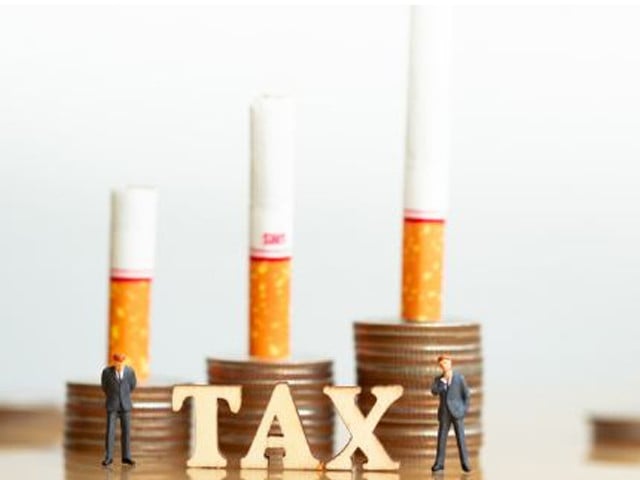
ISLAMABAD: Economists as well as public health and environmental specialists have urged the government to reverse the freeze on tobacco taxation, introduce yearly inflation-linked increases in cigarette taxes and examine a climate levy on the tobacco industry, saying the current policy is raising costs for public health, the economy and the environment.
The recommendations were presented at a policy dialogue titled The Cost of Inaction: Tobacco Tax Freeze in Pakistan's 2026-27 Budget, organised jointly by the Sustainable Development Policy Institute (SDPI) and the Social Policy and Development Centre (SPDC).
Tax freeze and declining real burden
Dr Irfan Chatha, a research fellow at SDPI, said tobacco taxation should be treated first and foremost as a health intervention rather than only a source of revenue. He said several countries levy far higher taxes on tobacco than Pakistan, citing Vietnam as an example where tobacco taxes make up about 60% of the retail price.
SPDC Managing Director Asif Iqbal said the federal excise duty on cigarettes has remained unchanged since 2023 despite Pakistan's fiscal pressures. He said that because cigarette duties are charged as specific taxes instead of ad valorem taxes, inflation has sharply reduced their real value over time.
According to SPDC estimates cited by Iqbal, the real tax burden on economy cigarette brands has dropped by around Rs26 per pack, while the burden on premium brands has declined by about Rs84 per pack. He said the continued freeze has effectively benefited both tobacco manufacturers and consumers by making cigarettes cheaper in real terms. Iqbal called for annual inflation-based adjustments to be built into the tax system and for a gradual increase in the tax burden on economy brands to discourage consumers from shifting from premium to lower-priced products.
Environmental costs highlighted
Waseem Iftikhar Janjua, a visiting researcher at SDPI, said tobacco damages the environment across its full life cycle. Presenting SDPI findings, he said tobacco farming contributes to land degradation, deforestation and heavy pesticide use, while manufacturing, transport and consumption add to greenhouse gas emissions.
Janjua said producing one cigarette uses about 3.7 litres of water and creates roughly 14 grams of carbon dioxide emissions. He said tobacco filters are a significant source of microplastic pollution and that discarded cigarette butts pollute soil and water bodies with toxic chemicals. He estimated that waste and environmental degradation linked to tobacco cause annual costs running into billions of rupees.
He urged the authorities to require tobacco companies to publicly disclose emissions and pollution data and to ensure full compliance with environmental rules. He also proposed that a climate tax on the tobacco industry be included in the next federal budget.
WHO rejects industry arguments
Waseem Saleem, representing the World Health Organisation Pakistan, said the main objective of tobacco taxation is to cut consumption and improve public health. He disputed the tobacco industry's claim that higher taxes reduce state revenues, saying available evidence shows that substantial tax increases reduce cigarette use while also raising revenue collection.
Saleem said cigarette affordability remains a major issue because income growth and population growth can weaken the effect of unchanged tax rates. He also challenged the industry's position that higher tobacco taxes fuel illicit trade, saying experiences in Bangladesh and Sri Lanka show illicit trade is more closely tied to enforcement and tax administration than to tax rates.
0 Comments
No comments yet. Be the first to join the discussion!


