

June 23, 2026
Kenya protest victims question compensation as police killing cases lag
Families of Kenyans killed during protests say government compensation does not replace justice, as only a handful of police violence cases have reached court. Memorial protests are planned to mark two years since the 2024 anti-tax unrest.

June 23, 2026
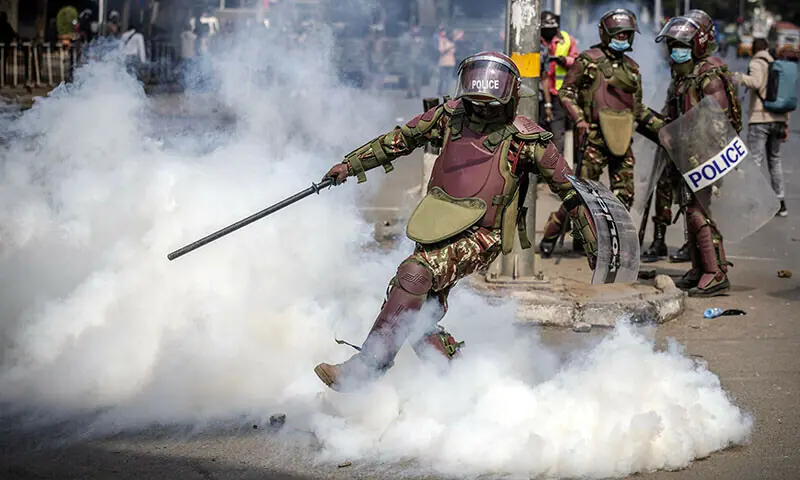
NAIROBI: Families of people killed during anti-government protests in Kenya say a compensation drive announced by President William Ruto does not address their demand for accountability, as memorial demonstrations are due on Thursday to mark two years since the June 2024 unrest.
The 2024 protests, led largely by young Kenyans opposing new taxes and expressing broader anger over corruption, were seen as a major moment in the country’s politics because participants mobilised across ethnic lines to press for accountability. According to the Independent Police Oversight Authority (IPOA), 62 people were killed during weeks of protests in June and July 2024, while another 65 died during anniversary protests in the same period the following year. Rights groups have put the death toll higher and say most of those killed were shot by police and other security personnel.
Last week, Ruto announced 2 billion shillings, or $15.5 million, to compensate 1,100 people affected by violent protests between 2017 and 2025. He described the move as an acknowledgement that harm occurred, but did not apologise. A government-appointed compensation panel said on Tuesday it had begun the first 348 payments, including compensation in 115 fatality cases, with each family receiving 3 million shillings, about $28,000.
Some relatives said the payments did not amount to justice. Gillian Munyao, whose 29-year-old son Rex Masai was among the first people killed in the June 2024 protests, criticised the initiative while speaking to AFP at a Nairobi court last week, where the case is still underway.
"He’s covering up the wrongs that he did. He just wants us to shut up because of the cash that he’s giving us — the peanuts,"
Munyao also said “I’m not seeing justice anywhere … why pay us without giving the culprit?”
Few cases in court
According to the IPOA, only three cases linked to deaths in the 2024 protests and one from 2025 have reached court, and no police officer has been convicted.
Dozens of government critics were abducted in 2024 and 2025, with many still missing, according to Amnesty International and Human Rights Watch. In May 2025, Ruto said the abductions would stop and stated that there was an accountability mechanism to bring those responsible to justice. However, many people, including his former attorney general, have said he was directly responsible for the kidnappings, and there has been no sign of an investigation.
Compensation disputes
Lawyer Nick Karanja, who represents several victims left out of the compensation process, called the effort a smokescreen. One of his clients, 49-year-old Fenancia Njeri, has not received any offer over the death of her son Issa Mburu, who was killed on July 7, 2025.
Speaking to AFP, Njeri said the past year had been extremely difficult and added that she sometimes sees the police officer who killed her son near the informal settlement outside Nairobi where she lives.
"It’s been a whole year … very, very hard,"
Ruto had warned at the time that violent protesters should be shot in the legs. Mark Clinton Deya, 26, said that was what happened to him despite, by his account, protesting peacefully that day. He told AFP he was shot by police, with a bullet tearing through his right thigh and lodging in his other leg.
"I was a chef … but now I can’t do that work. This leg can’t stand for long. It starts shaking," Deya said he filed a case with the IPOA but was never contacted again.
Police in Kenya continue to kill people during episodes of unrest while victims are often dismissed by the government as rioters. At least four people were killed during fuel protests in May and three more during demonstrations this month against a proposed Ebola quarantine centre for US citizens.
Chrispine Odawa, the father of Rex Masai, said those patterns were exactly what protesters were trying to change.
"Those are the things we are trying to change”, he stated.
0 Comments
No comments yet. Be the first to join the discussion!


