June 20, 2026
Pakistan-facilitated US-Iran follow-up talks to commence in Switzerland tomorrow
Pakistan announced US-Iran technical-level talks will begin Sunday in Switzerland in Buergenstock to implement the Islamabad MoU, marking the first formal follow-up after the deal ending over 100 days of conflict.
June 20, 2026

ISLAMABAD: Pakistan's Foreign Office (FO) on Saturday announced that technical-level negotiations aimed at implementing the landmark Islamabad Memorandum of Understanding (MoU) between the United States and Iran will commence in Buergenstock, Switzerland, on Sunday.
According to the FO, representatives from the United States and Iran, alongside mediators from Pakistan and Qatar, will participate in the discussions as part of efforts to advance the understandings reached under the historic agreement.
“Pakistan will continue to facilitate the process in its role as mediator, with a view to advancing the understandings reached under the Islamabad Memorandum of Understanding,” the Foreign Office said in a statement.
The talks mark the first formal follow-up engagement since the signing of the agreement earlier this week, which ended more than 100 days of conflict and opened a pathway toward a comprehensive settlement between Washington and Tehran.
Meanwhile, US Vice President JD Vance said he plans to travel to Switzerland in the coming days as negotiations progress.
Speaking to Fox News, Vance said discussions with Iran were proceeding positively, adding that US Special Envoy Steve Witkoff and Jared Kushner, son-in-law of President Donald Trump, were already in Switzerland participating in the diplomatic effort.
“Negotiations are going well,” Vance said, while maintaining that the United States retained significant leverage in the process.
Iran has also confirmed its participation in the talks. Foreign Ministry spokesperson Esmaeil Baghaei said Tehran would send a delegation to Switzerland to ensure implementation of commitments agreed under the accord.
Baghaei stressed that Iran had fulfilled its obligations under the agreement and expected reciprocal steps from Washington.
“In Switzerland, we intend to press for the fulfilment of the other side’s commitments and clarify how they plan to act on their obligations,” he was quoted as saying by Iranian media.
He further emphasised that the United States must ensure Israel complies with ceasefire commitments, particularly regarding military actions in Lebanon.
“If part of the counterpart’s commitments is not implemented, the entirety of the agreement will be jeopardised,” Baghaei warned, calling for immediate measures to preserve the accord.
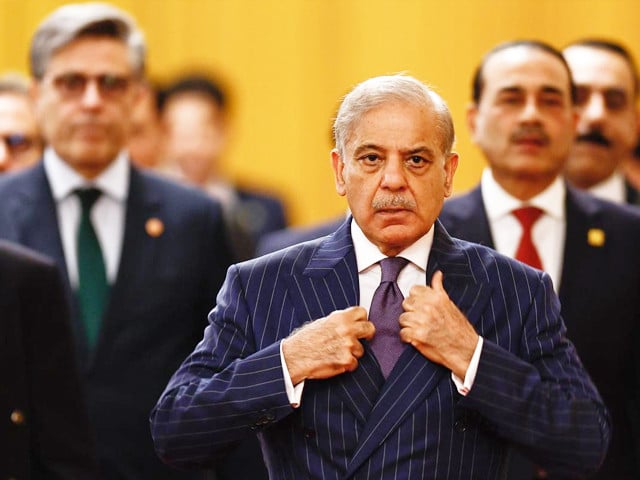
The 14-point Islamabad MoU was signed on Thursday by US President Donald Trump and Iranian President Masoud Pezeshkian, with Prime Minister Shehbaz Sharif signing as mediator on behalf of Pakistan.
The agreement establishes a framework for ending hostilities, reopening the Strait of Hormuz to international commercial shipping and launching a 60-day negotiation process aimed at achieving a permanent settlement.
The accord has been widely welcomed by the international community, which viewed the prolonged conflict as a major threat to global peace and economic stability. The crisis had disrupted energy markets and triggered sharp increases in oil prices due to uncertainty surrounding the Strait of Hormuz.
Under the agreement, the United States will lift restrictions on Iranian ports and immediately waive key oil sanctions that have weighed heavily on Iran’s economy. In return, Iran will reopen the Strait of Hormuz, restoring a critical artery for global energy supplies and international trade.
The agreement also envisages broader economic cooperation in the future. Upon reaching a final understanding on Iran’s nuclear programme, Washington has pledged to facilitate the release of a proposed $300 billion reconstruction fund backed by regional partners to support post-conflict recovery and economic development.
Diplomats view the upcoming Switzerland talks as a crucial test of the agreement’s durability and a significant step toward translating the landmark diplomatic breakthrough into a lasting peace framework for the region.
0 Comments
No comments yet. Be the first to join the discussion!