June 19, 2026
Senate seeks relief for salaried class, higher taxes on wealthy
The Senate approved 123 budget recommendations for 2026-27, including a 15% salary increase for government employees and tax relief for salaried groups. It also proposed higher taxes on luxury assets and lower levies on essential goods and farm inputs.

June 19, 2026
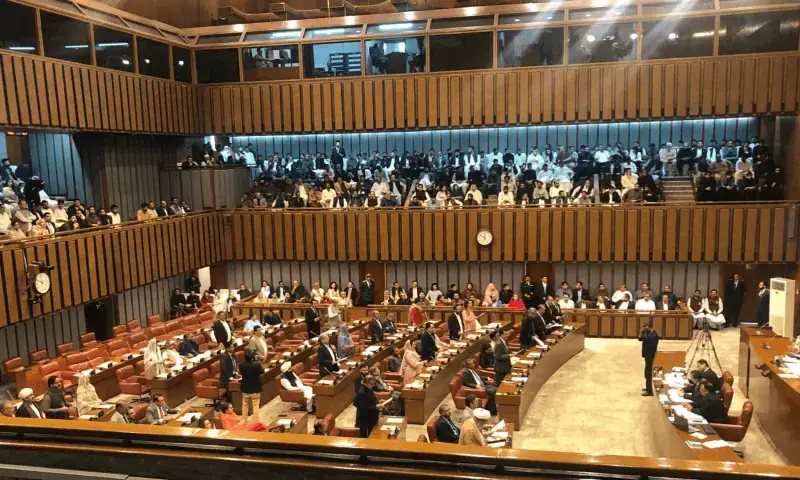
ISLAMABAD: The Senate on Thursday approved a set of recommendations on the budget for 2026-27, including a 15% increase in salaries for government employees, restoration of frozen medical allowances for employees and pensioners, tax relief for salaried and low-income groups, and higher taxation on luxury assets and large-engine vehicles.
The recommendations were adopted during a sitting chaired by Senate Chairman Yousaf Raza Gillani after Senate Standing Committee on Finance Chairman Saleem Mandviwalla presented the committee’s report on the Finance Bill. The upper house also recommended reducing General Sales Tax on food items, medicines, educational supplies and agricultural inputs, and called for allocation of funds to lower electricity tariffs.
Among the proposals, the Senate urged the government to withdraw additional charges and taxes collected through electricity bills from domestic and low-income consumers. It also suggested zero-rating taxes and duties on fertilisers, seeds, pesticides, diesel and agricultural machinery to support the agriculture sector.
The house further proposed extending tax exemptions available to IT exporters and freelancers for another 10 years. It also called for lower indirect taxes on essential goods, a simpler tax regime for small and medium-sized enterprises, a review of proposed tax measures affecting essential commodities and the salaried class, and steps to broaden the tax base.
Luxury taxation and property proposals
To increase revenue, the Senate recommended higher taxes on vehicles with engine capacities above 3,000cc, luxury properties and other non-productive assets. It also proposed comprehensive taxation and documentation measures for luxury retail businesses, real estate transactions and luxury transactions carried out by non-filers.
On property taxation, the Senate suggested that lower property tax rates should remain limited to first-time homebuyers, while investors buying second homes or holding plots for investment should continue to be taxed.
In one of the notable recommendations, the house suggested permitting foreign residents and visitors to bring alcohol into the country for personal consumption.
Spending priorities and minister’s remarks
The Senate recommendations included higher allocations for public hospitals, primary healthcare services, higher education and scholarship programmes. The report also urged the government to cut non-development expenditure and put in place a mechanism to transfer development funds to elected local governments.
Wrapping up the budget debate, Finance Minister Muhammad Aurangzeb told the house that the government had missed its GDP growth target because of global and regional economic conditions, but said reform efforts in different sectors had continued. He said advance tax on the export sector had been removed, various markup rates had been cut and tax relief had been provided to the construction sector.
Aurangzeb said no new taxes had been imposed on the IT sector and that measures were being taken to create a better ecosystem and training opportunities for freelancers. He also said small farmers had been facilitated through easier access to loans, Rs10 billion had been allocated under the Youth Loan Scheme, and taxes on the import of agricultural machinery had been abolished.
The finance minister said a simplified scheme was being introduced to bring small shopkeepers into the tax net, while the Federal Board of Revenue was being digitised to reduce human involvement and improve institutional efficiency. He added that the government was pursuing measures aimed at economic self-reliance and had shown it could deal with flood-related challenges through its own resources.
Committee recommendations forwarded
Speaking during the session, Mandviwalla said he was presenting Senate budget recommendations for the eighth consecutive time as chairman of the finance committee. He said the budget had been presented in a war-like situation and noted that salaried individuals had been given some relief through reduced income tax slabs.
He also called for more measures to promote solar energy and proposed abolishing taxes on credit and ATM cards. Mandviwalla said the finance committee had submitted 108 recommendations and the Senate Standing Committee on Planning had submitted 15, taking the total to 123.
He said allocations for health and education remained very low and that additional burden had been placed on existing taxpayers. He reiterated the committee’s proposals for at least a 15% increase in government employees’ salaries, lower taxes on food items and agriculture, tax exemptions for books, notebooks and pencils, and use of climate-related levies only for environmental improvement measures.
Chairman Gillani said the house had held detailed debate on the budget over four consecutive days, with 56 senators participating. He said the finance and planning committees had worked continuously to prepare 123 recommendations, which would now be sent to the National Assembly for consideration. The Senate session was later adjourned for an indefinite period.
0 Comments
No comments yet. Be the first to join the discussion!