

June 18, 2026
Suparco identifies 130 glacial lakes for risk monitoring in northern Pakistan
Suparco has identified 130 potentially dangerous glacial lakes in northern Pakistan and said 24 of them are currently unfrozen and under close watch. The agency also warned that El Nino conditions could weaken the monsoon and intensify heatwaves and drought.

June 18, 2026
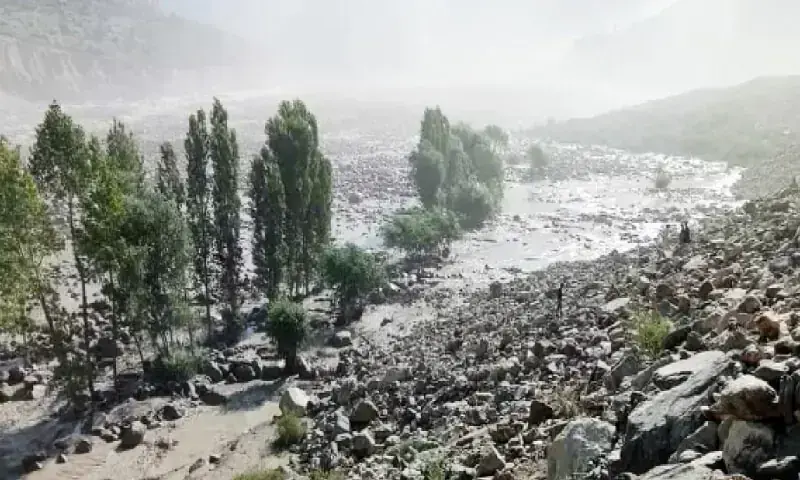
ISLAMABAD: The Space and Upper Atmosphere Research Commission (Suparco) has placed 130 potentially dangerous glacial lakes under watch and said these water bodies could pose risks to settlements downstream in the event of glacial lake outburst floods, or Glofs.
According to the assessment, Suparco has been carrying out regular surveillance of potentially dangerous glacial lakes through satellite imagery and sharing updates with relevant authorities, including the Ministry of Climate Change and Environmental Coordination’s technical committee. Its latest analysis was based on satellite images taken on May 31 and June 1, 2026.
Of the 130 lakes identified as potentially hazardous, 24 are currently unfrozen and clearly visible, and these have been examined closely to measure their surface extent and assess possible risks. The assessment found that most of the remaining lakes are still frozen. Suparco’s satellite-based mapping marked frozen and unfrozen lakes with separate colour codes and also showed their spatial distribution.
The mapping further identified populations living near these lakes that could be exposed if a Glof occurs, which is described as a recurring hazard in mountainous areas. Population exposure was estimated through a grid-based system showing the number of people living within each 100-by-100-metre area around the monitored lakes, providing an indication of downstream communities that may be vulnerable if a lake bursts.
Coordination with disaster authorities
Suparco said its identification of high-risk glacial lakes drew on data from provincial disaster management agencies, including the Provincial Disaster Management Authority in Khyber Pakhtunkhwa and the Gilgit-Baltistan Disaster Management Authority. Earlier monitoring work had relied on older inventories provided by these bodies.
A comparison of previous and updated datasets showed that 56 glacial lakes appeared in both records, indicating continuity in monitoring as well as changes in the wider inventory. Such updates were important for improving preparedness and response planning.
Suparco also stressed that continued satellite monitoring remained important for early warning and risk reduction, particularly as climate change speeds up glacial melting in northern Pakistan. Stronger coordination between scientific institutions and disaster management authorities was essential for protecting vulnerable communities from possible Glof incidents.
When contacted, the Ministry of Climate Change and Environmental Coordination said the latest assessment reflected Pakistan’s growing ability to scientifically monitor climate-related threats and improve preparedness against glacial lake outburst floods. Ministry media spokesperson Mohammad Saleem Shaikh said 24 of the 130 potentially dangerous glacial lakes were currently unfrozen and under close observation.
He said the ministry, working with Suparco, the National Disaster Management Authority and provincial disaster management authorities, had strengthened hazard mapping, community-based adaptation programmes and early warning systems in high-risk valleys. He also said international cooperation with Italy, the United Nations Development Programme and scientific institutions had further improved Pakistan’s climate resilience and environmental monitoring capacity.
"This is not a cause for panic, but a call for preparedness. The fact that we are able to identify and continuously monitor these lakes demonstrates that Pakistan’s climate risk surveillance systems are becoming increasingly robust and science-driven," Shaikh said.
El Nino warning for coming seasons
Separately, Suparco warned that El Nino conditions could affect Pakistan’s weather during the 2026 monsoon and winter seasons. The El Nino Southern Oscillation had entered its El Nino phase, with warmer-than-normal sea surface temperatures developing across the central and eastern Pacific Ocean.
According to Suparco, these conditions may lead to weaker-than-normal monsoon rainfall, more frequent heatwaves during spring and summer, drought conditions and warmer winters later in the year. El Nino alters rainfall patterns globally and often brings drought to Southeast Asia, Australia, India and parts of Africa, while contributing to wetter conditions in the southern United States, East Africa and parts of South America.
0 Comments
No comments yet. Be the first to join the discussion!


