June 18, 2026
New framework to curb taxpayer harassment
FBR Chairman Rashid Mahmood Langrial says a faceless tax system will be launched in October to reduce harassment and curb misuse of taxpayer information. The pilot phase will begin this year, with full implementation planned over three years.

June 18, 2026
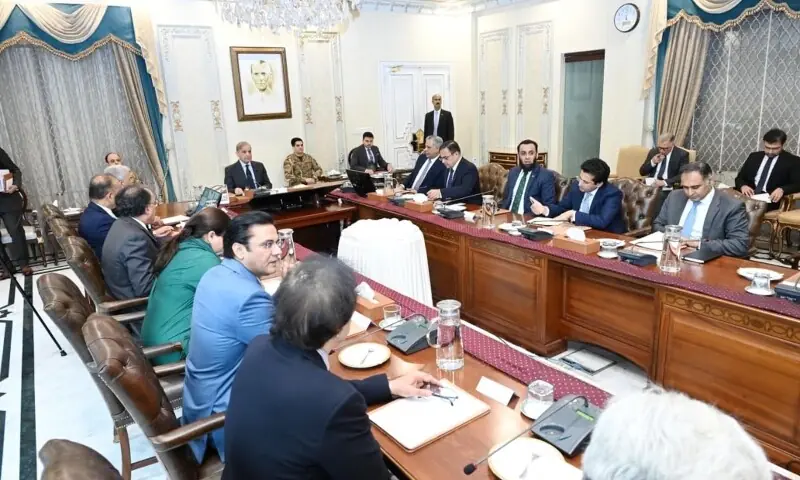
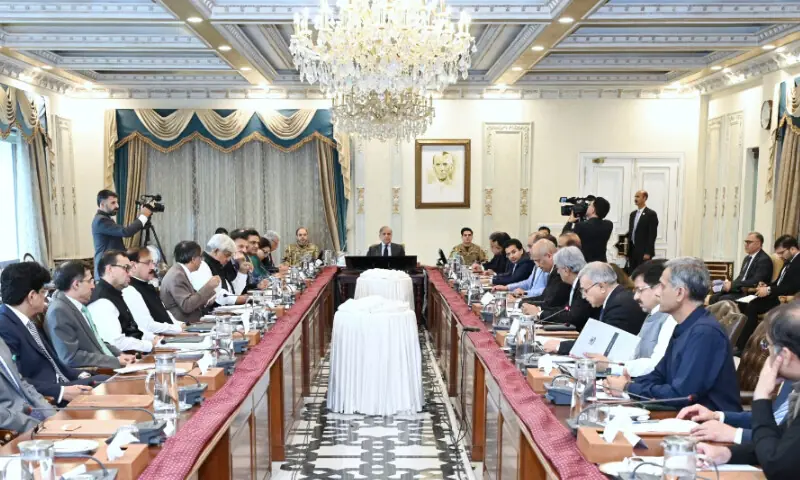
ISLAMABAD: Federal Board of Revenue Chairman Rashid Mahmood Langrial told the National Assembly Standing Committee on Finance on Wednesday that the tax authority plans to launch a faceless tax system in October, saying the new model is intended to reduce harassment of taxpayers by limiting direct interaction with tax officials.
Briefing the committee, which was chaired by former finance minister Syed Naveed Qamar, Langrial said a barrier was needed between taxpayers and tax officers to prevent exploitation. He said information sent to field formations for tax collection was often either used to pressure taxpayers or ignored altogether. Referring to the proposed model, he said tax administration would increasingly rely on digital processes and system-based case selection, though in some situations tax collectors would still be able to identify taxpayers.
Langrial told lawmakers that 8,697 individuals had bank deposits of Rs750 billion while reporting zero income. He also said 98.9% of high-deposit individuals had underreported their bank flows, while 80% of top property buyers had materially under-declared their assets despite being tax filers. After taking over as FBR chairman in 2024, he said, he had aimed to focus enforcement on 5% of taxpayers who had the capacity to pay Rs1.2 trillion in income tax.
In support of the changes, Langrial said the present structure gave officials access to extensive information that could be misused.
"The existing tax model is such that either this sort of information is used to harass people or it is simply ignored. The new operating model is being introduced to protect taxpayers from harassments by taxmen," he said.
"We were equipping our officers with rich information, who were manipulating it for their own benefits,"he further told the committee.
According to the FBR chairman, frequent in-person contact between taxpayers and officers continued despite the existence of digital systems, creating space for collusion and rent-seeking. Finance Minister Muhammad Aurangzeb told the committee that the revised model drew on international experience and would be rolled out in phases to reduce human interaction as much as possible.
How the system will work
Langrial said faceless processing would be driven by system-based risk identification. Under the proposed arrangement, cases flagged by the system would go first to the National Assessment wing, where they would be randomly assigned to an officer. A separate quality control wing would then review the assessment report. Only cases deemed worth pursuing would be forwarded to the audit wing, while taxpayers would be offered an e-hearing option in a faceless format.
He said the system would be implemented fully over three years, with the pilot phase expected to start in October. Hamid Ateeq Sarwar, Member Strategic Transformation, told the committee that the model had been designed around variance in expenditures, sales and means.
According to the FBR briefing, the system will use a rules-based third-party compliance management system to identify under-declaration in property, vehicle and banking data. It will also issue flags for filers and non-filers to settle their tax position before property and vehicle transactions can proceed. For sales tax, the FBR said the model would use its compliance system to match digital invoices with monthly returns to identify ghost buyers, under-reporters and disappearing sellers.
The tax authority also told lawmakers that Inland Revenue operations would be structurally divided into three functionally exclusive wings, each with its own mandate, statutory powers and separate jurisdiction. In its presentation, the FBR said a 1% increase in the corruption index led to a 4.57% fall in the tax-to-GDP ratio, and added that Pakistan had the lowest Political Risk Services score in the region at 52 out of 100.
Lawmakers raise concerns
Some committee members questioned whether the new arrangement would once again place the burden on already compliant groups, including salaried taxpayers and the corporate sector. MNA Jawed Hanif Khan said 95% of people in Pakistan could not understand such a complicated system and argued that any new mechanism should be user-friendly.
MNA Hina Rabbani Khar said the proposed model appeared to be a carefully prepared strategy, but noted that earlier initiatives had failed to produce the desired results. In response, Langrial said weak case quality stemmed from discretionary powers and limited specialisation, while combining audit, assessment, enforcement and recovery under one officer had undermined outcomes.
Separately, Minister of State for Finance Bilal Azhar Kayani briefed the committee on the fixed tax scheme for traders. Responding to a question about whether it amounted to a tax amnesty, he said it was not an amnesty. He added that if an abnormal discrepancy emerged in tax statements, the government could carry out an audit in consultation with representatives of the trading community. Hamid Ateeq Sarwar said compliance risk management system triggers would also apply to traders, potentially leading to audits and tax demands.
0 Comments
No comments yet. Be the first to join the discussion!