June 18, 2026
PM Shehbaz assures Iran of Pakistan's continued support as US-Iran peace process moves forward
Prime Minister Shehbaz Sharif assures Iranian President Masoud Pezeshkian Pakistan will continue backing the next phase of US-Iran negotiations, following the Islamabad MoU. Leaders discuss implementation and stronger bilateral ties.
June 18, 2026

-- Pezeshkian praises Pakistan’s mediation role, says Tehran will always remember Islamabad’s support during difficult times
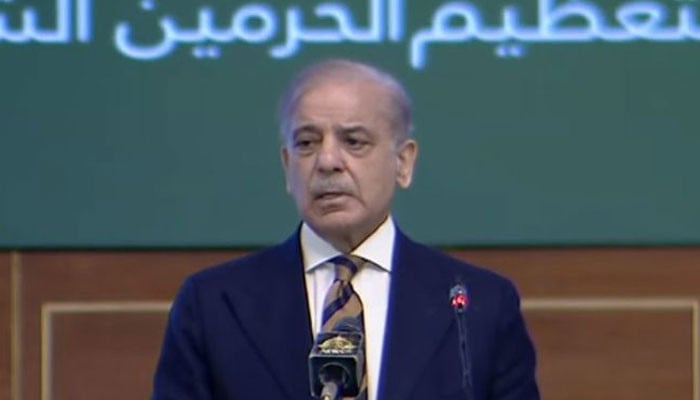
ISLAMABAD: Prime Minister Shehbaz Sharif on Wednesday reaffirmed Pakistan’s unwavering support for Iran during the next phase of its negotiations with the United States, assuring Tehran that Islamabad would continue to stand by the Islamic Republic as a brotherly neighbour and trusted partner.
The assurance came during a telephone conversation between Prime Minister Shehbaz Sharif and Iranian President Masoud Pezeshkian, their first direct contact since the signing of the historic Islamabad Memorandum of Understanding (MoU) that formally ended months of conflict between the United States and Iran.
According to the Prime Minister’s Office (PMO), the two leaders held a detailed discussion lasting more than 30 minutes, focusing on the implementation of the agreement, regional stability and the future direction of Pakistan-Iran relations.
Prime Minister Shehbaz congratulated President Pezeshkian, the Iranian leadership and the people of Iran on the successful conclusion of the landmark agreement.
“This historic deal will not only help restore peace and stability in the region but will also contribute significantly to the reconstruction and economic revival of Iran while further strengthening Pakistan-Iran relations across all areas of mutual interest,” the prime minister said.
He also conveyed his respectful regards and best wishes to Iran’s Supreme Leader, Ayatollah Mojtaba Khamenei.
The Islamabad MoU, signed electronically by US President Donald Trump and President Pezeshkian and endorsed by Prime Minister Shehbaz Sharif as mediator, has been hailed internationally as a major diplomatic breakthrough that ended a conflict which had threatened regional security, disrupted global trade and energy markets, and intensified humanitarian concerns across the Middle East.
During the conversation, Prime Minister Shehbaz assured the Iranian president that Pakistan would continue supporting efforts aimed at ensuring the successful implementation of the agreement and the advancement of dialogue between Tehran and Washington.
President Pezeshkian, on behalf of the Iranian nation, expressed profound gratitude to Prime Minister Shehbaz Sharif and Chief of Defence Forces and Chief of Army Staff Field Marshal Syed Asim Munir for their pivotal role in facilitating the mediation process.
“Iran will always remember Pakistan’s positive and constructive efforts and its support during these difficult times,” President Pezeshkian said, according to the PMO.
The Iranian president praised Pakistan’s diplomatic engagement, describing its role in bringing the two sides together as one carried out with “great skill and sincerity”.
He also expressed Tehran’s keen interest in expanding bilateral cooperation with Pakistan in diverse fields, including trade, investment, energy, connectivity and regional security.
The two leaders agreed to maintain close coordination in the coming days and discussed plans for exchanging official visits at the earliest opportunity to further strengthen bilateral cooperation and advance shared regional objectives.
According to the PMO, both sides reaffirmed their commitment to deepening the longstanding brotherly relationship between Pakistan and Iran and enhancing cooperation on matters of mutual interest.
Earlier in the day, Prime Minister Shehbaz announced that the Islamabad MoU had formally entered into force following its electronic signing by the presidents of the United States and Iran.
“I am honoured to announce that the historic Islamabad Memorandum of Understanding has been electronically signed between the United States of America and the Islamic Republic of Iran,” the prime minister said in a statement.
Under the first phase of the agreement, Iran has reopened the Strait of Hormuz while the United States has lifted its naval blockade, easing tensions in one of the world’s most strategically important maritime corridors.
The 14-point accord extends the ceasefire first reached in April and provides a framework for negotiations on a comprehensive settlement, including issues related to Iran’s nuclear programme, regional security and economic reconstruction.
The agreement is widely being viewed as a diplomatic success for Pakistan, which played a central role in facilitating communication between Washington and Tehran throughout the crisis and worked closely with regional partners to advance a peaceful resolution.
Observers believe the accord could pave the way for broader regional stability, economic recovery and enhanced cooperation among countries of the Middle East and South Asia.
0 Comments
No comments yet. Be the first to join the discussion!