June 16, 2026
Iran's strategic victory and Israel's growing isolation
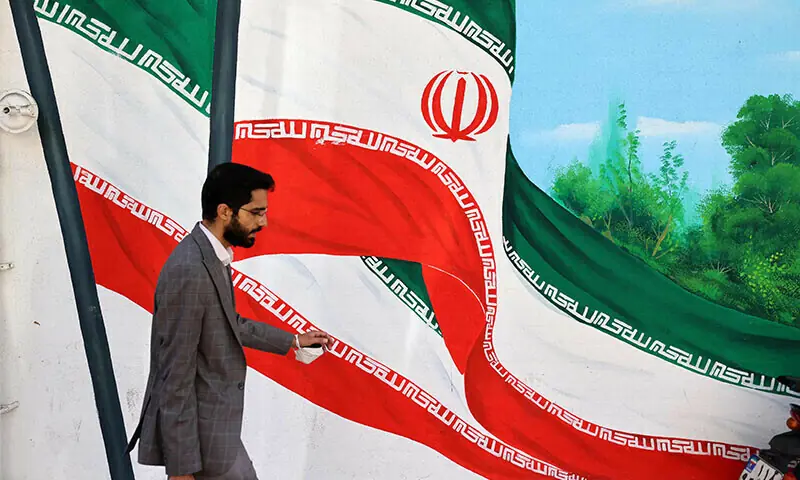
Iran’s confrontation effort to weaken Tehran instead boosted Iran’s regional influence. As negotiations expand, diplomatic outcomes and potential sanctions relief could reshape the Middle East.
June 16, 2026

History may ultimately record June 2026 as the month when the strategic balance of the Middle East began to shift in a manner few thought possible. What started as an effort to weaken Iran, curtail its influence, and force it into submission instead produced a different outcome. Iran survived, endured, adapted, and emerged from the confrontation with its political system intact, its strategic position preserved, and its regional influence enhanced.
At the outset of the conflict, expectations in many capitals were remarkably similar. The assumption was that the combined military, economic, technological, and intelligence capabilities of the United States and Israel would prove overwhelming. Iran was expected to retreat, compromise, or collapse under sustained pressure. The objective was not merely military success but strategic transformation: a weakened Iran, a diminished Axis of Resistance, and a Middle East reordered under terms favorable to Washington and Tel Aviv. That objective was not achieved.
The conflict demonstrated a reality that military planners will study for years. Modern warfare is no longer determined solely by aircraft carriers, stealth bombers, advanced fighter aircraft, and defense budgets measured in hundreds of billions of dollars. Iran relied on a different doctrine—one based on strategic patience, missile technology, drone warfare, cyber capabilities, underground infrastructure, and asymmetrical operations. Rather than matching its adversaries weapon for weapon, it focused on raising the cost of confrontation and denying its opponents a decisive political outcome.
This approach fundamentally challenged long-standing assumptions about military superiority. The lesson was simple but profound: overwhelming power does not automatically produce political success. Nations with determination, strategic depth, and resilience can survive pressures that many observers consider impossible to withstand.
The conflict also exposed a profound divide within the Muslim world. For nearly two years, the world witnessed the devastation in Gaza and the immense suffering of Palestinians. Yet many of the region's most influential states—including Saudi Arabia, the United Arab Emirates, Bahrain, Egypt, Jordan, and Türkiye—chose caution, restraint, and strategic calculation over confrontation. Their leaders prioritized economic stability, national interests, and avoidance of a wider regional war.
Iran chose a different path. It accepted the political, economic, and military risks associated with direct confrontation and positioned itself as the principal challenger of Israeli military power. Whether one agrees with Tehran's policies or not, that decision dramatically elevated Iran's standing across large segments of the Muslim world and transformed its image from a regional actor into a symbol of resistance.
The military consequences of the war may prove significant, but the diplomatic consequences may be even greater. Reports of expanding negotiations involving Iran, the United States, Israel, Lebanon, and Hezbollah suggest that the conflict may conclude not with regime change in Tehran but with arrangements that preserve Iran's core interests while reducing the likelihood of wider regional war.
If such a settlement ultimately results in meaningful sanctions relief, access to frozen assets, normalized trade relations, and unrestricted energy exports, the greatest beneficiary may not be the Iranian military but the Iranian people.
For more than four decades, sanctions and financial restrictions prevented Iran from fully utilizing its enormous economic potential. Despite possessing some of the world's largest oil and natural gas reserves, Iran often sold energy under difficult conditions and at discounted prices. Economic normalization would fundamentally change that equation.
The return of frozen assets and renewed access to international markets would strengthen the Iranian economy, stabilize the national currency, reduce inflationary pressures, and attract investment from around the world. Iran would be able to market its energy resources under normal commercial conditions, generating revenues that could be directed toward infrastructure, education, healthcare, scientific research, technology, and industrial modernization.
The country's geographic location provides another extraordinary advantage. Positioned at the crossroads of Asia, Europe, Central Asia, and the Middle East, Iran has the potential to become a major transportation, logistics, and energy hub. Modern ports, rail networks, highways, industrial zones, and trade corridors could transform the country into one of the most important commercial gateways in Eurasia.
Cities such as Tehran, Isfahan, Shiraz, Mashhad, and Tabriz could experience rapid modernization. Universities could attract international talent. Research institutions could expand. Advanced manufacturing, artificial intelligence, biotechnology, aerospace industries, and digital technologies could emerge as pillars of economic growth. The transformation of Iran from a heavily sanctioned state into a major economic power would represent one of the most significant geopolitical developments of the twenty-first century.
Another major consequence of the conflict concerns regional security. Many governments in the Middle East have concluded that long-term stability cannot rest on overwhelming military imbalance. The existence of a significant strategic disparity has encouraged regional actors to explore new security arrangements, deeper defense cooperation, and alternative mechanisms for deterrence.
In this environment, Pakistan assumes a unique role. As the only Muslim nuclear power, Pakistan occupies a position unlike any other state in the Islamic world. Therefore all middle eastern countries including Turkey are scrambling to sign defense deals with Pakistan to provide them counterbalancing deterrence to Israel’s nuclear capability.
Its diplomatic engagement during the crisis elevated its profile, while its strategic capabilities make it an increasingly important factor in regional calculations. Whether through diplomacy, defense cooperation, or broader security dialogue, Pakistan is likely to become more influential in discussions about the future architecture of Middle Eastern security.
The broader lesson is that stability is most likely to emerge when no state believes it can impose its will indefinitely through military superiority and on the strength of nuclear arms. Durable peace requires balance, mutual recognition, respect for sovereignty, and political settlements that address the underlying causes of conflict rather than merely managing their symptoms.
The war also raises important questions for Israel. For decades, Israel operated under assumptions that combined military superiority and unconditional strategic backing of the US would enable it to materialize its elusive dream of greater Israel. Iran’s defiance and the US begging for a peace deal suggest that those assumptions are being reassessed. The costs of perpetual confrontation are rising. The political consequences of prolonged conflict are becoming more severe. Diplomatic solutions that once seemed distant may gradually become unavoidable.
The ultimate lesson of this conflict is not military. It is political and economic. Nations are not judged solely by the wars they fight. They are judged by what they build after the fighting ends. If Iran succeeds in transforming resilience into prosperity, sanctions relief into development, and strategic endurance into national renewal, it will achieve a victory far greater than any military triumph.
The Middle East now stands at a crossroads. One path leads toward reconciliation, economic integration, regional cooperation, and coexistence. The other leads toward continued rivalry, arms competition, and recurring conflict. The decisions made in the coming years will determine which future emerges.
My conclusion is straightforward. The greatest achievement of Iran was not defeating an adversary on the battlefield. It was demonstrating that overwhelming pressure could be resisted, that strategic patience could outlast coercion, and that endurance could preserve national sovereignty. If that resilience now opens the door to economic transformation, diplomatic influence, and a more balanced regional order, then June 2026 may indeed be remembered as the beginning of a new chapter in Middle Eastern history.
The writer retired as Press Secretary the President, and is former Press Minister at Embassy of Pakistan to France and former MD, Shalimar Recording & Broadcasting Company Limited
View all articles →0 Comments
No comments yet. Be the first to join the discussion!