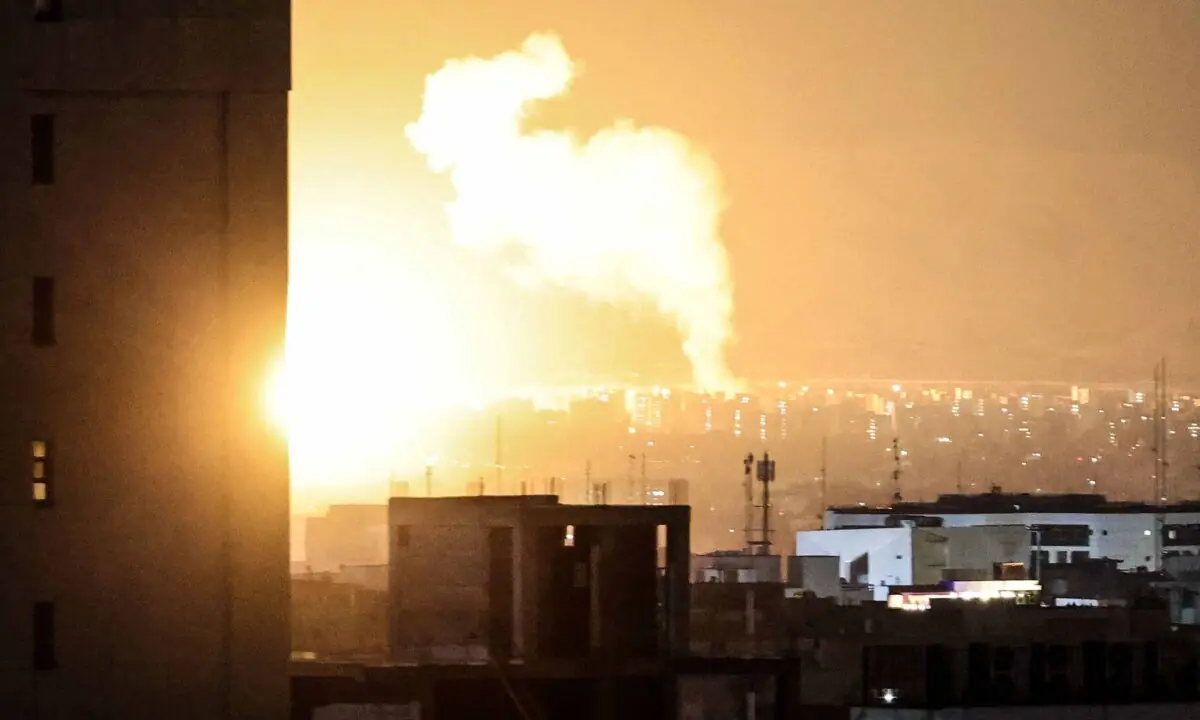
Iran’s iron resolve
Amid escalating tensions with the US and Israel, Iran's military strategy emphasizes resilience, precision, and adaptability in asymmetric warfare, redefining engagement terms.

Reflecting long preparation for asymmetric warfare
In the midst of a rapidly escalating conflict with the USA and Israel, Iran has demonstrated a level of resilience and strategic acumen that few outside observers fully anticipated. Despite the overwhelming military capabilities of its adversaries, Tehran’s response has been methodical, coordinated, and remarkably precise— highlighting a military doctrine designed for endurance, adaptability, and asymmetric warfare.
From the first days of the confrontation, Iran’s ability to absorb external strikes while maintaining operational continuity became immediately apparent. While conventional wisdom suggested that prolonged attacks on Iranian infrastructure might paralyze decision-making, the country’s command structures, from political leadership to military operations, remained intact and responsive. This level of institutional resilience is not incidental; it reflects decades of planning aimed at preparing for high-intensity conflict scenarios in which conventional superiority is not on Iran’s side.
Central to Tehran’s strategy has been a commitment to precision and selective targeting. Rather than relying on broad, indiscriminate strikes, Iranian forces have consistently executed operations designed to degrade key adversary assets while minimizing unnecessary exposure. Missile and drone deployments have focused on logistical hubs, military installations, and command nodes, signaling a sophisticated understanding of modern warfare dynamics. Such precision is as much about tactical efficiency as it is about messaging: each strike conveys capability, discipline, and the ability to control escalation on Iran’s own terms.
Equally striking is the integration of various military domains. Missile systems, drone squadrons, air defense units, and cyber capabilities have been deployed in coordinated fashion, reflecting a high level of operational maturity. Perhaps Iran’s military exercises with China and Russia have proved fruitful.
As of early 2026, China has deepened its strategic partnership with Iran by providing access to the BeiDou-3 navigation satellite system for military and civilian use. This transition allows Iran to move away from reliance on US-controlled GPS, enhancing the resilience of its missile guidance, drone control, and command networks against jamming and interference.
The orchestration of multiple platforms in real time demonstrates that Iran has invested not just in hardware, but in the command, communication, and control infrastructure necessary to sustain complex operations under pressure. This approach allows Iran to exploit asymmetric advantages, offsetting conventional imbalances and forcing adversaries to reconsider assumptions about the cost and feasibility of further escalation.
Resilience in this conflict is not merely structural; it is cultural and strategic. The sustained capacity to respond, adapt, and continue operations under duress signals a military ethos built around endurance and preparation. Tehran has clearly anticipated that any engagement with superior forces would be protracted, and it has structured its forces accordingly. Dispersed command centees, redundant communications, and the ability to rapidly reconstitute damaged units all reflect a military designed to survive and thrive under continuous pressure.
Iran’s conduct in the current conflict offers a case study in modern strategic resilience. Through careful planning, precise strikes, and the systematic integration of military capabilities, Tehran has demonstrated that even against militarily superior opponents, endurance and intelligence can redefine the terms of engagement. For policymakers, analysts, and observers, the lesson is unambiguous: in modern conflict, preparation, adaptability, and precision are as decisive as firepower, and Iran’s actions are a stark reminder of the strategic potency of these principles.
Iran’s approach has also been deliberately calibrated to signal both deterrence and negotiation leverage. By demonstrating the ability to inflict meaningful disruption through selective strikes, Tehran positions itself not as a reactive state but as a calculated actor capable of controlling escalation. This strategy complicates adversary calculations, raising the costs of further attacks while leaving space for political maneuvering. In essence, Iran is leveraging battlefield precision and operational discipline as tools of diplomacy as well as defense.
Technology and innovation are central to this narrative of capability. Advanced missile guidance, long-endurance drones, and integrated reconnaissance systems have allowed Iranian forces to strike targets far from their borders with credible accuracy. While critics may question the ultimate effectiveness of individual strikes, the systematic development and deployment of these systems signal an evolving military doctrine: one that prioritizes adaptability, reach, and asymmetric leverage over sheer numbers.
The broader strategic calculus is clear: Iran’s military actions are as much about perception as they are about destruction. Demonstrating operational competence and precise execution reinforces domestic confidence, reassures allies, and complicates adversary narratives about Iranian vulnerability. In conflicts where information is as vital as ordnance, the ability to shape perception through measured, demonstrable success becomes an instrument of power in its own right.
There is also a stark lesson in patience and discipline. Unlike forces that might respond impulsively to strikes, Iran has shown a preference for carefully sequenced operations, avoiding overextension while maximizing impact. This reflects an understanding that long-term survival and influence require both strategic foresight and tactical restraint. Every move is calculated to reinforce resilience, deter further aggression, and maintain leverage in an increasingly complex regional environment.
The ongoing confrontation underscores a broader principle of modern conflict: military capability alone does not guarantee security or dominance. Cohesion, planning, and precise execution can offset numerical or technological disadvantages, particularly in asymmetric contexts. Iran’s performance thus far exemplifies how a nation with a clear strategic vision, disciplined forces, and operational flexibility can challenge even the most powerful adversaries.
Iran’s conduct in the current conflict offers a case study in modern strategic resilience. Through careful planning, precise strikes, and the systematic integration of military capabilities, Tehran has demonstrated that even against militarily superior opponents, endurance and intelligence can redefine the terms of engagement. For policymakers, analysts, and observers, the lesson is unambiguous: in modern conflict, preparation, adaptability, and precision are as decisive as firepower, and Iran’s actions are a stark reminder of the strategic potency of these principles.

The writer is Head of News at Pakistan Today. He has a special focus on current affairs, regional and global connectivity, and counterterrorism. He tweets as @mian_abrar and also can be reached at [email protected]
View all articles →Comments
No comments yet. Be the first to join the discussion!