June 15, 2026
US, Iran reach preliminary agreement to end war, signing set for Friday
The US and Iran say they have reached a preliminary agreement to halt their war, end the US naval blockade and move toward reopening the Strait of Hormuz. A formal signing is planned for Friday in Switzerland, while broader nuclear and sanctions talks are set to follow.

June 15, 2026
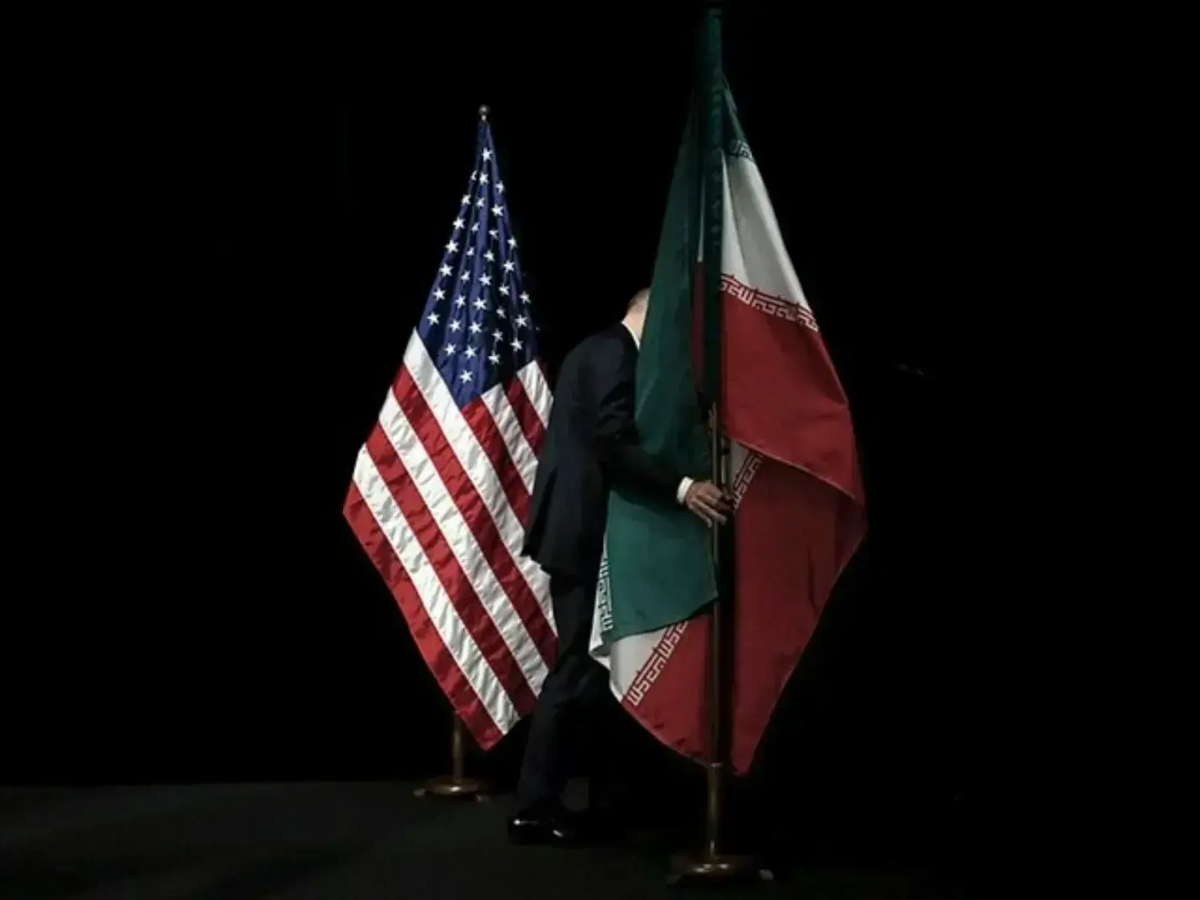
WASHINGTON/TEHRAN: The United States and Iran have announced a preliminary agreement to end their war, stop the US naval blockade of Iran and move toward reopening the Strait of Hormuz, with a formal signing ceremony scheduled for Friday in Switzerland.
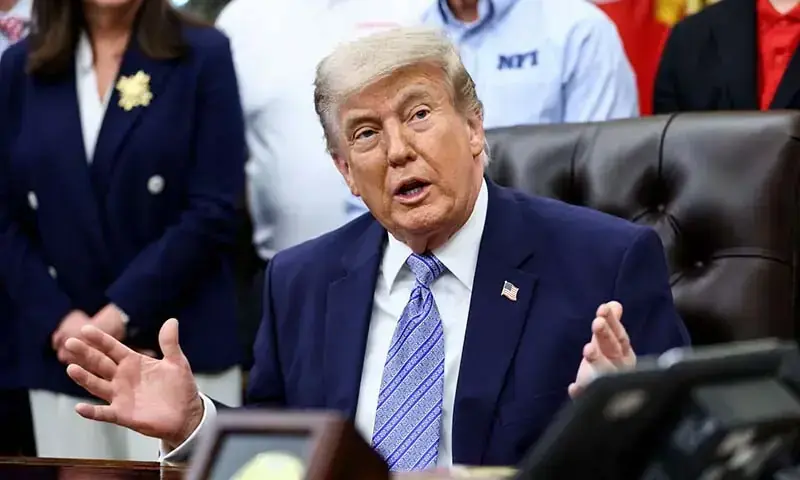
US President Donald Trump said on Truth Social that the agreement with Iran had been completed. Prime Minister Shehbaz Sharif, who said Pakistan had served as a mediator, also announced that a deal had been reached early Monday local time. Sharif said the pact provided for the immediate and permanent end of military operations on all fronts, including Lebanon.
In a statement, Iran’s Supreme National Security Council secretariat said war and military operations on all fronts, including Lebanon, would end permanently from Monday night. Iran’s deputy foreign minister Kazem Gharibabadi said a broader agreement, including sanctions relief for Iran, would be negotiated during a 60-day ceasefire period. The fate of Iran’s nuclear programme is also to be taken up in those later talks.
The exact terms of the memorandum of understanding were not immediately released, but Iranian media carried reported details of a 14-point draft framework. The semi-official Mehr News Agency said the draft called for an immediate and permanent halt to the war on all fronts, including Lebanon, the lifting of the US naval blockade, the reopening of the Strait of Hormuz within 30 days under Iranian arrangements, and a 60-day negotiation period on nuclear issues and sanctions relief.
Draft terms reported by Iranian media
The draft also includes a US commitment not to interfere in Iran’s internal affairs and to respect the sovereignty of the Islamic Republic. It further provides for a withdrawal of US forces from around Iran, a pledge not to deploy additional troops to the region, and no new sanctions during the negotiation period. The draft contains a monitoring mechanism for implementation.
The draft provides for suspending sanctions on Iranian oil sales, petrochemical products and derivatives, while allowing Tehran full access to related proceeds. $24 billion in frozen Iranian assets would be released during the 60-day negotiations period, with half to be made available before final talks begin.
The eventual final agreement would include the full removal of US primary and secondary sanctions as well as the termination of relevant UN Security Council and International Atomic Energy Agency Board of Governors resolutions. Final talks would focus only on enriched material and enrichment activities, sanctions relief and reconstruction of Iran’s economy, while Iran’s missile programme and support for resistance groups were excluded from the agenda.
The draft also requires the US and its allies to present reconstruction plans for Iran worth at least $300 billion and says the final agreement would be endorsed through a UN Security Council resolution. Final negotiations would not begin until half of Iran’s frozen assets had been released, sanctions on Iranian oil suspended and the naval blockade lifted.
Tasnim News Agency, citing what it described as an informed source, said last-minute changes were made during the final hours of negotiations, including provisions related to the administration of the Strait of Hormuz. The source also said guarantees tied to Lebanon’s sovereignty and territorial integrity were added at the final stage and helped shape Iran’s decision not to carry out a planned response to Israeli strikes on Beirut’s southern suburbs.
Markets react as focus shifts to nuclear talks
Trump said the Strait of Hormuz would reopen on Friday and that he had ordered an end to the US blockade of Iranian ports. He wrote:
"Ships of the World, start your engines. Let the oil flow!"Oil prices fell after the announcement. Brent crude futures dropped 4% in early Monday trading, while US West Texas Intermediate fell by more than 4.6%. Asian stock markets also rose.
There was no immediate reaction from Israel, which has said it was not a party to the US-Iran talks. Lebanon had been a difficult issue in the negotiations, with Israel and Hezbollah having ignored repeated calls in recent weeks from Trump and others to stop attacking each other.
Former Biden administration State Department spokesperson Matthew Miller said Trump had given Iran important concessions in order to restore the situation that existed before the war began. He said:
Republican Senator Lindsey Graham welcomed the agreement but said he would be monitoring the coming negotiations on Iran’s nuclear programme closely. He said:
"Under our law, any nuclear deal with Iran will be sent to Congress for review and a vote""Congratulations to all in getting us to this point."Thousands of people, mostly in Iran and Lebanon, have been killed since US and Israeli forces first attacked Iran on February 28. Iran struck Israel and Gulf states hosting US bases and effectively blockaded the Strait of Hormuz, pushing up global energy prices, while US forces blocked Iranian ports in response.
Iranian officials and senior figures killed in the war
A separate recap said the war killed a large number of senior Iranian political and military figures. Supreme Leader Ayatollah Ali Khamenei was killed in the first hour of the war on February 28 in a strike on a meeting of senior officials in Tehran, and that his daughter-in-law, daughter and at least one grandchild were also killed. His son Mojtaba Khamenei survived, reportedly with injuries, and took over as supreme leader, though he has not yet made a public appearance.
State media said Ali Khamenei’s funeral would take place on July 9 in his hometown of Mashhad, after three days of funeral ceremonies in Tehran and another in Qom. Ali Larijani was killed on March 17 in an Israeli strike reportedly in the Tehran region, while Revolutionary Guards chief Mohammad Pakpour, who had taken over in June 2025 after Hossein Salami’s death in Israel’s 12-day war against Iran, was killed on the first day of the war and replaced by former interior and defence minister Ahmad Vahidi.
The same report said Guards naval chief Alireza Tangsiri, adviser Ali Shamkhani, Intelligence Minister Esmail Khatib, Defence Minister Aziz Nasirzadeh, Basij commander Gholamreza Soleimani, Guards spokesman Ali Mohammad Naini, head of military office Mohammad Shirazi and armed forces chief Abdolrahim Mousavi were also killed during the conflict. Shamkhani had initially been reported dead after being badly wounded in an Israeli strike during Israel’s June war against Iran but later re-emerged before being killed on the first day of the current war.
Just before Naini’s death was confirmed, Fars news agency issued a statement quoting him as saying Iran’s missile production deserved a perfect score and was continuing despite the war. Israel’s defence minister had described Tangsiri as the man responsible for mining and blocking the Strait of Hormuz.
0 Comments
No comments yet. Be the first to join the discussion!