

June 15, 2026
Irsa boosts water flows to Sindh after crops take a hit
Irsa has increased downstream releases from Chashma Barrage to 200,000 cusecs for Sindh after severe shortages disrupted kharif sowing. Farmers and irrigation officials say the extra water will take days to reach the worst-hit lower areas.

June 15, 2026
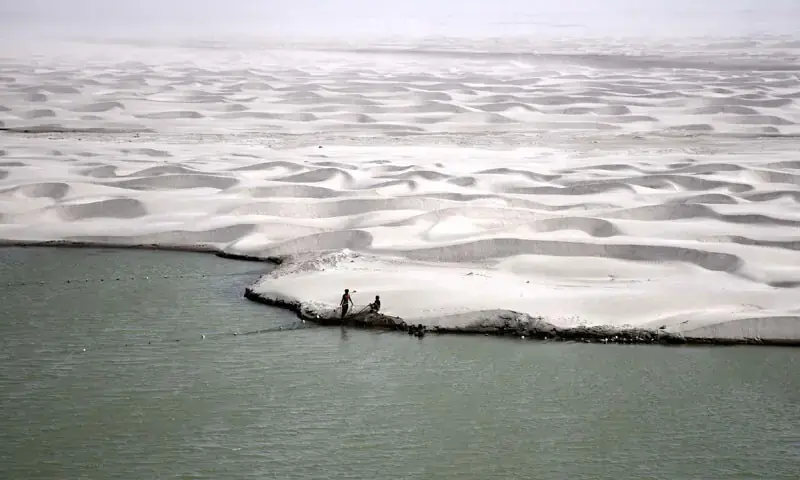
HYDERABAD: The Indus River System Authority (Irsa) has stepped up water releases downstream of Chashma Barrage to meet Sindh’s requirements, but the increase has come after significant damage was already reported to summer crop sowing in the province.
Improved releases of 200,000 cusecs were made downstream of Chashma on June 13 and 14. The increase includes Sindh’s indented supply of 160,000 cusecs sought on June 11, while the remaining flow is meant for Taunsa Barrage and Balochistan. The added water could take about five days to reach Guddu Barrage and another seven days to reach Kotri Barrage, where shortages are the most severe.
Sindh’s water indent is being supplied at Chashma despite repeated demands from the province that releases should be made at Guddu to reduce transit losses. Persistent shortages have led to protests in Sindh, while Chief Minister Murad Ali Shah sought the prime minister’s intervention to defer the filling of dams. Sindh Irrigation Minister Jam Khan Shoro also questioned Irsa’s handling of flows, and PPP lawmakers raised the matter during the budget session in parliament.
Concerns over storage at Chashma
Pressure from farmers’ organisations, political parties, parliamentarians and the Sindh government appeared to have played a role in Irsa’s decision to raise releases in recent days. Irsa had been increasing the pond level at Chashma since early June while Sindh was urgently seeking water for its perennial and non-perennial canals during the kharif sowing period.
Irrigation officials and experts noted that on June 4, when Sindh sought 130,000 cusecs, Chashma released 138,000 cusecs downstream, including water for Taunsa and Balochistan, yet the barrage’s pond level climbed from 643.5 feet on June 4 to 647.6 feet by June 7. The maximum pond level at Chashma is 649 feet. One expert said the higher pond levels suggested water was being retained at a time when Sindh needed it for sowing. He said that if all downstream requirements, including Sindh’s share, had been met, around 165,000 cusecs should have been released from Chashma.
After protests, Irsa began lowering the pond level after June 8, though only gradually, with the level moving from 647.6 feet on June 7 to 647.4 feet on June 8 and 643.9 feet on June 14. Outflows for Sindh rose from 150,000 cusecs to 178,000 cusecs on June 10, then 180,000 cusecs on June 11 and 12, before reaching 200,000 cusecs on June 13.
Shortages remain acute downstream
An irrigation source said the effect of the increased releases would not be immediate because of travel time between barrages. “The percentage shortage at Kotri will see a drop only sometime later,” he added..
The same source explained that Guddu Barrage would receive increased flow on June 15 and 16 that had actually been released from Chashma on June 10, and that later increases would reach Guddu and Kotri in sequence.
Flows into the Chashma-Jhelum and Taunsa-Panjnad link canals continued, with withdrawals of 16,500 cusecs and 12,000 cusecs respectively. That was stated to be somewhat higher than the flow at Kotri on Saturday, which stood at 11,275 cusecs against an accord-based requirement of 32,500 cusecs, leaving a 65pc shortage. The shortfall was reported at 35pc at Sukkur Barrage, 46pc at Guddu and 65pc at Kotri.
Farmers report damage to nurseries
Farmers in both lower and upper Sindh said the shortage had already affected crop preparation. Nadeem Shah, a grower from Sujawal served by Kotri Barrage’s Old Phuleli canal, said paddy nursery conditions had worsened as the canal faced a 61pc shortage on June 14.
"This year nursery is dying,” he said from Sujawal."
He added that hybrid paddy loses strength if it is not transplanted within 40 days, reducing yields. In upper Sindh, Ishaq Mughairi, whose area is fed by Sukkur Barrage’s North Western Canal, said distributaries had not received enough water for nurseries.
The North Western Canal was facing a 46pc reduction in flows on June 14, second only to Sukkur Barrage’s Dadu Canal, which was reporting a 68pc shortage.
Sindh Chamber of Agriculture Senior Vice Chairman Nabi Bux Sathio said the situation might have been different if the issue had been raised earlier in the National Assembly or if the chief minister had written to the prime minister sooner. He was referring to the chief minister’s June 11 letter on Sindh’s worsening water situation. Sathio said early paddy varieties C-9 and Irri-6 had to be sown in nurseries in early June, but because farmers did not receive adequate prices for hybrid seed varieties that can be planted later in June, many had been reluctant to grow them this year. He said growers may now be forced to turn again to those later-sown varieties.
Meanwhile, Irsa has written to the relevant Wapda member, asking for immediate steps to meet its indents through operation of Tarbela’s Tunnel-4 low-level outlet. Irsa told Wapda that despite successful testing of the outlet in May, releases from Tarbela remained below indented requirements from June 10 to June 14, and warned that failure to meet those requirements could worsen provincial shortages at a critical stage of the kharif season.
0 Comments
No comments yet. Be the first to join the discussion!


