June 14, 2026
Opposition leaders reject budget, say taxes and poverty crushing public
Opposition leaders in Islamabad have rejected the federal budget, saying it increases taxes, ignores poverty and fails to reduce state spending. They also questioned government claims of economic progress and called for deeper reforms.

June 14, 2026
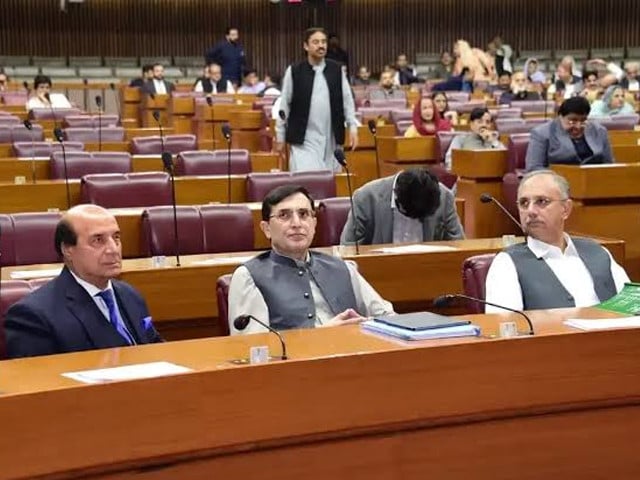
ISLAMABAD: Opposition leaders on Sunday mounted a broad attack on the federal budget at events in the capital, saying it failed to reflect ground realities, increased the tax burden on citizens and did not address worsening poverty.
Speaking at a budget seminar in Islamabad, Senate Opposition Leader Allama Raja Nasir Abbas rejected the government’s economic narrative and criticised the claim that a person earning Rs280 a day was not below the poverty line. He said the rulers were ignoring the facts and had failed to deliver services to the public.
Abbas said ordinary Pakistanis were facing severe economic hardship as food prices continued to rise. Drawing a comparison with household finances, he said a family whose spending exceeds its income falls into debt and eventually begins selling assets. He argued that Pakistan was in a similar position, with expenditure outpacing income and no meaningful steps being taken to either cut spending or boost earnings.
He also warned that if future elections were conducted under the same system, the outcome would be the worst.
Criticism of tax policy and public services
Tehreek-e-Tahafuz-e-Ayeen-e-Pakistan leader Mustafa Nawaz Khokhar said the rise in poverty showed the failure of the government’s economic policies. He said economic progress should be judged by whether people’s lives improve, adding that low-income groups were finding life increasingly difficult.
Khokhar said a taxation system could not work effectively unless the state also provided services and facilities to citizens. He maintained that collecting heavy taxes without delivering services was unjustified and said the budget could not succeed unless it addressed people’s problems and reduced poverty.
Pakistan Tehreek-e-Insaf senior leader Salman Akram Raja described the budget as an economic emergency and said the country was caught in a deep crisis driven by debt. He said official claims of development did not match the actual situation and warned that rising borrowing posed a serious danger to the country’s future.
Raja said the federal government was burdened by interest payments and that financing the system through loans was not a lasting solution. He added that poverty was increasing rather than falling, while Pakistan lagged significantly in spending on health and education. He said investment in human development was essential if the country wanted to compete globally and called for fundamental changes to tackle the crisis.
Abbasi and Jamaat-e-Islami also oppose budget
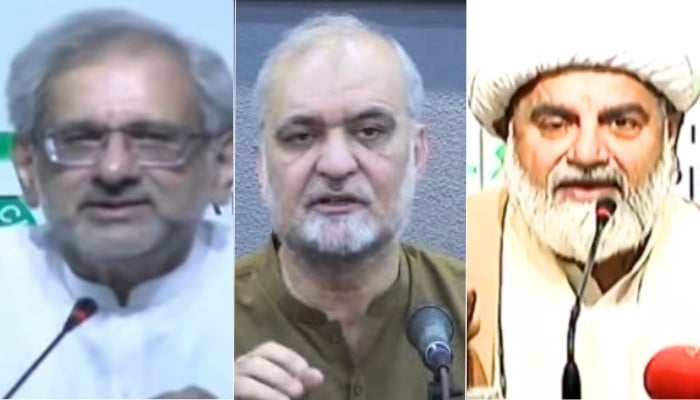
Former prime minister and Awam Pakistan Party leader Shahid Khaqan Abbasi said the past four years had been the most damaging period for Pakistan’s economy. He said government spending had grown beyond development expenditure, while pension costs had surpassed the cost of running the government.
Abbasi said interest and debt servicing had begun to overtake income and that the debt burden was rising every year, making the crisis more severe. He added that new taxes had increased pressure on the public, while the government was relying on fresh borrowing to cover its expenses. He said claims of relief in the budget did not appear to match reality and argued that ordinary citizens were carrying the burden of indirect taxation.
Abbasi also called for structural reform, saying investment would not come without the rule of law, political stability and continuity in policy.
At a separate press conference in Islamabad, Jamaat-e-Islami Emir Hafiz Naeemur Rehman said the country had a cruel tax system and claimed that the common man was paying 60% taxes. He said the budget offered no real relief and only altered figures on paper.
Hafiz Naeem called for the petroleum levy to be scrapped and demanded an end to capacity payments to independent power producers. He also said allocations for MNAs under the Public Sector Development Programme should be abolished and that official vehicles should not exceed 1300cc.
He said electricity, petrol and gas prices had a direct impact on the public and added that the government itself had acknowledged pressure from the IMF. He further claimed that large amounts had been kept in the budget to conceal incompetence.
0 Comments
No comments yet. Be the first to join the discussion!