

June 14, 2026
Health allocation rises to Rs53.3bn in proposed FY2026-27 budget
The proposed federal budget for FY2026-27 sets aside Rs53.3 billion for health-related spending, including PSDP projects. The Pakistan Medical Association has criticised the allocation pattern, saying preventive health and disease control remain underfunded.

June 14, 2026
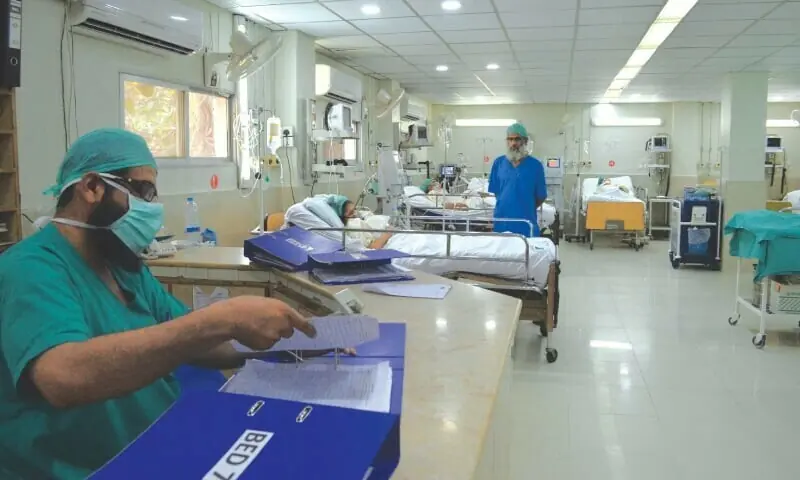
ISLAMABAD: The federal government has proposed Rs53.3 billion for health-related spending in the budget for fiscal year 2026-27, including allocations under the Public Sector Development Programme (PSDP), according to budget documents.
Of the Rs22 billion earmarked for the Ministry of National Health Services, Rs20.7 billion is to be financed through domestic resources, while Rs1.3 billion is expected through foreign assistance. The PSDP provides an overall allocation of Rs24.3 billion for the health and nutrition sector.
The proposed allocation is higher than the previous fiscal year, when the health sector was initially assigned Rs16.5 billion and later revised downward to Rs14 billion. Budget documents show that health accounts for 2.2 per cent of the total Rs187.2 billion social sector development allocation for FY2026-27.
Major projects included in allocation
Among the notable schemes listed in the budget is a Rs1.5 billion allocation for the National Institute of Heart Diseases (NIHD) in Rawalpindi for cardiovascular research and disease prevention. Another Rs1 billion has been proposed for the expansion and upgradation of the Armed Forces Institute of Cardiology (AFIC) and NIHD to strengthen specialised cardiac care.
The budget also includes funding for the initial stage of a healthcare infrastructure project linked to the National University of Medical Sciences (Nums). The allocation is meant for the acquisition of land from the Capital Development Authority for a proposed medical city in Islamabad.
PMA raises concerns
The Pakistan Medical Association (PMA) criticised the proposed spending pattern, saying the budget gives preference to infrastructure while underfunding core public health functions. In a statement, PMA Secretary General Dr Abdul Ghafoor Shoro said the country was facing a worsening health security situation amid inflation and what he described as misplaced fiscal priorities. “PMA notes with grave concern that while the federal government’s newly announced Rs53.3 billion allocation for the Ministry of National Health Services for the 2026–27 fiscal year continues to favour visible infrastructure projects, it critically underfunds the essential mechanisms needed to fight a silent, nationwide maternal and child nutrition crisis.
Dr Shoro said the situation for ordinary citizens remained severe and argued that structural neglect had pushed the healthcare system toward systemic failure.
“The reality on the ground remains catastrophic for the average citizen, validating the medical fraternity’s long-standing warning that Pakistan’s healthcare infrastructure is entering a state of systemic collapse due to structural neglect,” he said.
He said the One Health Workforce Development programme had been allocated Rs99.9 million, which he called inadequate in view of threats including mpox, measles, dengue and polio. He added that the Common Management Unit for TB, HIV/AIDS and malaria had been assigned Rs500 million despite Pakistan carrying a heavy tuberculosis burden and facing an expanding hepatitis C epidemic affecting an estimated 10 million people. He also said the Drug Control Section had been allocated Rs144 million.
“Furthermore, ongoing federal health schemes carry throw-forward liabilities exceeding Rs121 billion, legally tying the hands of future policymakers and locking public capital into brick-and-mortar projects for years to come. We are witnessing a double-pronged tragedy. On one hand, inflation is stripping families of the ability to afford basic milk, meat and vegetables and on the other the federal government is spending 70 percent of its healthcare resources on brick-and-mortar operations and specialised tertiary care, virtually abandoning prevention, disease surveillance and nutrition defence,” he added.
0 Comments
No comments yet. Be the first to join the discussion!


