June 12, 2026
SC lifts austerity measures, restores normal court operations from June 15
Supreme Court withdraws March 10 austerity steps, ending reduced court schedules and POL limits from June 15, amid eased petroleum supply disruptions. NJPMC allows district courts to return to a six-day week; FCCP shifts to a five-day schedule nationwide.
June 12, 2026

Notification issued with approval of CJP Justice Afridi following easing disruptions amid Iran–US-linked energy crisis
NJPMC restores six-day working week for district judiciary, asks high courts to maintain resource and energy-saving measures
FCCP revises timings, shifts to five-day working week nationwide
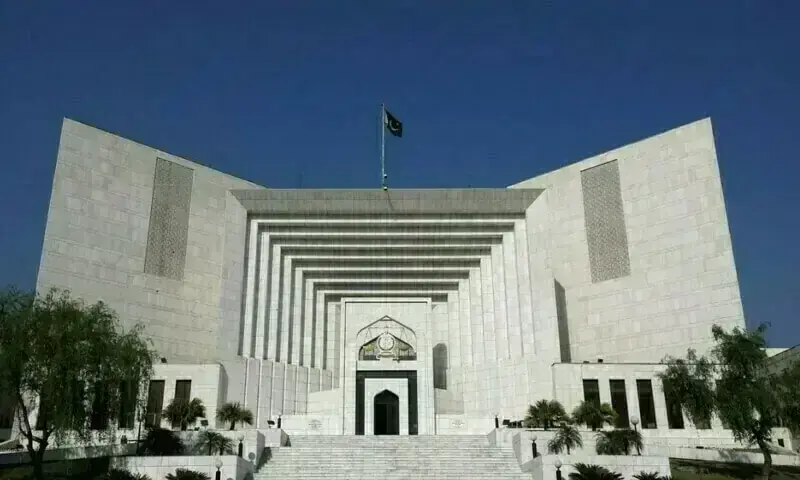
ISLAMABAD: The Supreme Court on Friday announced the withdrawal of austerity measures imposed on March 10, 2026, following an improved situation linked to disruptions in petroleum supplies amid the ongoing Iran–US conflict.
According to an SC notification issued with the approval of Chief Justice of Pakistan Justice Yahya Afridi, the March 10, 2026 notification has been withdrawn and all austerity measures introduced under it will be lifted.
“Accordingly, all austerity measures adopted in the said notification shall cease to have effect from June 15, 2026,” the notification added.
On March 10, the apex court had announced a series of austerity steps, including a four-day working week for courts and a 50 per cent reduction in the monthly ceiling of Petroleum, Oil and Lubricants (POL) allocated to judges and entitled officers.
The government had announced unprecedented austerity measures on March 9 in the wake of the Middle East conflict to address a global energy crisis triggered by disruptions, including the closure of the Strait of Hormuz. Following the government’s decision, several institutions, including the Supreme Court, the National Assembly and the Senate, had implemented similar measures.
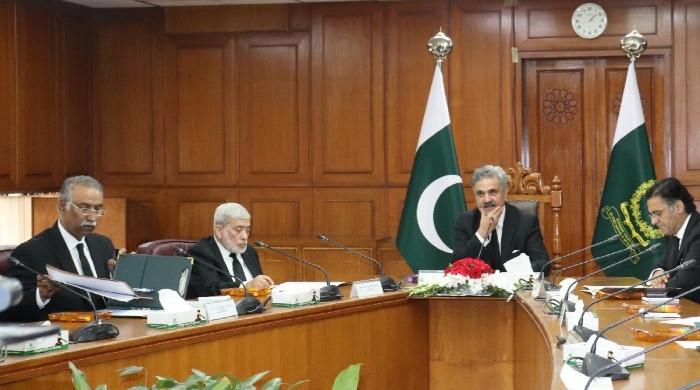
A day earlier, the 60th meeting of the National Judicial Policy Making Committee (NJPMC), chaired by the Chief Justice, reviewed proposals from the Peshawar High Court (PHC) and the Lahore High Court (LHC) regarding the restoration of a six-day working week for the district judiciary.
The committee noted that the earlier policy had been introduced under the Judicial Austerity and Energy Conservation Strategy approved in its 58th meeting to ensure prudent resource use and energy conservation.
During the meeting, the NJPMC appreciated the federal government’s support and, taking into account the improved situation conveyed by the Ministry of Law, decided that the district judiciary may revert to a six-day working week as per the pre-austerity schedule.
However, the committee stressed that high courts should continue implementing effective resource management and energy-saving measures to ensure the smooth and uninterrupted administration of justice.
FCCP Revises Its Court And Office Timings At Principal Seat And All Benches
Separately, the Federal Constitutional Court of Pakistan (FCCP) has revised its court and office timings at its Principal Seat and all benches across the country, effective from June 15, 2026.
According to a notification issued with the approval of the Chief Justice, the FCCP will observe a five-day working week from Monday to Friday at its registries and benches in Islamabad, Lahore, Karachi, Peshawar and Quetta.
Under the revised schedule, court proceedings from Monday to Thursday will be held from 9:00 a.m. to 11:00 a.m., followed by a half-hour break until 11:30 a.m., after which proceedings will continue till 1:00 p.m.
On Fridays, hearings will be conducted from 9:00 a.m. to 11:30 a.m. without a break.
Office timings at all registries and benches will remain from 8:30 a.m. to 4:30 p.m., Monday through Friday, with a one-hour break from 1:00 p.m. to 2:00 p.m. on Fridays for lunch and Juma prayers.
The notification further states that, except in urgent matters, no case or application will be received within one hour of closing time.
The revised schedule aims to enhance efficiency and ensure the smooth administration of constitutional justice across all registries and benches of the Federal Constitutional Court of Pakistan.
0 Comments
No comments yet. Be the first to join the discussion!