June 6, 2026
Trump says US making 'great success' with Iran
Donald Trump says the US has “great success” with Iran, adding Tehran will not get a nuclear weapon and the nuclear program is largely finished. Iran and Gulf states dispute the latest developments.

-- 'They are in no position to have a nuclear weapon,' says US president
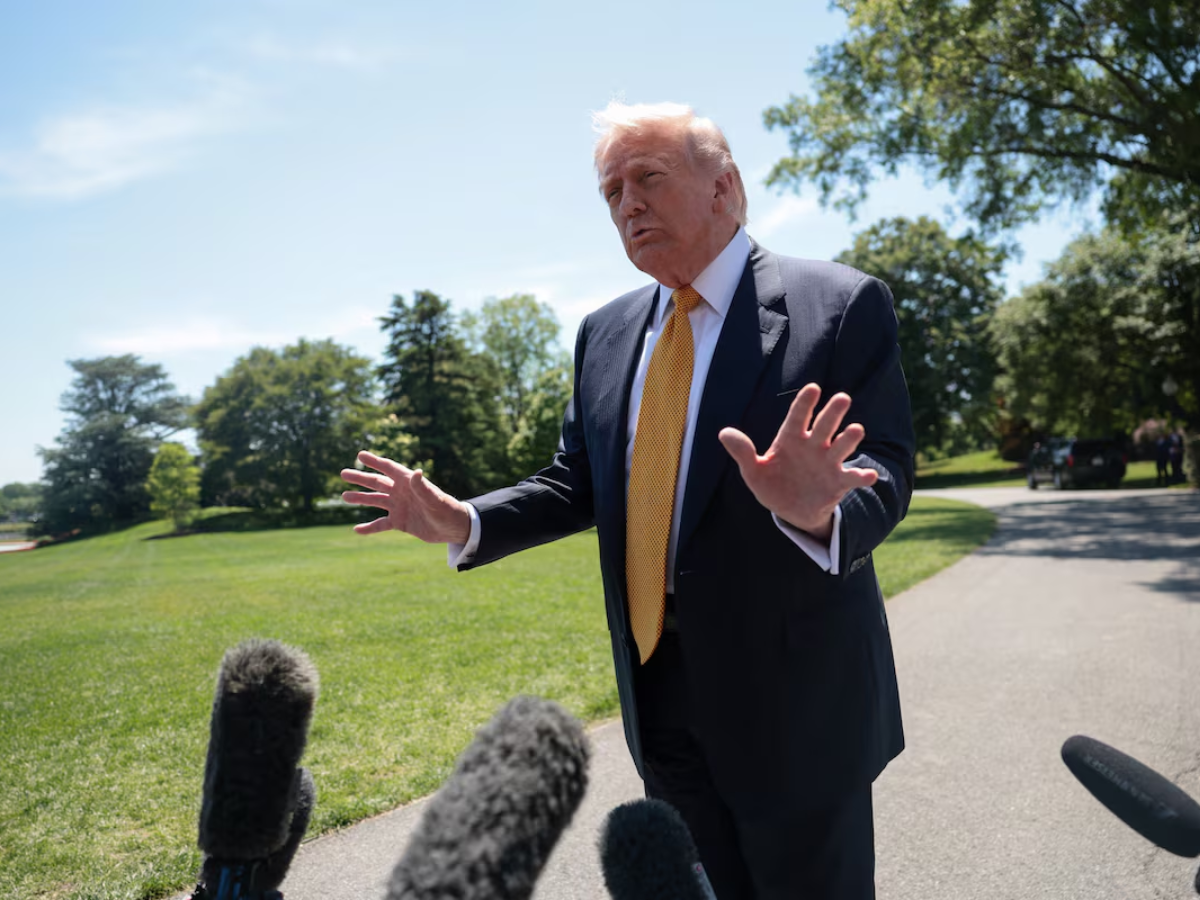
WASHINGTON: United States President Donald Trump said on Friday that his administration was making significant progress in its dealings with Iran.
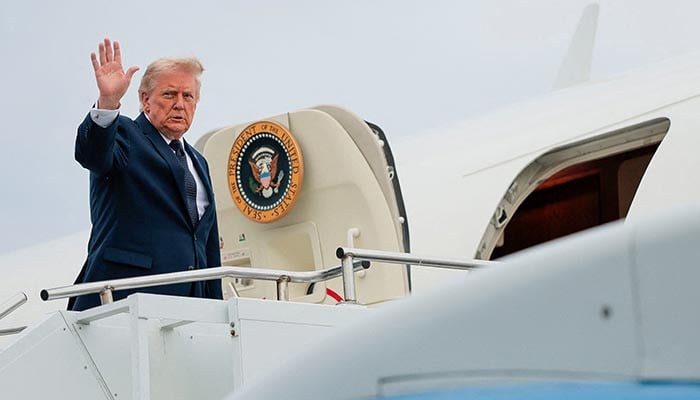
"We are having great success with Iran," Trump told reporters aboard Air Force One en route to Wisconsin.
Trump reiterated that Tehran would not be allowed to obtain a nuclear weapon.
"They're not going to have a nuclear weapon. They are in no position to have a nuclear weapon," he said.
Separately, after landing in Wisconsin, Trump told reporters that the situation with Iran "seems to be going quite well".
Asked when the last time he had discussions, Trump did not reply.
Later, at a gathering with farmers, Trump said the US had "largely finished" Iran's nuclear programme.
"This was going to be a very capable country that was going to have a massive nuclear presence, and we weren't going to let that happen, nobody wanted that to happen, and we've largely finished that," he said. "One way or the other, it's finished. It's either finished with a piece of paper or finished a more difficult way."
Trump said the US was "going to come out of Iran very quickly".
"And it's going to be very strong, one way or the other, whether it's a piece of paper or the very tough way," he added.
Iran says IAEA politicising oversight of Tehran's nuclear programme
Iran's Deputy Foreign Minister Kazem Gharibabadi said that the UN nuclear watchdog should avoid turning technical reports into "tools of political pressure" if it wanted to contribute to a diplomatic solution.
He said that the loss of the agency's oversight at some facilities resulted from the attacks rather than a lack of cooperation by Iran, adding that the International Atomic Energy Agency was using the consequences of US and Israeli strikes on Iranian nuclear sites to create "ambiguity" about Tehran's nuclear programme.
Bahrain condemns Iranian attacks on its territory, as well as on Kuwait
Bahrain's Foreign Ministry on Saturday condemned Iranian attacks on the Bahraini and the Kuwaiti territories, calling them "a flagrant violation of the sovereignty of the two countries" and a "threat to the security and stability" of the Gulf region.
The missiles were "successfully" intercepted, the ministry said in a statement, according to the Bahrain News Agency.
It also accused Iran of violating the UN Security Council Resolution 2817 (2026), which condemned Iranian attacks and any attempts to close the Strait of Hormuz or disrupt international maritime navigation.
Manama also urged Tehran to immediately halt the "unjustified" attacks, fully reopen the Strait of Hormuz without restrictions, disclose the locations of naval mines, and facilitate the safe departure of over 20,000 stranded sailors from the region.
The ministry said Bahrain's patience “does not signify weakness,” stressing that the defence of its sovereignty is a red line, and pledged to take all legitimate measures to safeguard its security.
Iran hits US bases in Kuwait, Bahrain in retaliation for drone attacks in latest Gulf flare-up
Iran's Islamic Revolutionary Guard Corps (IRGC) said it struck "enemy bases" in Kuwait and Bahrain after US drones attacked sites on Iranian territory, Tasnim News reported on Saturday.
The IRGC's Aerospace Force targeted the Ali al-Salem air base in Kuwait and key US Navy Fifth Fleet facilities in Bahrain with ballistic missiles, according to the semi-official news agency.
The strikes came in response to American drone attacks on a telecommunications tower on Qeshm Island and a tower in Sirik, said the IRGC.
It warned that further aggression would prompt a response beyond limited strikes, including the complete closure of the Strait of Hormuz to oil and gas shipments, rattling global energy markets and raising fears of prolonged economic damage.
Read: Iran says $24b assets row stalls talks
US forces struck Iranian coastal radar sites after shooting down drones launched by Iran toward the Strait of Hormuz, the US military said, in the latest escalation complicating efforts to end the war between the two countries.
The US military believed the four Iranian drones were targeting regional maritime traffic, a US official told Reuters. US Central Command said on X that the US then struck Iran's surveillance sites in Goruk and Qeshm Island, which are both on the Strait of Hormuz.
Kuwaiti air defences were intercepting missile and drone attacks of undisclosed origin, state media reported, while in Bahrain, sirens sounded and residents were urged to seek shelter.
Iran said it had hit US bases in both countries with ballistic missiles, but the US military said six missiles were intercepted and a seventh did not reach its target.
The US and Iran have been engaged in largely indirect negotiations to secure an interim deal to halt the three-month-old war that would leave issues, including Iran's nuclear programme to further negotiations.
Read more: Iran declares support for Hezbollah with wider peace deal in doubt
But amid periodic skirmishes, a deal has remained elusive.
As part of any agreement, Tehran wants access to billions of dollars in oil revenue, waivers on sanctions on crude exports, the lifting of a US blockade on its ports and leverage over the strait. Iran has effectively blocked the strait, where about a fifth of the world's oil transited before the war.
US President Donald Trump is facing mounting domestic political pressure due to rising gas prices to bring the unpopular war to an end. He told NBC that while most of Iran's drone and missile manufacturing facilities had been destroyed, the Iranians still have access to about a fifth of their missiles.
"They have some missiles, they have some drones. I would say percentage-wise, maybe 21%-22% of their missiles. It's a lot of missiles, but it's not what it was when we first attacked," Trump told NBC News' "Meet the Press" program, according to excerpts released by the network on Friday.
When asked why Iran’s leaders — if as desperate as he has portrayed them — were not more inclined to strike a deal, Trump said:
"Because they are strong. They're proud. There are things they never thought they'd be doing that they're going to have to do, they've got no choice, and it takes a little while."
After the US and Israel launched the war against Iran on February 28, Tehran fired missiles and drones against Gulf states hosting US bases and largely stopped shipping through the Strait of Hormuz.
The conflict has driven up oil prices and disrupted supply chains for other products. The UN World Food Programme said on Friday that it was pushing millions of people closer to hunger due to rising fuel and transport costs.
Mohsen Rezaei, an adviser to Iran's supreme leader, told CNN on Friday that a peace deal hinged on the Trump administration unfreezing $24 billion in Iranian assets, and warned that the US would "enter into a dark corridor" if it resumed attacks.
0 Comments
No comments yet. Be the first to join the discussion!