

June 11, 2026
Claim about Lahore, Faisalabad to be among world's hottest cities by 2050 misleading
A fact-check says claims that Lahore and Faisalabad will rank among the world’s hottest cities by 2050 are misleading. The study cited in such posts measured projected heat-related deaths and vulnerability, not future temperature rankings.

June 11, 2026
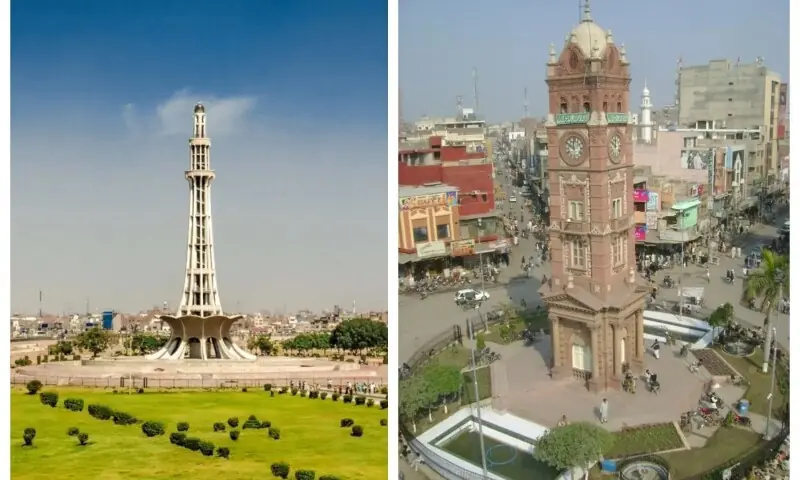
ISLAMABAD: Claims circulating on social media and repeated by some local news outlets that Lahore and Faisalabad are on track to rank among the world’s hottest cities by 2050 are misleading, according to a fact-check originally published by iVerify Pakistan and carried by Dawn.
The claim began spreading from June 7, 2026, after several digital media pages on X, Facebook and Instagram posted that the two Punjab cities were projected to become among the hottest globally by mid-century. The posts were accompanied by AI-generated images showing extreme temperatures. Similar reports also appeared on the websites of Bol News, Dunya, The Nation and ProPakistani, it added.
According to the fact-check, those posts and reports referred to a climate study but did not identify it by name, publication date or provide a link. A keyword search did not find any credible domestic or international reporting confirming the claim, nor did it locate any peer-reviewed study or institutional report ranking Lahore and Faisalabad among the world’s hottest cities by temperature.
Heatwave advisory and study confusion
On June 7, the Pakistan Meteorological Department issued an advisory warning that a heatwave would affect the country until June 12, with temperatures expected to rise by as much as seven degrees Celsius above normal. The PMD said a high-pressure system was likely to develop and remain in the upper atmosphere. It also warned that night-time temperatures were expected to increase and that isolated dust storms could occur in southern Punjab and Sindh. The department advised children, women and senior citizens to take extra precautions during the heatwave.
The fact-check said search results instead pointed to a March 2026 study by the University of Chicago’s Climate Impact Lab. That report, previously covered by Dawn and other outlets including Earth.Org and Time Magazine, projected that Pakistan could see a net increase of 51 temperature-related deaths per 100,000 people by 2050.
It also identified Faisalabad, Lahore, Multan, Gujranwala, Peshawar, Hyderabad, Rawalpindi and Islamabad among the world’s most heat-vulnerable cities. However, the fact-check stressed that the study ranked cities by projected heat-related mortality risk rather than by future temperatures.
What the study actually measured
The executive summary of the Climate Impact Lab report stated that heat-related mortality cannot be assessed simply by identifying the hottest places. It examined projected changes in net temperature-related death rates in 2050 compared with the 2001-2010 average. The fact-check said the study’s assessment was shaped by factors including income levels, the ability to adapt independently through access to cooling and behavioural adjustments, and existing heat exposure.
In the ranking for cities in low- and lower-middle-income countries, Faisalabad was projected to see 81 additional deaths per 100,000 people annually by 2050. Multan ranked second at 72, Gujranwala third at 67, and Lahore fourth at 55. Of the more than 100,000 additional heat-related deaths projected annually across 301 cities worldwide, about one in three would occur in Pakistani cities.
At the national level, Pakistan was ranked fourth globally with a projected net increase of 51 deaths per 100,000 people, behind Niger, Burkina Faso and Djibouti.
Fatima Yamin, a climate change and disaster management expert, told iVerify Pakistan that the Climate Impact Lab study was about projected heat-related deaths and that countries were ranked on that basis. “Pakistan has always been, for the last few years, in the top five countries in the world most vulnerable to climate change and based on that they have made this scale.”
She also reiterated, according to the fact-check, that the study explained how heat-related deaths were expected to rise in Pakistan.
The fact-check concluded that while Pakistani cities are among those facing some of the sharpest projected increases in heat-related mortality by 2050, this should not be confused with a ranking of the world’s hottest cities by temperature.
0 Comments
No comments yet. Be the first to join the discussion!


