

June 9, 2026
Neglect leaves historic Hindu cremation site in decay
A pre-Partition Hindu cremation ground in Khanewal, locally known as Shamshan Ghat, has fallen into disrepair after decades of neglect. Residents and local historians say the site remains an important historical and religious landmark.

June 9, 2026
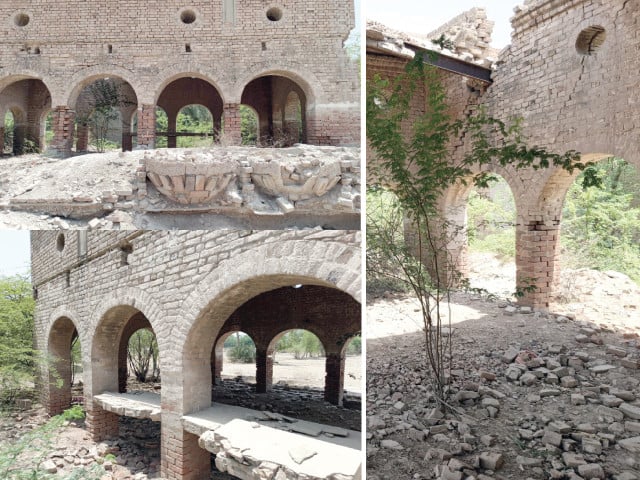
KHANEWAL: A centuries-old Hindu cremation ground on Jahanian Road in Khanewal, once used for the funeral rites of the area’s Hindu community, has fallen into neglect and is now in a deteriorating condition.
Known locally as Shamshan Ghat, the site dates back to the pre-Partition period, when Khanewal had sizeable Hindu, Sikh and Muslim populations. Before 1947, it served as an important religious facility where Hindu families in the city performed last rites according to their traditions.
Historical accounts indicate that Khanewal expanded rapidly during British rule, particularly after the railway junction was established in the early 20th century, leading to the growth of communities from different faiths. Along with places of worship, burial grounds and cremation sites were also set up around the growing town. After Partition, most Hindu and Sikh residents migrated to India, and many religious and cultural sites they left behind gradually lost their original function, including the cremation ground.
According to historical sources and local accounts, the site once spread over about 63 kanals and seven marlas, though its precise limits can no longer be confirmed without official land and revenue records. Local historian Professor Ramesh said available historical traditions and records show that Khanewal’s Hindu community had used the cremation ground for generations before Partition.
He said that religious activity at the site largely stopped after 1947, but added that the land still holds historical and religious importance.
Residents say portions of the site still contain traces of old cremation platforms, long-standing trees and remains of historic structures. Local traditions also maintain that the area was used for the cremation of both adults and infants.
Elderly resident Moinuddin Qureshi said the cremation ground remained well known among local people even many years after Partition. He said Hindu families from across the city once brought their dead there for last rites and that the place is still referred to as Shamshan Ghat.
Local historians say nearby places, including Ram Chautra and Lachhman Chautra, were also important centres for Hindu funeral rituals in the area. Former teacher Ehsanul Haq said the cremation ground had been established in line with Hindu religious practice, under which such places are generally located in open spaces away from dense residential neighbourhoods.
Hakim Karamat Ali said the property was likely overseen before Partition by a local Hindu Panchayat or the Sanatan Dharam Sabha, and later became part of the abandoned properties left behind after migration. Historical maps and records, including Survey of India documents from 1910 to 1945, British-era railway town plans, municipal archives and Evacuee Trust Property records, have helped identify the site’s original location and significance.
The site is now under the supervision of Hindu religious authorities, but local residents say parts of the structure are close to collapse after decades of neglect. "If the government takes timely action, this valuable heritage can still be preserved for future generations," local resident Mohsin Arain said urging action for its protection.
0 Comments
No comments yet. Be the first to join the discussion!


