June 8, 2026
Weather extremes sour outlook for mango growers
Pakistan’s mango season has opened under pressure as heat swings, erratic rain, hailstorms, pests and flood after-effects damage orchards across Punjab. Growers and researchers say later varieties have been hit hardest.

June 8, 2026
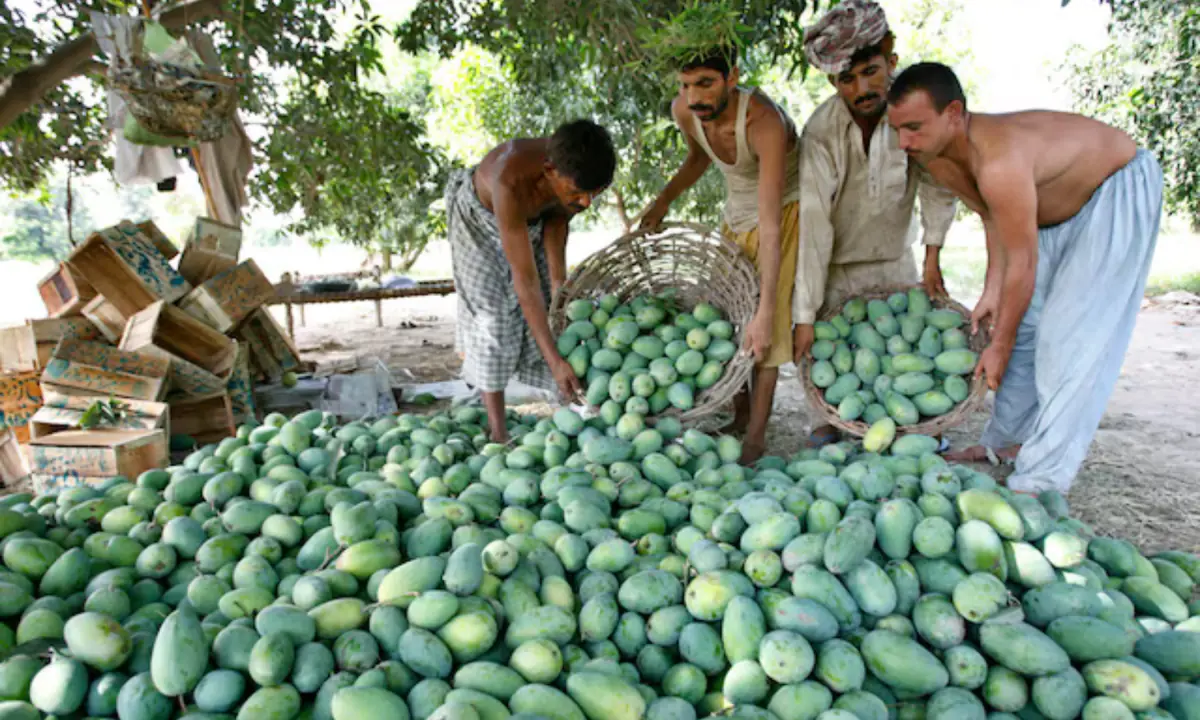
MULTAN: Pakistan’s mango season has begun amid growing concern among growers and traders as weather volatility, pest attacks and lingering damage from last year’s flooding weigh on orchards across Punjab’s main producing belt.
Roadside vendors and market sellers have started receiving the early Sindhri crop, while later varieties from Punjab including Langra, Dusehri, Chaunsa and Anwar Ratol are expected to follow. But this year’s crop has arrived under strain after erratic temperatures, unseasonal rain and hailstorms during the crucial flowering and fruit-setting period affected orchards in southern, central and northern Punjab, including Multan, Dera Ghazi Khan, Bahawalpur, Sahiwal, Faisalabad, Sargodha and Lahore divisions.
Growers say losses are substantial in some areas. Rabia Sultan, who grows several mango varieties on nearly 100 acres in Kot Addu, said around 40 per cent of the crop in her area had been damaged. Major Tariq Khan, director of Lutfabad Farms and director operations of the Progressive Mango Growers Group, said output had been declining in recent years and described the current season as particularly troublesome. He said damage was visible across South Punjab’s mango-growing belt, adding that Dusehri and Langra had escaped some of the worst effects because they matured earlier, while Chaunsa and Ratol, which ripen later, were hit more heavily.
Flowering disrupted by unusual temperatures
February departed sharply from normal winter conditions in Punjab. Pakistan Meteorological Department data showed the province’s monthly mean temperature was 17.1°C, around 2.5°C above average, while rainfall was 88.8 per cent below normal. Daytime temperatures ranged from 24°C to 28°C and nighttime lows from 11°C to 14°C.
Hafiz Asif Ur Rehman, principal scientist at the Mango Research Institute in Multan, said orchard surveys in February showed trees heavily laden with boor, or blossom, creating early optimism for a strong 2026 crop.
That outlook changed in March when daytime temperatures rose to between 32°C and 37°C, roughly 2°C to 6°C above normal, while nighttime temperatures stayed between 14°C and 18°C. Riaz Hussain, a scientific officer at the institute, said the heat during flowering reduced pollen viability, disrupted pollinator activity and conducive flowering, and also led to some premature fruit drop.
By mid-March, daytime temperatures dropped back into the 20s, creating an unstable pattern after the earlier heat. Hussain said this led to uneven flowering, multiple waves of fruit setting, delayed maturity and increased bator, or malformed clusters, that favour pest infestation, especially mango hoppers and fungal disease.
Although April and May were closer to seasonal norms, repeated hail, rain and windstorms continued to affect orchards. Waqas Bucha, who manages 30 acres of orchards on Bosan Road in Multan, said sudden temperature bursts can scar mango skin, making fruit less suitable for export and lowering its market value.
Flood after-effects and pest pressure
Damage began even before this year’s weather fluctuations, as prolonged waterlogging after the 2025 floods had already harmed feeder roots, reduced soil aeration and weakened trees, especially in low-lying orchards near riverine areas of the Chenab. The Pakistan Society for Horticultural Science said more than 41,000 acres, or over half of the orchards in Multan, Shujabad and Jalalpur, remained submerged last year.
Small and medium-aged orchards in their most productive years were hit particularly hard, with trees either uprooted or severely stressed. In several areas, delayed vegetative growth remained tender for longer periods, increasing vulnerability to insect attacks and nutrient imbalance because saturated soils do not absorb fertiliser in the usual way.
These conditions have also fuelled persistent pest problems. Bucha said he had already sprayed pesticides twice, while Tariq Khan said he had sprayed three times but infestations remained. He added that in some areas farmers had carried out up to eight sprays and still failed to bring pests under control.
Exports delayed, long-term concerns deepen
The Ministry of Commerce extended the start of the export season to June 1, 2026, saying the decision followed stakeholder requests and climatic changes that delayed fruit maturity, particularly for Sindhri.
Over the last five years, Punjab has seen a broader shift in weather patterns, with longer summers reaching 40°C to 45°C and shorter, milder winters, reflecting an estimated 3°C increase in mean temperature. Rainfall has also become more erratic, with the 2022 monsoon bringing around 77 per cent above-normal rainfall and 2024 also recording above-normal monsoon activity.
Punjab Agriculture Department kharif estimates show that while cultivated area remained broadly stable at around 240,000 to 244,000 acres between 2019-20 and 2020-21, yield fell 6 per cent from 143.79 to 135.02 maunds per acre. Between 2021-22 and 2022-23, area stayed at 244,500 acres while yield dropped 4 per cent from 148 to 142 maunds. In 2023-24, yield rose to 173.5 maunds per acre with acreage unchanged, but in 2024-25 cultivated area jumped 55 per cent to 378,975 acres while yield fell 14.5 per cent to 148.4 maunds per acre.
Dr Azeem Sardar, an agricultural development specialist with The Urban Unit, said changing weather was one of the major reasons behind lower mango yield. Tariq Khan said his area had once been known for cotton, but farmers gradually abandoned that crop because of climate change, pests and falling yields, and he feared mango could face a similar future unless adaptation measures are adopted.
0 Comments
No comments yet. Be the first to join the discussion!