

June 8, 2026
ICU bed shortage strains public hospitals in KP
Peshawar’s public hospitals are facing a serious ICU bed shortage, with around 400 beds serving more than 40 million people in Khyber Pakhtunkhwa. Doctors say the shortfall is costing lives, while the provincial government says it plans to increase capacity.

June 8, 2026
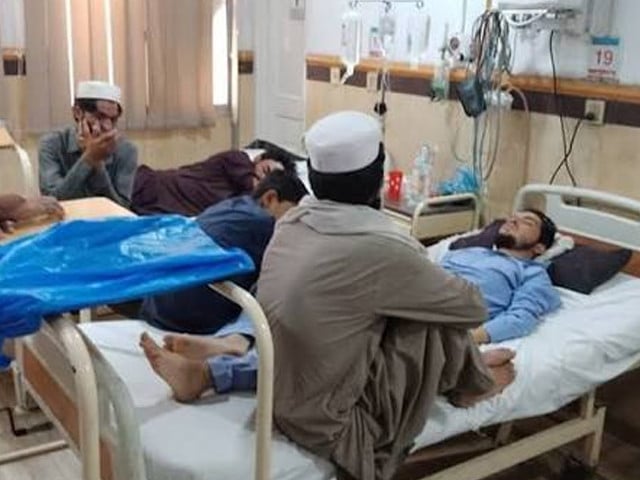
PESHAWAR: A severe shortage of intensive care unit beds in Khyber Pakhtunkhwa’s public hospitals is limiting access to critical treatment, with doctors and health officials acknowledging that existing capacity falls far short of the province’s needs.
The issue was brought into focus by the case of Muhammad Owais, who searched for an ICU bed for his critically ill mother at Khyber Teaching Hospital but was told none were available. He said he moved from one department to another in the hope of finding help, but his mother died before a bed could be arranged. Speaking about the incident, Owais questioned official claims about hospital facilities and accountability for his mother’s death.
A population of more than 40 million in the province is served by about 400 ICU beds in public hospitals, which amounts to fewer than one bed for every 100,000 people. Among the major facilities, Hayatabad Medical Complex has 49 ICU beds, Khyber Teaching Hospital 45, Lady Reading Hospital 34, Ayub Teaching Hospital in Abbottabad 32, Mardan Medical Complex 16, and Qazi Hussain Ahmad Medical Complex in Nowshera six.
Lady Reading Hospital is the province’s largest tertiary-care facility and an important referral centre for major emergencies and bomb blast victims, yet it has only 34 ICU beds.
Doctors call shortage a serious crisis
Pulmonologist Dr Ehtesham Khan described the situation as deeply concerning and said the current number of ICU beds was insufficient for a province of more than 40 million people. He said Khyber Pakhtunkhwa should have at least 1,000 ICU beds in light of healthcare demand and international standards. Dr Khan said the lack of ICU availability was costing lives among trauma patients, cardiac patients, children and others with life-threatening conditions who require urgent intensive care.
He also said the problem was not limited to physical infrastructure. Pakistan continues to face a shortage of trained critical care specialists even as intensive care medicine advances internationally. He said many intensivists choose to work abroad because of better incentives and working conditions, adding that setting up an ICU requires not only more beds but also trained staff and specialised resources, both of which are limited.
Dr Khan also urged the government to extend the Sehat Card programme to cover ICU treatment in private hospitals. He said daily ICU costs in private facilities often exceed Rs50,000, putting critical care beyond the reach of poor patients.
Facilities lacking in other departments too
Dr Saleem Yousafzai, spokesperson for the Provincial Doctors Association, said the shortage was not confined to intensive care units. He said Khyber Pakhtunkhwa has 11 teaching hospitals and 32 non-teaching government hospitals, but facilities are also lacking in radiology, pathology and several other departments. He recommended that each teaching hospital in the province should have at least 50 ICU beds, while district headquarters hospitals should maintain a minimum of 20.
Khyber Pakhtunkhwa Health Secretary Shahidullah Khan said the government and health department were fully aware of the shortage of ICU beds in public hospitals. He said improving healthcare services remained the government’s top priority and added that the provincial government planned to raise the health budget in the next fiscal year. The government also intends to double the number of ICU beds in public-sector hospitals.
0 Comments
No comments yet. Be the first to join the discussion!


