PM reaffirms export-led growth, promises public relief in budget
PM Shehbaz Sharif consults business leaders ahead of the June 10 budget, pledging public relief and export-led growth. He briefs tax, AI, court reforms, and trade upgrades under the IMF programme.

Premier Shehbaz says strong private sector partnership key to economic recovery
Holds detailed exchanges with businessmen on pace of economic growth, upcoming budget
Govt briefs business leaders on tax, AI and structural reforms as budget 2026–27 to be presented on June 10 amid IMF programme
Infrastructure upgrades planned to boost trade and logistics network
Business leaders seek lower taxes, cheaper energy, faster tax refunds
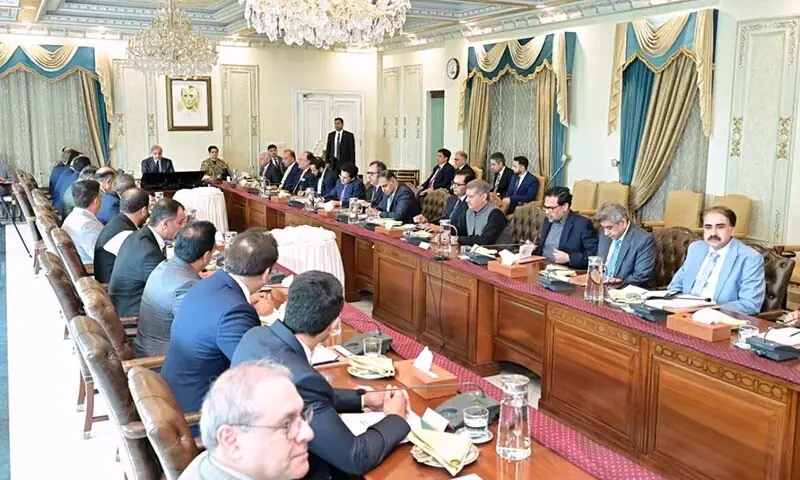
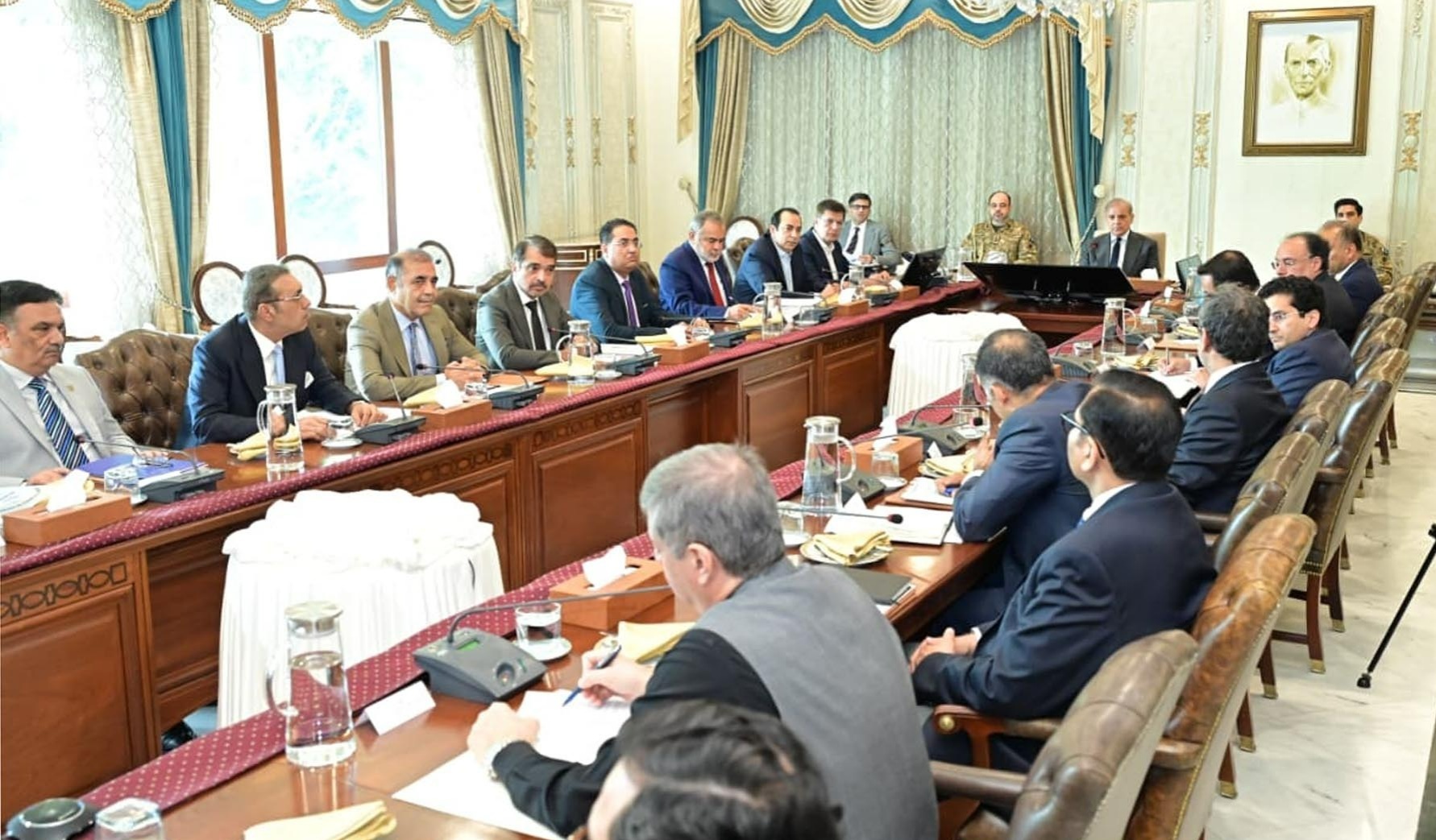
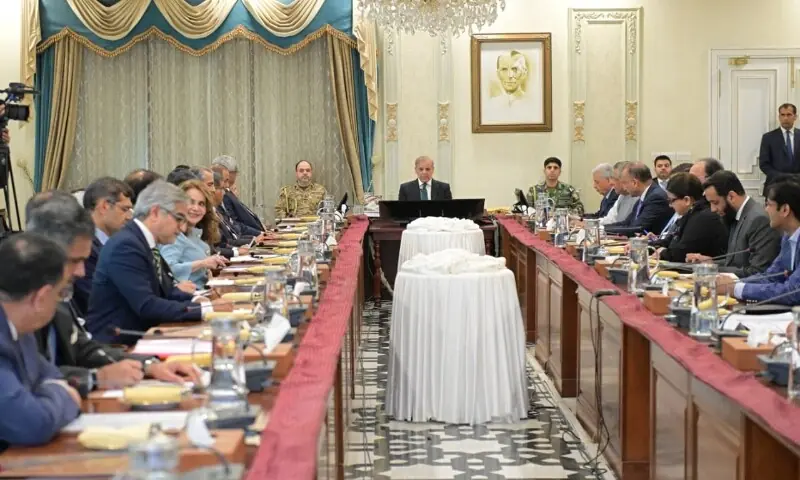
ISLAMABAD: Prime Minister Shehbaz Sharif on Wednesday assured leading business figures that the government’s upcoming budget would include public relief measures, reaffirming its commitment to an export-led growth strategy, which he described as the central pillar of economic policy amid efforts to balance recovery with fiscal discipline under a $7 billion International Monetary Fund (IMF) programme.
“Measures to provide relief to the public are being included in the budget,” the prime minister was quoted as saying in a statement issued after consultations with some of the country’s most prominent industrialists and business leaders ahead of the federal budget 2026–27.
“You are the ambassadors of Pakistan,” he told the delegation, expressing gratitude for the business community’s support during “difficult economic conditions”.
A delegation of leading industrialists and prominent businessmen met Prime Minister Muhammad Shehbaz Sharif in Islamabad on 3 June 2026. pic.twitter.com/bheYXJc1NM
— Prime Minister's Office (@PakPMO) June 3, 2026
PM Shehbaz Sharif said a strong partnership with the private sector was a “guarantee of economic growth” and stressed the “utmost importance” of consulting stakeholders in economic policymaking.
He reiterated that Pakistan was “on the path of export-led growth”, adding that it remained the core of the country’s economic policy.
The federal budget for FY2026–27, scheduled to be presented on June 10, comes at a sensitive juncture for the economy. While inflation has eased from record highs and foreign exchange reserves have stabilised following IMF support secured in 2024, businesses continue to raise concerns over high taxation, elevated energy costs and subdued investment activity.
The prime minister also held detailed exchanges with leading businessmen and industrialists on the pace of economic growth and the direction of upcoming budgetary measures.
“You are the ambassadors of Pakistan,” he again told the delegation, thanking them for their continued support during challenging economic conditions.
اسلام آباد: 3 جون، 2026.
وزیراعظم محمد شہباز شریف سے ملک کے معروف صنعتکاروں اور ممتاز کاروباری شخصیات کے وفد کی ملاقات ہوئی. یہ ملاقات ملک کی مجموعی معاشی ترقی کی رفتار تیز کرنے اور مالی سال 2026-2027 کے بجٹ کے حوالےسے کاروباری برادری سے مشاورت کے تناظر میں تھی.
وفد میں میاں… pic.twitter.com/bWso7avmqH— Prime Minister's Office (@PakPMO) June 3, 2026
According to the Prime Minister’s Office, the government also briefed participants on a series of ongoing reforms, including steps to accelerate resolution of tax disputes through strengthened tax tribunals, the establishment of special commercial courts, and efforts to bring parts of the informal economy into the tax net.
Officials further informed the meeting that a National AI Transformation Plan is being developed as part of broader efforts to modernise the economy, improve productivity and support emerging growth sectors.
The briefing also highlighted infrastructure initiatives aimed at strengthening trade and logistics, including upgrades to Karachi’s freight connectivity, progress on the M-13 motorway linking Kharian and Rawalpindi, and plans to modernise Pakistan Railways’ ML-1 and ML-2 networks to enhance cargo transportation across the country.
The visiting delegation included prominent industrialists and corporate leaders such as Nishat Group Chairman Mian Muhammad Mansha, Arif Habib Group Chairman Arif Habib, Lucky Cement CEO Muhammad Ali Tabba, Systems Limited CEO Asif Peer, Pakistan Business Council Chairperson Zeelaf Munir, Interloop Chairman Musadaq Zulqarnain, and Jazz CEO Aamir Ibrahim.
According to the PMO, the business leaders shared recommendations on the upcoming budget and broader economic policy, while expressing support for efforts to strengthen the economy and improve the investment climate.
Participants emphasised the need to translate recent macroeconomic stabilisation into sustained export-led growth through tax reforms, investment incentives and measures to enhance industrial competitiveness. They also called for broadening the tax base by bringing undocumented sectors into the formal economy while reducing the burden on compliant taxpayers and exporters.
Business leaders also appreciated the government’s recent reduction in electricity tariffs for industry, efforts to expedite tax refunds and steps to promote exports, according to the statement. They welcomed initiatives on digital payments, economic documentation and tax reforms aimed at improving the ease of doing business.
Pakistan has spent much of the past two years implementing economic reforms under IMF-supported programmes, including measures to broaden the tax base, reduce losses in the energy sector and attract investment.
The government maintains that these reforms have contributed to macroeconomic stabilisation, although businesses continue to press for lower taxes, cheaper energy and reduced production costs to enhance competitiveness, exports and overall growth.
Comments
No comments yet. Be the first to join the discussion!