

PM Shehbaz says economy stabilised, vows export-led growth and greater relief for business community
PM Shehbaz Sharif chaired business leaders’ talks, saying Pakistan’s economy is stabilised. He vowed export-led growth, promised budget incentives, ordered tax refunds by June 15, and kept export finance markup capped at 4.5% until June 2027.
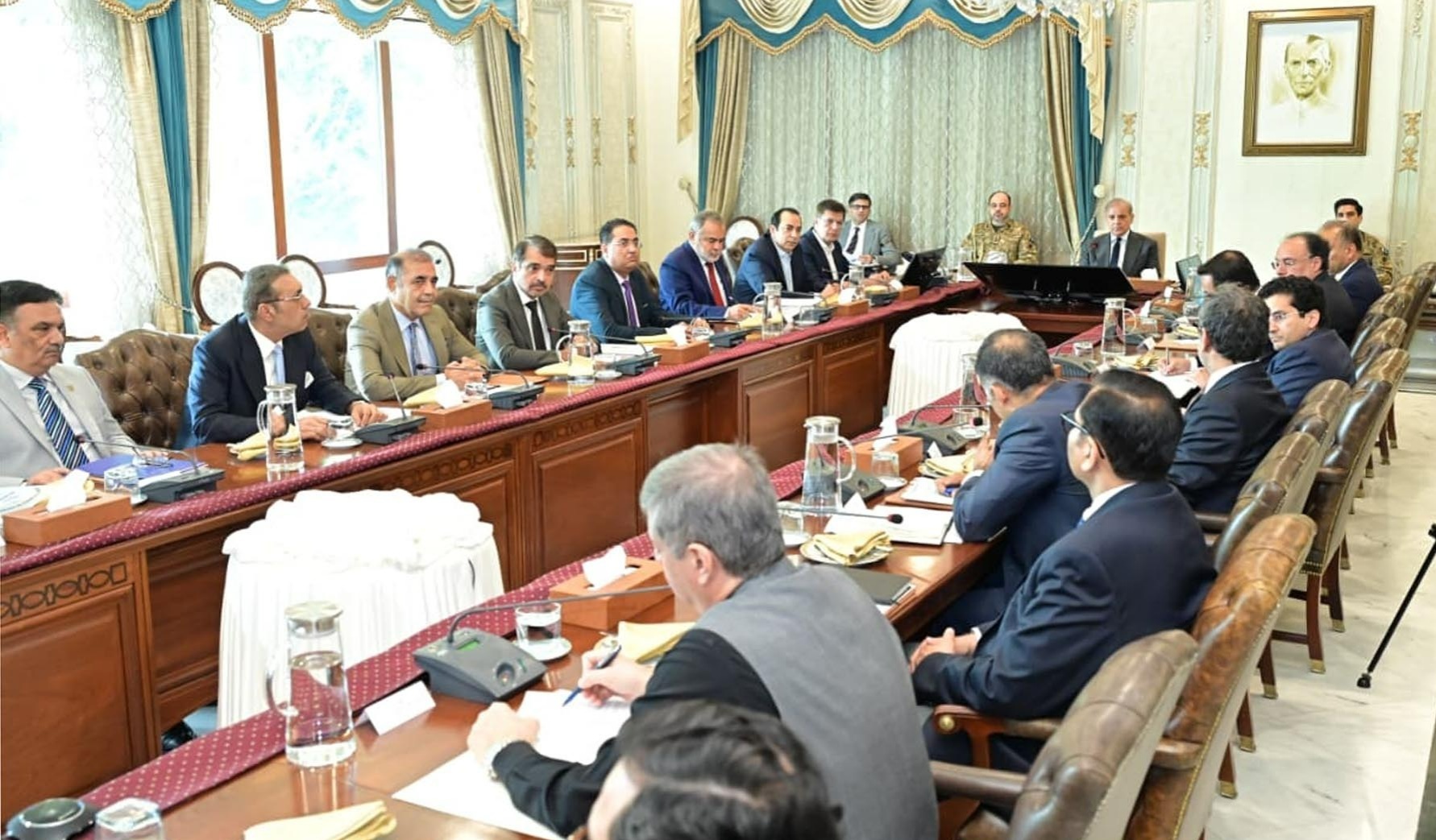
ISLAMABAD: Prime Minister Muhammad Shehbaz Sharif on Monday said that Pakistan's economy had achieved stability after a period of sustained and determined efforts by the government, adding that comprehensive measures were now being undertaken to accelerate economic growth and create new opportunities for investment, production and employment.
The prime minister expressed these views while chairing a high-level consultative meeting with a delegation comprising senior representatives of chambers of commerce and industry from across the country. The meeting focused on proposals for the upcoming federal budget and strategies aimed at strengthening Pakistan’s economic foundation.
Addressing the participants, Prime Minister Shehbaz Sharif emphasized that economic recovery had been made possible through prudent policymaking, fiscal discipline and collective national efforts. He said the government remained committed to ensuring that the benefits of economic stability translated into higher growth, increased industrial activity and improved living standards for the people.
He reiterated that export-led economic development remained the cornerstone of the government’s economic strategy.
“Our mission is export-based economic development, and through collective efforts we will successfully accomplish this mission,” the prime minister stated.
He informed the business leaders that the forthcoming federal budget would include additional incentives and measures designed to promote industrial development, encourage domestic production and strengthen Pakistan’s export sector.
The prime minister also directed the Federal Board of Revenue (FBR) to resolve all pending tax refund cases by June 15, stressing that timely refunds were essential for improving liquidity in the business sector and enhancing investor confidence.
The consultative session was attended by presidents and senior office-bearers of the Federation of Pakistan Chambers of Commerce and Industry (FPCCI) as well as representatives from the chambers of Karachi, Lahore, Rawalpindi, Islamabad, Khyber Pakhtunkhwa, Quetta, Gujrat, Gujranwala and Sialkot.
Federal ministers including Rana Tanvir Hussain, Muhammad Aurangzeb, Attaullah Tarar, Ali Pervez Malik and Owais Ahmed Khan Leghari attended the meeting. Minister of State for Finance Bilal Azhar Kiani, State Bank Governor Jameel Ahmad, FBR Chairman Rashid Mahmood Langrial and other senior government officials were also present.
During the meeting, members of the business community presented a range of recommendations regarding taxation, industrial growth, export promotion and broader economic reforms. The prime minister assured participants that their proposals would be given due consideration during the finalisation of the federal budget.
In a major relief measure for exporters, Prime Minister Shehbaz Sharif announced that despite the recent increase in the policy interest rate, the markup under the Export Finance Scheme would remain capped at 4.5 percent until June 2027. He appreciated the banking sector for extending support to exporters and facilitating the country's export-oriented industries.
To address concerns of the business community, the prime minister also directed authorities to relocate the central office of Pakistan Revenue Automation Limited (PRAL) to Karachi, stating that the move would improve accessibility and operational efficiency for businesses.
Responding to longstanding demands from overseas Pakistanis and local traders, he ordered the establishment of a passport office in Gujrat, a city known for its large overseas Pakistani population and vibrant business community.
Highlighting the government's commitment to entrepreneurship and economic inclusion, Prime Minister Shehbaz Sharif underscored the importance of reforms and facilitation measures aimed at strengthening the Small and Medium Enterprises (SME) sector. He described SMEs as a critical engine of economic growth, employment generation and innovation.
The prime minister also encouraged Pakistani investors to enter into joint ventures for the local manufacturing of electric vehicles (EVs), noting that the transition to clean and sustainable transportation offered significant economic and environmental benefits. He said promoting domestic production of EVs would help reduce import dependence, create skilled jobs and support Pakistan’s industrial modernization.
Members of the business delegation lauded the efforts of Prime Minister Shehbaz Sharif, Deputy Prime Minister and Foreign Minister Senator Mohammad Ishaq Dar, and Chief of Army Staff and Chief of Defence Forces Field Marshal Syed Asim Munir for their role in promoting peace and stability during recent tensions in the Gulf region.
The business leaders expressed confidence that regional peace would contribute positively to economic growth, trade and investment prospects in Pakistan. They assured the government of their full support in initiatives aimed at economic development, industrial expansion and job creation.
The delegation also welcomed the launch of the “Wazir-e-Azam Apna Ghar Programme”, describing it as a significant initiative that would enable low-income and middle-class families to access affordable housing through easy financing schemes.
Business representatives appreciated the government’s reforms in the Export Development Fund Board, the successful privatisation of Pakistan International Airlines (PIA), and ongoing efforts to digitise the Federal Board of Revenue and introduce e-invoicing systems.
They further pledged their cooperation in supporting the government’s drive to document the economy and bring informal business activities into the formal sector through digitisation, transparency and structural reforms.
The meeting concluded with a shared commitment between the government and the business community to work closely together to achieve sustainable economic growth, increase exports, attract investment, and create employment opportunities across the country.
Comments
No comments yet. Be the first to join the discussion!


