FM Araghchi says Iran acted in self-defence after retaliatory strikes in Kuwait and Bahrain
Iran’s FM Abbas Araghchi says Tehran will continue self-defence strikes on sites used for attacks on Iran, after the IRGC fired missiles on Kuwait and Bahrain. The UN warns of escalation as Trump signals possible talks.

IRGC claims missile strikes on US-linked sites in Kuwait and Bahrain
Iran cites retaliation for attacks on tanker in Strait of Hormuz and Qeshm facility
Tehran warns of ‘decisive response’ to further hostile acts
Trump says Iran agreed not to pursue nuclear weapons deal
US president claims military success, signals possible future talks
Qatar, Saudi Arabia condemn strikes, China urges ceasefire adherence, warning against renewed war
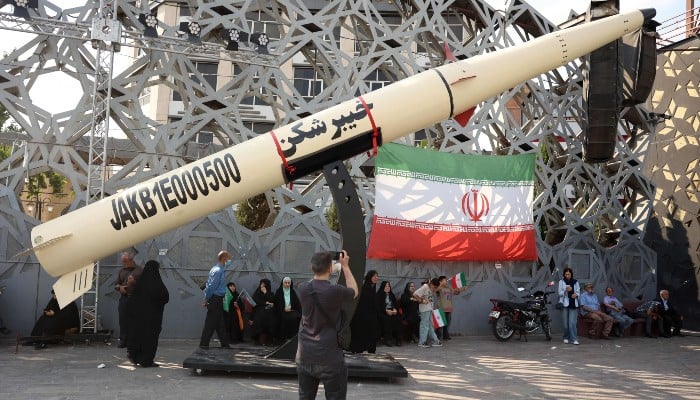
TEHRAN/RIYADH/WASHINGTON: Iranian Foreign Minister Abbas Araghchi on Wednesday said Tehran would continue military strikes against sites allegedly used in attacks on Iran, after the Islamic Revolutionary Guard Corps (IRGC) fired missiles on Kuwait and Bahrain in retaliation for US attacks on an Iranian oil tanker in the Strait of Hormuz and a telecommunications tower on Qeshm Island, Iranian state media reported.
“Our armed forces are conducting self-defence strikes on sites the US is permitted to use to attack civilian shipping and violate the ceasefire,” Araghchi said in a post on X.
Our Armed Forces are conducting self-defense strikes on sites the U.S. is permitted to use to attack civilian shipping and violate the ceasefire.
Any hostile act will be met with an immediate, decisive response. What sanctions and war failed to achieve won't be won with more war pic.twitter.com/CwjULJ6PeI— Seyed Abbas Araghchi (@araghchi) June 3, 2026
“Any hostile act will be met with an immediate, decisive response. What sanctions and war failed to achieve won’t be won with more war,” he added.
The Iranian foreign ministry also condemned what it described as US attacks on an Iranian oil tanker in the Strait of Hormuz and a telecommunications tower on Qeshm Island, saying the actions violated a ceasefire understanding and international law.
It said Kuwait and Bahrain bore “direct and clear responsibility” for the incidents, alleging their territory and facilities were being used to support US military operations against Iran. Tehran said it reserved the right to self-defence and would use all available means to respond, including targeting the source of any future attacks.
Statement by the Ministry of Foreign Affairs of the Islamic Republic of Iran Condemning the Aggressive Attacks by the United States Against an Iranian Oil Tanker and a Telecommunications Tower in Qeshm
(Unofficial Translation)
3 June 2026
The Ministry of Foreign Affairs of the… pic.twitter.com/1AqBltnonE— Iran in India (@Iran_in_India) June 3, 2026
The remarks came in response to comments by US Secretary of State Marco Rubio, who praised the cooperation of Washington’s regional allies, including the United Arab Emirates and Kuwait.
“I think our allies in the region have been very cooperative — some, obviously, very aggressively cooperative, like the UAE, for example. Kuwait’s been fantastic in this part,” Rubio said.
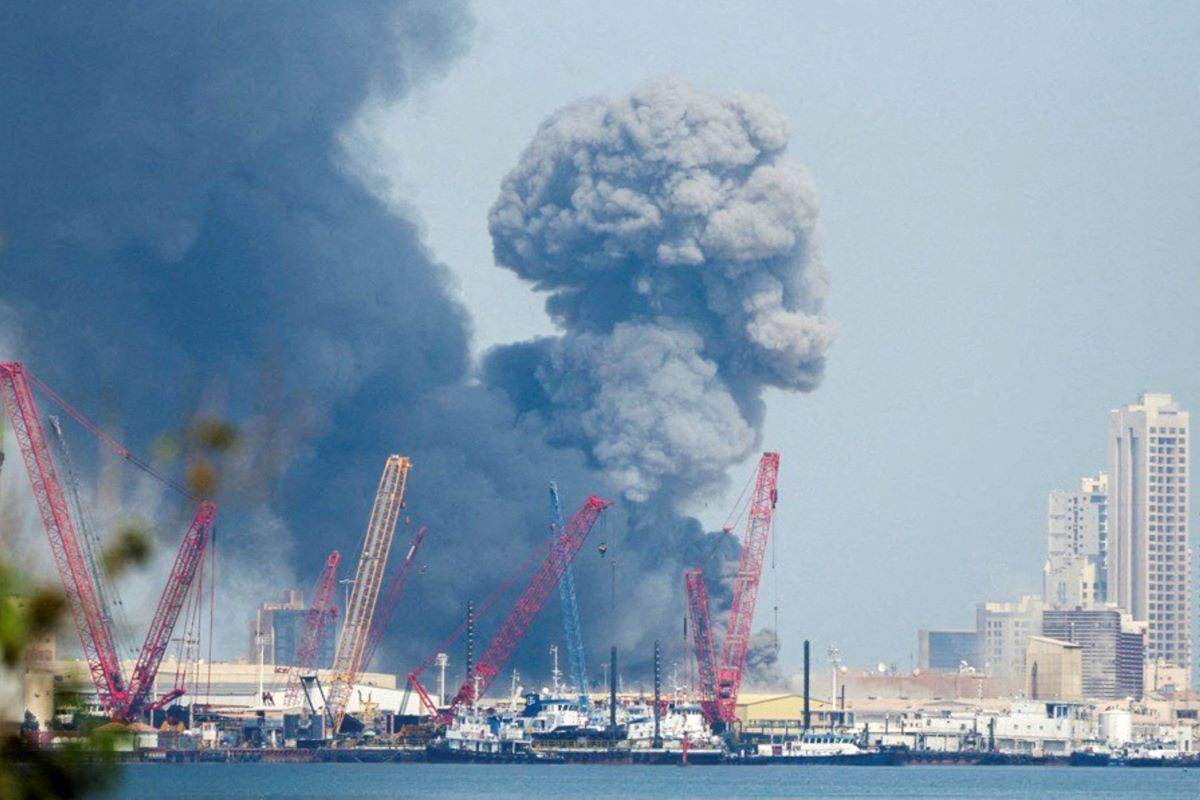
The IRGC said it had targeted a US base in Kuwait and the US Fifth Fleet headquarters in Bahrain in retaliation for the alleged US overnight attack on its communications tower on southern Qeshm Island.
UN Secretary-General alarmed
Meanwhile, UN Secretary-General Antonio Guterres expressed alarm over the reported exchange of fire between the United States and Iran, as well as reports that Iran had targeted Kuwait and Bahrain, his spokesperson said.
“The secretary general is alarmed by the reported exchange of fire overnight between the United States and the Islamic Republic of Iran, and also by reports that the Islamic Republic of Iran has targeted Kuwait and Bahrain,” spokesperson Stéphane Dujarric said.
He said Guterres was “deeply troubled” by reports of civilian casualties and called on all sides to exercise maximum restraint to avoid further escalation that could undermine diplomatic efforts.
The UN chief also condemned all attacks on civilian infrastructure, noting that international humanitarian law strictly prohibits targeting civilian objects. He reaffirmed support for mediation efforts, including those led by Pakistan, and urged all parties to engage constructively in diplomacy.
‘Probably meet’ Iranian Supreme Leader at some point if conditions allowed: Trump
Separately, US President Donald Trump said Iran had agreed not to acquire a nuclear weapon and suggested he would “probably meet” Iranian Supreme Leader Mojtaba Khamenei at some point if conditions allowed.
“They’ve already agreed they’re not going to have a nuclear weapon,” Trump said in an interview with the New York Post’s “Pod Force One”.
Trump also rejected suggestions that Iran held leverage in the conflict, saying it lacked naval, air and military strength and claiming its economy was under severe strain.
On the Strait of Hormuz blockade, he said he did not expect it to last long and described US actions as a “very great success” militarily, while expressing confidence that a resolution would come “fairly quickly”.
He also said he had not yet met Khamenei but would be open to doing so, depending on how negotiations developed.
“I’d like to meet him. We probably will meet at some point, depending on how it all works out,” he said.
Trump further said he remained “perturbed” by Israeli Prime Minister Benjamin Netanyahu’s stance on continued fighting with Lebanon, referencing a reported phone call in which he urged restraint.
He added that despite occasional disagreements, he maintained a strong working relationship with Netanyahu, describing both leaders as “wartime” figures.
Trump reiterated his long-standing position that Iran must not acquire a nuclear weapon, saying his concerns dated back to his first term and his decision to withdraw from the 2015 nuclear agreement.
He dismissed criticism of his shifting positions, saying decisions changed as facts on the ground evolved, and insisted his actions were driven by national security considerations.
He also defended his handling of the Iran conflict as necessary, saying delays would have risked Tehran acquiring nuclear capability.
“I couldn’t… this is too important,” he said, describing the strikes as a deliberate “operation” aimed at preventing nuclear escalation.
Tehran warns will not allow US to ‘overreach’ in negotiations or ceasefire process
Iran on Wednesday warned that it would not allow the United States to “overreach” in negotiations or the ceasefire process, as tensions escalated across the Gulf region following a series of missile and drone strikes on Kuwait and Bahrain and growing international concern over renewed warfare.
A senior Iranian official, Mohsen Rezaee, a member of the Expediency Discernment Council and former IRGC commander, said Tehran’s response to any aggression would be “a barrage of missiles and drones.”
Senior Iranian official Mohsen Rezaee:
Neither in negotiations nor in the ceasefire process will we allow America to overreach.
The response to every shot and aggression will be a barrage of missiles and drones. History will not turn back, and the aggressor will be swiftly… pic.twitter.com/gsSsZ1Gdbh— Clash Report (@clashreport) June 3, 2026
“The response to every shot and aggression will be a barrage of missiles and drones. History will not turn back, and the aggressor will be swiftly punished,” he said in a post on X.
“Neither in negotiations nor in the ceasefire process will we allow America to overreach,” he added.
Meanwhile, Kuwait International Airport was hit by Iranian drones on Wednesday, causing injuries and “significant” damage, according to a Defence Ministry statement that prompted authorities to suspend and divert flights “until further notice.”
بيان رقم (63)
صرّح المتحدث الرسمي لوزارة الدفاع، العقيد الركن سعود عبدالعزيز العطوان، بأن عدداً من الطائرات المسيّرة المعادية استهدفت اليوم مبنى الركاب (T1) بمطار الكويت الدولي نتيجة العدوان الإيراني الآثم، ما أسفر عن أضرار مادية جسيمة في المبنى وإصابة عدد من الأشخاص، حيث تلقوا… pic.twitter.com/HMSd0TX7sG— KUWAIT ARMY - الجيش الكويتي (@KuwaitArmyGHQ) June 3, 2026
Defence Ministry spokesman Saud Abdulaziz Al-Otaibi said “hostile” drones struck the airport’s main passenger terminal (T1), damaging the structure and injuring several people who were taken for medical treatment.
He added that Kuwaiti armed forces were “monitoring the situation in coordination with relevant authorities and remain on full alert to respond to any developments.”
The General Directorate of Civil Aviation separately activated an emergency plan following the incident.
Earlier, Iran’s Islamic Revolutionary Guard Corps (IRGC) said attacks targeting US bases in Kuwait were carried out in response to an American strike on Qeshm Island in southern Iran.
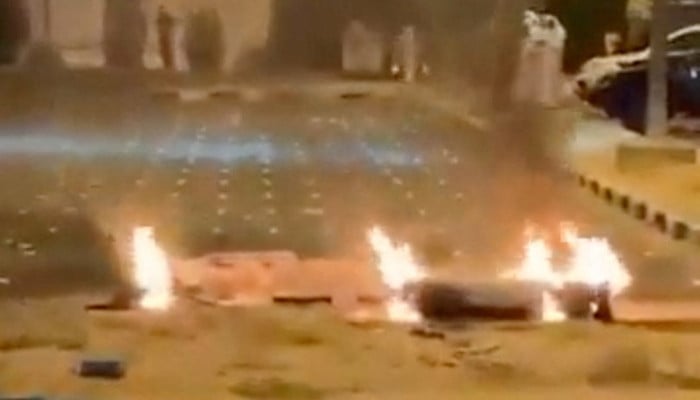
Kuwait later said one person was killed in the Iranian attacks, while the Foreign Ministry said several others were injured and key infrastructure, including diplomatic missions, was damaged. It said the strikes targeted “civilian and vital” facilities, including Kuwait International Airport.
The ministry strongly condemned what it called Iran’s “brutal and continued attacks” using ballistic missiles and drones, and said Kuwait “reserves the right” to respond in accordance with international law.
Kuwait’s health ministry said 63 people were injured in the drone and missile strikes, including cases requiring major emergency surgery. It confirmed that seven “major emergency” operations were performed.
Following the attack, Kuwait International Airport temporarily suspended operations but later resumed flights from Terminal 4 after technical assessments and safety checks were completed, according to the official Kuna news agency.
Qatar also condemned the Iranian strikes on civilian targets in Kuwait and Bahrain, saying they violated international law and the 1949 Geneva Conventions. Doha expressed solidarity with Kuwait and Bahrain and called for de-escalation.
The Ministry of Foreign Affairs affirms the State of #Qatar's complete rejection of targeting civilian targets and vital facilities, and stresses the need to spare the region the consequences of unjustified attacks and to work towards de-escalation in order to restore regional…
— Qatar News Agency (@QNAEnglish) June 3, 2026
Saudi Arabia said Foreign Minister Prince Faisal bin Farhan received a phone call from Qatari Prime Minister and Foreign Minister Sheikh Mohammed bin Abdulrahman Al Thani, during which both sides discussed the latest regional developments following the attacks.
China, meanwhile, urged all parties to honour the ceasefire and avoid “renewed warfare,” warning that escalation served no one’s interest. Foreign Ministry spokesperson Mao Ning said Beijing was “deeply concerned” and called for disputes to be resolved through political and diplomatic means.
Iranian state media also reported that the country’s armed forces vowed to defend the Islamic Republic “to the death” on the anniversary of the death of Ayatollah Ruhollah Khomeini, accusing the US and Israel of aggression and calling for national unity.
The statement said the armed forces would not retreat in the face of threats and described recent attacks as exposing the “true face” of their adversaries.
Separately, Iranian officials signalled a mixed stance on diplomacy. Deputy parliament speaker Mojtaba Nikzad said Iran would negotiate if necessary but did not trust US promises, insisting that “we do not trust any promises from the Americans.”
Hardline lawmaker Esmail Kowsari also called for a stronger military response against the United States, saying Washington only responds to “the language of force,” according to Iran’s Tasnim News Agency.
China reiterated that “renewed warfare serves no one’s interest,” urging restraint and a return to diplomatic engagement amid rapidly escalating regional tensions.
Bahrain said it intercepted, destroyed 3 Iranian missiles, several drones
Bahrain's Defence Force said on Wednesday it intercepted and destroyed three Iranian missiles and a number of drones that were targeting “civilian” sites in the kingdom.
IRGC: US Fifth Fleet in Bahrain has been hit with Aerospace Force’s missiles, drones
Follow https://t.co/B3zXG73Jym pic.twitter.com/EF02j5jXN1— Press TV 🔻 (@PressTV) June 3, 2026
In a statement, the Defence Force accused Iran of continuing its "hostile approach" through missile and drone attacks aimed at “civilian” facilities in Bahrain.
The statement urged residents to exercise caution and avoid approaching or touching any suspicious objects or debris resulting from the attacks.
It also called on the public to immediately report any such findings to authorities.
No immediate information was provided regarding casualties or damage resulting from the attacks.
Hostilities flare in US-Israel war on Iran, oil jumps with talks at a stalemate
Gulf hostilities flared again on Wednesday, with an Iranian missile attack damaging Kuwait's airport and the US military carrying out strikes near the Strait of Hormuz, as diplomacy between Washington and Tehran showed little progress.
The latest flare-up, which sent oil prices up more than 1%, comes with the conflict stalemated in a shaky ceasefire and the Strait of Hormuz largely closed, more than three months after initial US and Israeli strikes on Iran.
Flights at Kuwait International Airport were suspended and diverted elsewhere until further notice, the state news agency said, citing aviation authorities, after an Iranian drone and missile attack on its T1 building.
The attack caused injuries and severely damaged some airport facilities, it added, but gave no further details.
Earlier, the US Central Command said two Iranian missiles shot at Kuwait fell short or broke up in flight, while several ballistic missiles aimed at regional targets failed and three missiles heading for Bahrain were intercepted.
🚫 CLAIM: Iran’s Islamic Revolutionary Guard Corps claims they struck U.S. 5th Fleet headquarters in Bahrain and a U.S. air base in the region with missiles and drones today. FALSE.
✅ TRUTH: All Iranian attacks on American forces failed. U.S. forces remain vigilant and ready to… pic.twitter.com/KuYzaENUqI— U.S. Central Command (@CENTCOM) June 2, 2026
Since the conflict began, Iran has repeatedly attacked targets in the Gulf region home to US military bases.
Central Command said the US military also downed Iranian drones targeting civilian ships in regional waters and US forces in Kuwait, and carried out strikes on Qeshm Island near the Strait of Hormuz following attempted attacks by Iran.
Comments
No comments yet. Be the first to join the discussion!