June 28, 2026
Iran warns Hormuz route changes will inflame tensions as truce teeters
Iran’s FM Abbas Araghchi warns any bid to bypass US-linked Strait of Hormuz arrangements will worsen tensions. As US strikes hit Iran and Iran targets US bases in Bahrain and Kuwait, both sides trade ceasefire violations.
Staff Report and Agencies
June 28, 2026

FM Araghchi rejects any bid to bypass Pakistan-brokered Strait of Hormuz arrangements
Tehran, Washington trade fresh strikes, accuse each other of violating fragile ceasefire
IRGC claims attacks on US bases in Bahrain, Kuwait after American strikes inside Iran
Tehran urges strict adherence to Islamabad MoU, calls for regional security framework
Bahrain seeks urgent UN Security Council session as Gulf tensions escalate
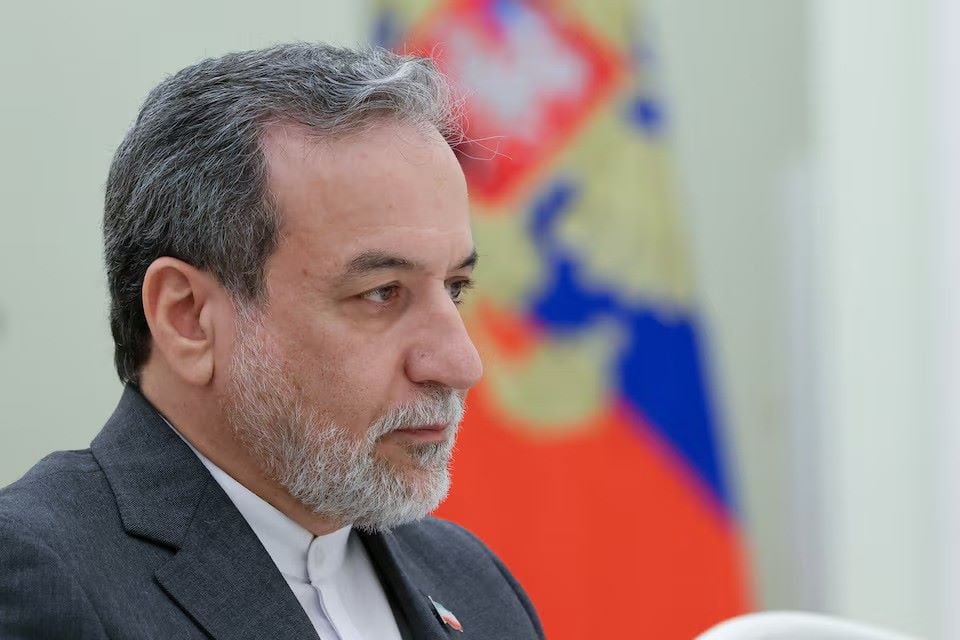
TEHRAN/WASHINGTON: Iran's Foreign Minister Abbas Araghchi warned on Sunday that any attempt to bypass the Strait of Hormuz routes agreed with the United States would "increase tensions" in the Middle East, as Tehran and Washington exchanged fresh attacks and traded accusations of violating a fragile Pakistan-brokered ceasefire.
Araghchi's warning came after the US military said it carried out fresh strikes early Sunday on multiple targets inside Iran in response to a new attack on a ship transiting the Strait of Hormuz.
Tehran retaliated by launching strikes against US military bases in Bahrain and Kuwait, further exposing the fragility of the Pakistan-mediated interim peace agreement aimed at ending the war launched by the United States and Israel on February 28, which disrupted shipping through the strategic waterway and rattled global energy markets.
"Any attempt to adopt new or separate arrangements compared to what is underway by the Islamic Republic of Iran will only lead to more complicated situations and delays in the reopening of the Strait of Hormuz, and will increase the tensions, as we witnessed in the past two nights," Araghchi told a press conference in Baghdad.
During his visit to the Iraqi capital, the Iranian foreign minister also called for the establishment of a regional security framework involving Gulf countries, as Tehran and Washington continued to accuse each other of breaching the truce intended to end the Middle East conflict.
BREAKING: Iranian Foreign Minister Abbas Araghchi met his Iraqi counterpart Fuad Hussein in the Iraqi capital, with the two now holding a joint press conference in Baghdad. pic.twitter.com/OmAfw8zG4S
— Al Jazeera Breaking News (@AJENews) June 28, 2026
Araghchi urged all parties to "adhere to the memorandum of understanding and not to allow this MoU to deviate from its course."
He added that "we should reach a new framework that includes all countries in the region and without the presence or interference of any country from outside the region."
His remarks echoed a proposal made earlier this week by Iranian President Masoud Pezeshkian, who called for a new "regional security structure" among countries in the region.
Araghchi also welcomed Iraq's proposal to convene a meeting involving the Gulf states, Iran and Iraq, which has been drawn into the regional conflict since its outset.
Following the US strikes, Iran's Islamic Revolutionary Guard Corps (IRGC) said on Sunday it had stepped up measures to control maritime traffic through the Strait of Hormuz and warned that vessels violating Tehran's designated route would face stricter action than before.
The only passage authorised by Tehran runs through a corridor along Iran's coastline. However, vessel-tracking platforms showed that ships continued using a non-Iranian-approved route through the strategic waterway on Friday.
A day earlier, the IRGC said Oman and the International Maritime Organisation (IMO) had announced the new shipping corridor without consulting Tehran and warned commercial vessels against using it.
The memorandum of understanding (MoU), brokered by Pakistan between the United States and Iran on June 18, was aimed at bringing a lasting end to the war.
Under the Islamabad MoU, Iran agreed to provide "safe passage of commercial vessels with no charge, for 60 days only, from the Persian Gulf to the Sea of Oman, and vice versa" through the Strait of Hormuz.
The agreement also stipulated that both the United States and Iran, along with their respective allies, would "not initiate any war or any military operation against each other and refrain from the threat or use of force against each other."
Tit-for-tat strikes
Earlier on Sunday, Iran said it had carried out a third consecutive day of retaliatory strikes after the United States launched multiple attacks on Iranian territory, with both sides accusing each other of violating the fragile ceasefire.
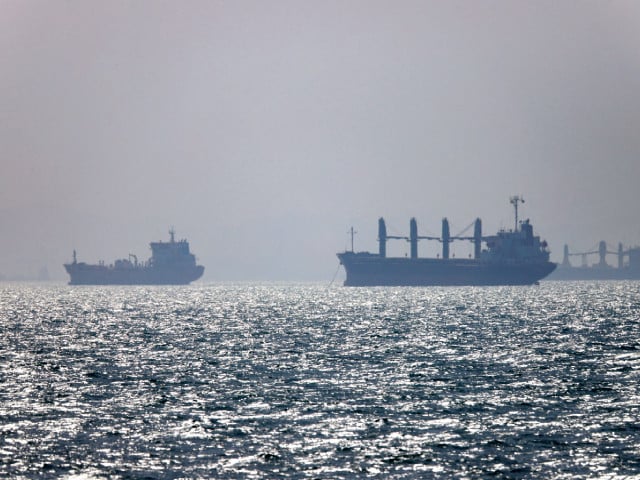
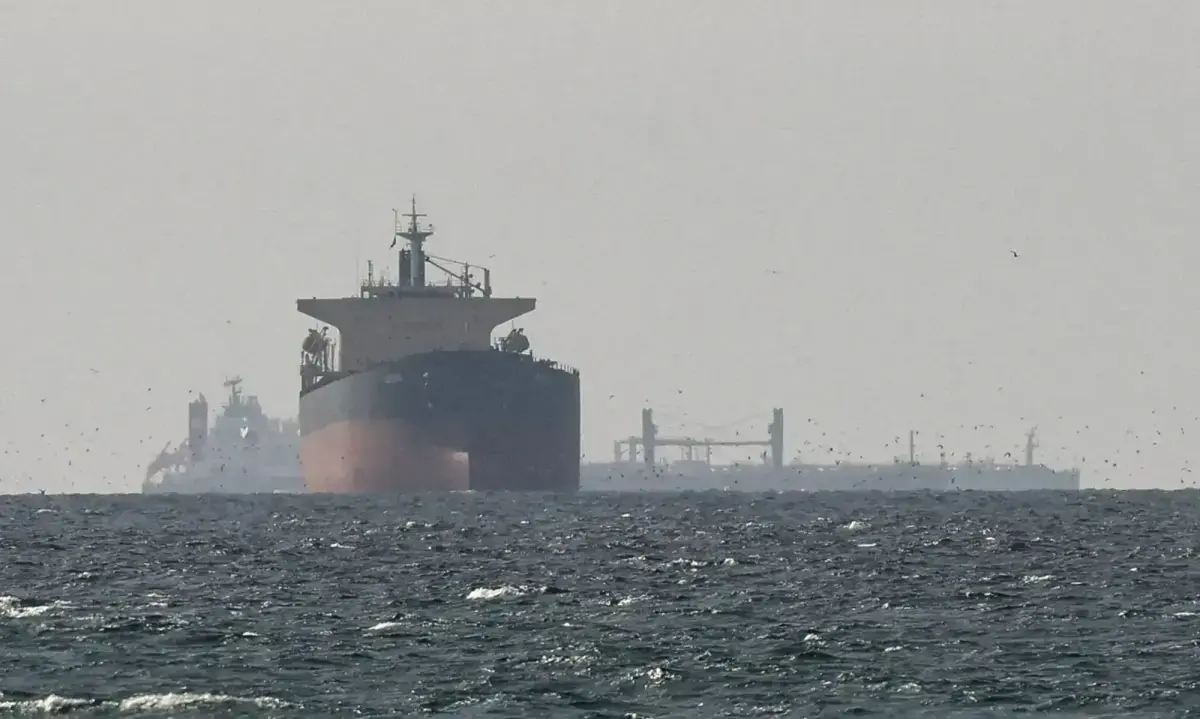
US Central Command (Centcom) said the American strikes were in response to an Iranian drone attack on the Panama-flagged oil tanker Kiku, carrying around two million barrels of crude oil.
U.S. Navy and Air Force fighter jets conducted strikes tonight on 10 Iranian military targets at multiple locations in and near the Strait of Hormuz for Iran's drone attack on M/T Kiku. pic.twitter.com/Z0TLZRqmF6
— U.S. Central Command (@CENTCOM) June 28, 2026
The US military said its operation targeted "surveillance infrastructure, communication systems, air defence sites, drone storage facilities, and minelayer capabilities."
Iranian state broadcaster IRIB reported explosions in Sirik, southern Iran, but gave no further details.
The IRGC said: "America's blind shots at Sirik will not resolve our dominance over the Strait of Hormuz. But our shots at violators will remind the rest of the vessels of the clear passage route."
In a statement carried by state-run Press TV, the IRGC said the US strikes had violated the ceasefire and "will result in the complete halt of all diplomatic processes."
Public Relations of Iran's Islamic Revolution Guard Corps (IRGC) announces that IRGC Navy and Aerospace Forces, during a joint missile and drone operation, launched ballistic missiles and drones at 8 key infrastructures of the US military in the region. pic.twitter.com/Y6ZeAmKtDY
— Press TV 🔻 (@PressTV) June 28, 2026
The IRGC Navy also warned that American bases in the region "will experience hell in the coming days."
Commander of Iran's Islamic Revolution Guard Corps (IRGC) Navy says America's blind shots at Sirik will not resolve our dominance over the Strait of Hormuz. But our shots at violators will remind the rest of the vessels of the clear passage route. pic.twitter.com/wR8lhyk06T
— Press TV 🔻 (@PressTV) June 28, 2026
The IRGC further claimed it had carried out retaliatory strikes against US military installations in Kuwait and Bahrain.
In a statement, it said the attacks "destroyed eight important US military facilities at the Ali al-Salem base in Kuwait and at the Fifth Fleet naval base in Port Salman in Bahrain."
"Any enemy aggression, whatever the pretext, even against insignificant targets ... will have a crushing response," the IRGC warned.
Air raid sirens sounded twice across Bahrain on Sunday, according to the Gulf nation's interior ministry.
The siren has been sounded ..Citizens and residents are urged to remain calm and head to the nearest safe place .
— Ministry of Interior (@moi_bahrain) June 28, 2026
A US official, confirming the attacks on American facilities, told Reuters there were no reported US casualties or major damage to US military sites in the Middle East, although the situation remained fluid.
Hours later, alarms sounded for a second time in Bahrain after authorities said an Iranian attack damaged a residential building in Muharraq province. No casualties were reported.
Bahrain subsequently urged the United Nations Security Council to convene an emergency session to hold Iran accountable, while the Kuwaiti army said it intercepted two ballistic missiles without any damage or casualties.
#Kuwait's Armed Forces detected and intercepted two hostile ballistic missiles.
The interception caused no material damage or human casualties.https://t.co/FBDErjC71N#KUNA pic.twitter.com/DFTgkIRYpt— Kuwait News Agency - English Feed (@kuna_en) June 28, 2026
Washington had carried out similar strikes on Friday, saying they were in response to an earlier Iranian attack on another vessel, the Ever Lovely.
US President Donald Trump early Sunday warned that Iran would "no longer exist" if the United States was "forced" to resume the war.
The warning came after US forces said they had struck multiple Iranian targets on Saturday in another retaliatory operation following attacks on shipping in the Strait of Hormuz.
"United States aircraft just struck Iranian missile and drone storage locations, and coastal radar sites, for violating the Cease Fire Agreement, AGAIN!" Trump wrote on Truth Social.
— Rapid Response 47 (@RapidResponse47) June 27, 2026
"There may come a point when we are no longer able to be reasonable, and will be forced to militarily complete the job that we very successfully started. If that happens, the Islamic Republic of Iran will no longer exist!" Trump added.
0 Comments
No comments yet. Be the first to join the discussion!