Europe’s synthetic jet fuel sector sees renewed momentum amid Iran war
Europe’s e-SAF industry is drawing fresh attention as the Iran war sharpens concerns over fuel dependence. Industry representatives say the conflict has improved the business case for synthetic aviation fuel, despite stalled investment and limited production capacity.

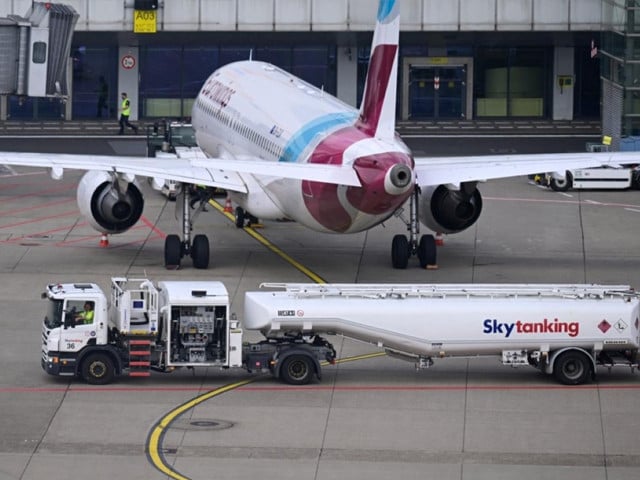
FRANKFURT: A small plant near Frankfurt that converts hydrogen and carbon dioxide into aviation fuel has become a focal point for a European industry hoping the Iran war will strengthen support for alternatives to oil-based jet fuel.
The facility operated by German company Ineratec uses hydrogen and CO2 supplied from a nearby chlorine factory and a biogas plant, which are fed into a reactor and then processed into jet fuel. Industry figures say interest in this type of synthetic fuel, known as electro-Sustainable Aviation Fuel or e-SAF, is rising as the conflict forces Europe to reconsider vulnerabilities in its energy and fuel supply chains.
Ineratec’s head of strategy Mariano Berkenwald said the war had improved the commercial case for the fuel. "The conflict "made the business case for e-SAF much stronger,"
Before pressure on Europe’s jet fuel supplies intensified, e-SAF had mainly been promoted for its environmental benefits. Supporters say it can cut aviation-related warming emissions by 90 percent because it does not rely on oil. Aviation accounts for up to four percent of greenhouse gas emissions released in the European Union.
Brussels has placed the fuel at the centre of its transport decarbonisation plans. Under EU rules, fuel suppliers must ensure that at least 1.2 percent of the kerosene available at EU airports is blended with e-SAF by 2030, with that share set to rise to 35 percent by 2050.
Despite those targets, the industry has struggled to expand because of steep production costs and limited investment. Ineratec, founded a decade ago, began output last year, and its Frankfurt-area site is currently the only plant in Europe producing the fuel.
Camille Mutrelle of advocacy group Transport & Environment said around 40 additional projects are under development across Europe but remain stalled because they have not secured enough financing to build production facilities. She said the region needs about nine more large plants to meet the 2030 target, but none are yet in place.
Ineratec’s current annual output stands at about 2,500 tonnes, which would be enough for roughly 50 transatlantic flights. With time running short, the European Commission has faced calls to either drop the target or at least remove the substantial penalties that suppliers could face if they fall short. That pressure has come as Brussels has already reduced ambition in other climate policy areas, including car-related goals.
Comments
No comments yet. Be the first to join the discussion!