June 23, 2026
Jet fuel prices plunge, but airfares stay sky-high
Airlines are poised to save billions as jet fuel prices fall after the interim US-Iran peace deal, but passengers may not see quick fare cuts. Tight capacity and pressure to rebuild margins are allowing carriers to keep prices firm.

June 23, 2026
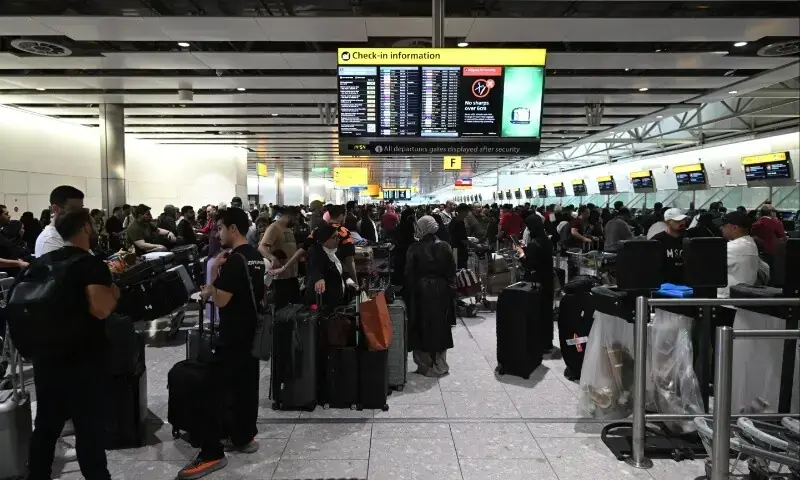
CHICAGO: Airlines are set to benefit from a sharp fall in jet fuel prices after an interim US-Iran peace deal pushed oil lower, but travellers are not expected to see immediate fare cuts as limited seat growth is giving carriers room to preserve stronger pricing.
The US market illustrates the trend most clearly. Ticket price increases have not kept pace with this year’s jump in fuel costs, while domestic capacity growth has remained restrained. That has left airlines in a position to use cheaper fuel to improve margins rather than roll back recent fare increases.
US jet fuel spot prices were at $2.85 a gallon on June 17, down from an early April peak of $4.88. Reuters calculations showed that if the decline is maintained, the industry’s yearly fuel bill could fall by more than $40 billion.
Fare increases lagged the fuel surge
As jet fuel prices climbed, US airlines raised fares, increased baggage charges and reduced schedules, but those measures only partly compensated for the cost increase. Industry data showed jet fuel prices rose at more than three times the pace of airfares between January and May.
Deutsche Bank estimated that US carriers would recover only about 60 cents for every additional dollar spent on fuel, producing $14.4bn in extra revenue against $24.1bn in higher costs. Alaska Air said it recovered about one-third of the increase. Delta Air Lines, United and American Airlines said their second-quarter recovery rate was between 40pc and 50pc, while JetBlue Airways and Frontier Group expected to recover less than half.
United CEO Scott Kirby told Reuters his airline is close to recapturing the fuel spike through pricing. Raymond James data showed average domestic fares booked one week before travel were 34.1pc higher year-on-year on June 8.
Melius Research analyst Conor Cunningham said the central issue is whether airlines can keep those fare gains as fuel becomes cheaper.
"What remains crucial is the ability to hold price,"
He added that lower gasoline prices could reduce consumer sensitivity to airfares.
Impact expected to vary by region
Outside the United States, any fare relief is likely to be uneven. Lower crude prices take time to feed through to jet fuel costs. Dudley Shanley, Goodbody’s head of aviation and travel research, said airlines are likely to keep fares firm, or increase them where demand permits, unless fuel prices return closer to levels seen at the start of the year.
In Europe, long-haul ticket prices are more likely to soften because airlines were more successful in passing on higher costs on those routes, RBC analyst Ruairi Cullinane said. Short-haul fares, however, may stay stronger if the peace agreement lifts demand.
In Asia, HSBC analysts said China’s three biggest airlines are dealing with weak pricing power. Cathay Pacific in Hong Kong, by contrast, is seen as being in a better position because higher fares, cargo earnings and demand for premium travel could help offset costs.
The Middle East was described as the clearest exception because the war had disrupted traffic. Aviation analyst John Strickland said some airlines may turn to promotions to attract passengers back, although fuel is still too costly for broad-based discounting. He added that UAE carriers may be able to move more aggressively with government support.
Airlines still focused on earnings recovery
The benefit to carriers will depend on how long fuel prices remain lower, since airline fuel costs are shaped by longer-term purchases rather than spot prices alone. The International Air Transport Association said jet fuel still costs 5pc more than a year ago even after the recent fall.
Southwest Airlines chief operating officer Andrew Watterson summed up the pressure when asked when the airline could return to pre-pandemic margins.
"When’s fuel going to go down?"
This leaves airlines with little reason to cut fares while they are still rebuilding profitability. Jefferies estimated that every 5pc decline in its roughly $3-per-gallon forecast for 2027 would raise projected earnings per share by 10pc to 15pc for Delta, Southwest and United, and by as much as 50pc for American Airlines.
The conditions that previously led to fare wars in the United States are largely absent. Delays in aircraft deliveries, congested airports and weaker low-cost carriers have reduced the chance of broad competition driving fares down. US domestic seat capacity is expected to grow just 0.4pc year-on-year in the third quarter, compared with 4.6pc expected before the recent Middle East tensions. JPMorgan analysts said constrained aircraft deliveries and retrenchment by budget airlines lower the risk of meaningful capacity growth and support airlines’ ability to maintain pricing.
0 Comments
No comments yet. Be the first to join the discussion!