PHC says SC ruling on jobs for civil servants’ families applies prospectively
The Peshawar High Court has ruled that the Supreme Court’s decision striking down Rule 10(4) will apply prospectively. It said those whose right to appointment had accrued before Sept 26, 2024, would still be entitled to consideration.

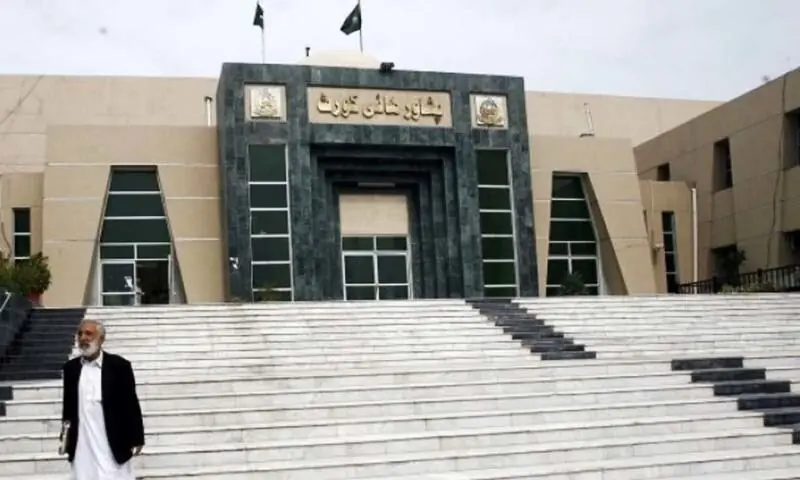
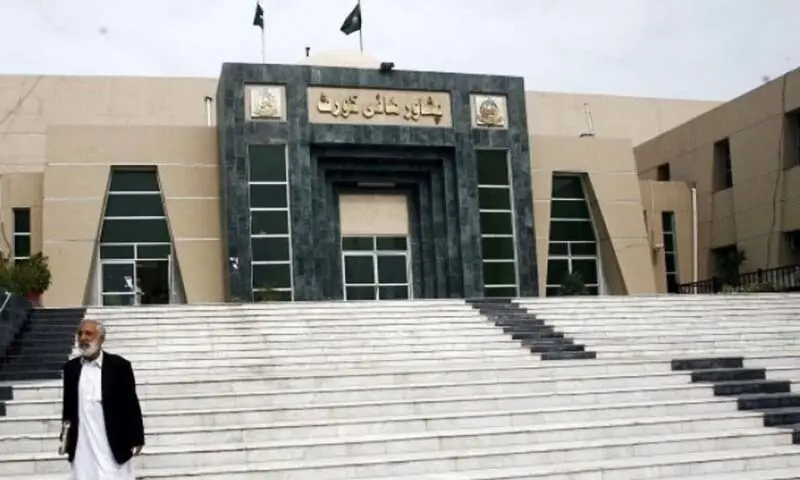
PESHAWAR: The Peshawar High Court (PHC) has ruled that the Supreme Court’s judgement striking down the rule allowing appointment of a deceased or incapacitated civil servant’s child or spouse will operate prospectively, and that those whose entitlement had already arisen before the apex court verdict will retain that right.
A bench comprising Justice Syed Arshad Ali and Justice Babar Sattar disposed of 16 petitions and directed that the petitioners’ applications for appointment be treated as pending before the competent authorities in the relevant departments. The court ordered that those applications be decided within one month in accordance with law.
The issue before the court was whether the law laid down by the Supreme Court in General Post Office versus Mohammad Jalal would apply prospectively so that individuals whose right to employment had accrued earlier under Rule 10(4) of the Khyber Pakhtunkhwa Civil Servants (Appointment, Promotion, Transfer) Rules, 1989, would still be entitled to such appointment. In a detailed nine-page judgement authored by Justice Babar Sattar, the bench held that the Supreme Court ruling was to be enforced prospectively.
The bench clarified that rights under Rule 10(4) would be considered to have accrued in favour of those individuals who met the minimum qualification for the relevant appointment under the first proviso to the rule at the time of the civil servant’s death or incapacity, provided that the death or incapacity had occurred before Sept 26, 2024, the date on which the Supreme Court delivered its judgement in General Post Office and declared Rule 10(4) illegal.
Court’s reading of the rule
According to the judgement, the event that triggered the right in favour of a child or widow or wife of a deceased or incapacitated civil servant was the death or incapacity itself. The court said that this right was subject to the child or spouse possessing the minimum qualification required for appointment to a post in BPS-1 to BPS-10, as well as the availability of a vacancy.
The bench further noted that the third proviso to the rule stated that where two vacant posts existed, the child or widow or wife would ordinarily be appointed to the post carrying the higher pay scale. It added that when the first proviso was read together with the main rule, it showed that the right vested at the time of death or incapacity, and that the question of minimum qualification was also to be assessed at that point.
The judgement also observed that the rule created an option for the wife of the deceased or incapacitated employee to avail the benefit where the child was a minor or otherwise lacked the required qualification for the post. At the same time, the bench pointed out that, unlike the rules in Sindh and Balochistan, the Khyber Pakhtunkhwa framework did not provide for a vested right to be exercised by a child of a deceased or incapacitated employee upon attaining majority.
Arguments before the bench
Several lawyers appeared for the petitioners, including Khadim Hussain Khosa, Saadullah Marwat, Asif Ali Shah, Jalaluddin and Shehzada Irfan. They argued that the petitioners’ right had already accrued under Rule 10(4) while that provision remained in force, and maintained that the Supreme Court judgement could not be given retrospective effect.
Additional Advocate General Taskeenuddin Khattak argued that after the Supreme Court judgement, Rule 10(4) of the KP APT Rules stood repealed and there was no longer any legal provision under which a child or spouse of a deceased or incapacitated civil servant could be appointed. He also submitted that the word used in the former Rule 10(4) was may rather than shall, which, according to him, showed that the provision was discretionary rather than mandatory.
The PHC rejected that interpretation. The bench held that because Rule 10(4) was a beneficial statutory provision and because the legislature had laid down conditions governing such appointments, the word may in the main provision had to be read as shall. The court said the rule-maker could not have intended to give government agencies broad discretion to grant or deny appointments under the rule at will, adding that such an interpretation would make the provision arbitrary.
Comments
No comments yet. Be the first to join the discussion!