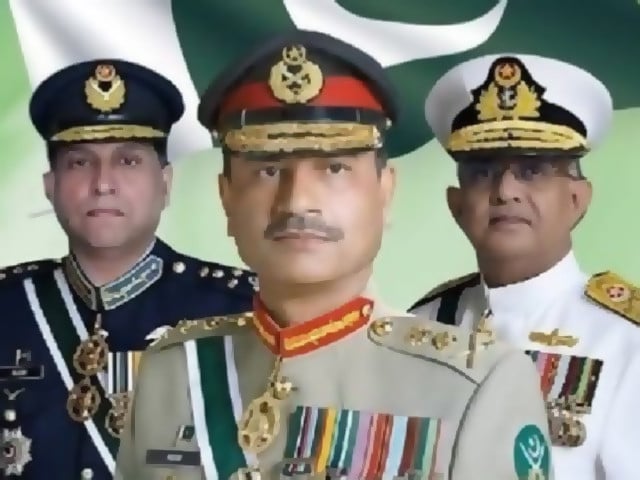
Marka-e-Haq: Pakistan’s stand against India's expansionist agenda
The article argues that Marka-e-Haq—“Battle for Truth”—captures Pakistan’s principled resistance to India’s revisionist aims, citing wars, Kashmir disputes, and the 2025 crisis.

There is no better phrase in the annals of South Asian history than Marka-e-Haq--the Battle for Truth. This idea, which reverberates in the collective consciousness of Pakistan, particularly in the wake of the 2025 aggression, is the embodiment of the principled stand of a sovereign state against hegemonic designs. It was not just a military or diplomatic event, but a reflection of the moral and existential power that this small country holds. It showed the world that resilience and the truth, based on justice and self-defense, triumph over expansionist intrigues. Marka-e-Haq, at its core, addresses the role of Pakistan as a bulwark to the conventional and nuclear posturing by India, which has repeatedly threatened the stability in the region and the global peace.
Since 1947, India has pursued irredentist ambitions, in which the superior conventional forces and the development of the nuclear posture were instrumentalized in order to redefine borders and dominate South Asia. It is not defensive realism but offensive revisionism, which is often obscured by the discourses of victimhood in the wake of incidents that are conveniently used to justify escalation. As a smaller state with its wounds of Partition, Pakistan has always urged peaceful settlement, especially in the case of Kashmir, and has been enduring existential pressures. Take into account the underlying conflicts. Amid the accession controversies by the Maharaja. India retaliated by sending in military forces and internationalizing the dispute through the UN, which demanded a plebiscite, which is yet to be implemented.
In the 1965 war, India went on an all-out offensive, invading Pakistani soil. Although Pakistan had undertaken some small steps, the disproportionate actions of India escalated it to an open war, which ended in a stalemate but made it clear that India was not willing to negotiate on the Kashmir issue on an equal footing. The 1971 war, resulting in the formation of Bangladesh, is usually propagated as a humanitarian intervention of India. But it was a sequel to internal Pakistani political crises. This is another clear indication of how India is keen to exploit internal differences to make territorial and strategic gains. Kargil 1999 involved Pakistani troops perched on heights on the other side of the Line of Control (LoC). India retaliated with a strong response using air and ground attacks. Both episodes underscore a cycle in which India presents herself as reactive in pursuit of maximalist goals.
False Flags, Surgical Strikes, and Nuclear Posturing Post-9/11 dynamics added to this. Recurrently, India has been using terror attacks - often alleged to be Pakistan-backed - as excuses to make military claims. The Pulwama suicide bombing of 2019 resulted in 40 dead CRPF officers. India accused Jaish-e-Mohammed and struck Balakot airstrikes deep into Pakistan saying to hit terror camps. It is not new to use the name of Jaish-e-Mohammed to wage war against Pakistan, specifically whenever India’s elections are near. However, the independent satellite images later indicated minimal damage with Pakistan downing an Indian jet and capturing pilot Abhinandan Varthaman, who was later released as a gesture of peace.
Pakistan has long been suspicious of such attacks, allowing Indian adventurism, in keeping with a tradition of unverified attribution. The 2025 Pahalgam attack in IIOJK, resulting in the deaths of tourists, caused a new crisis. Blaming the Pakistan-linked groups, India suspended the Indus Waters Treaty (IWT) and launched Operation Sindoor-missile strikes on suspected targets. Pakistan described it as a possible false flag, citing the timing and the absence of independent investigations, as had been the case with Pulwama. Counteractions were followed by cross-border attacks, but a restrained response by Marka-e-Haq and diplomatic overtures proved to be a victory of will and truth over aggression.
Empirically, these incidents demonstrated the strategy India follows to disturb regional peace. Notably, the utilization of sub-conventional initiators of conventional benefits tests the thresholds of Pakistan and projects the power back home. On the Nuclear Equation, India had shifted to Nuclear ambiguity when it had been NFU. The nuclear doctrine of India, as formulated on the basis of credible minimum deterrence and NFU, is tempered by statements from leaders such as Rajnath Singh, the defense minister of India, suggesting flexibility based on circumstances. The issue of modernization, such as triad capabilities, canisterized missiles, and possible counterforce targeting, is raising regional concerns.
Analysts point out that the expansionist nuclear posture by India is not only directed at Pakistan but also against China, and this design now has reached far beyond the regional level with the inclusion of Agni VI missiles. Pakistan's weapons provide a stable deterrent and prevent the war that would have ensued under the given contemporary circumstances. Pakistan’s nuclear shadow has ironically stabilized the region by increasing the cost of escalation, but India has probes below the threshold and is running the risk of miscalculation.
In an environment where Pakistan is not only facing traditional security threats from India, but its impact can be seen in its nontraditional security elements. As, unfortunately, India goes beyond bilateralism. Pakistan is facing a threat to its agriculture due to weaponization of water through the Indian unilateral suspension of the IWT. Disputed regions border infrastructure, alliances such as the QUAD, and economic heft project hegemony, marginalizing smaller neighbors. This regionally breeds instability in Indian occupied Kashmir, where heavy-handed policies estrange people. In South Asia, which is one-fifth of the world population, nuclear risks pose a threat to proliferation norms and the involvement of the great powers.
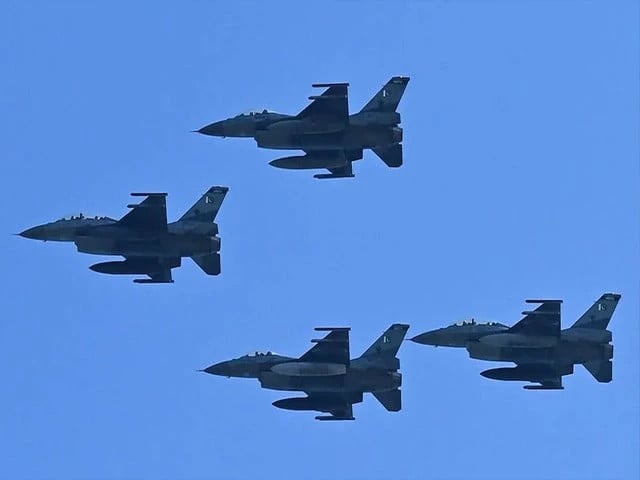
Marka-e-Haq opposed this with professional military, diplomatic, and clarity of narrative. It reveals false flags, the observance of international law while promoting and struggling in the UN to support Kashmir’s right for self-determination, and the emphasis on dialogue. The crises of recent times showed how well Pakistan’s air defenses could work, how quickly they could be mobilized, and that the Pakistani air defenses are the most capable in the region. In academia, the stance of Pakistan is acknowledged by scholars of international relations through a theoretical lens of realism and the security dilemma. The authors like Kenneth waltz, and Thomas Schelling, explains this through the realist approach of power maximization which arguably suits South Asia’s security dilemma. Kenneth argues that, ““more may be better” deterrence logic aligns with the idea that Pakistan can offset India’s conventional superiority through credible nuclear deterrence”. Similarly, according to a research titled, “Global Power Shift and Foreign Policy Choices for Pakistan”, Pakistan faces the power maximization of a larger rival. Game-theoretic deterrence presented by Glyn Synder, demonstrates how credible second-strike as well as asymmetric options can maintain peace. Pakistan's nuclear signaling can be considered, as evidenced by empirical data from crises such as Brasstacks 1987 and the 2001-02 standoff, where nuclear signaling signaled to Pakistan that deeper incursions would result in disaster.
Pakistan confidently displayed that its sovereignty can never be traded, and expansionism can never bring peace. India needs to give up the zero-sum games and go for the real deal: the pledges of plebiscite, nuclear risk mitigation, and confidence-building measures. The world cannot afford a nuclear flash point ignited by revisionism. Pakistan is a responsible nuclear nation, protector of the regional balance, and the defender of the truth. In this struggle, truth and justice do not triumph at the expense of being dominant, but at the cost of being principled. To ensure that the world is stable, the international community should understand this imbalance and call on the aggressor to restrain itself. It is only at that point that South Asia can cease being in conflict and start cooperating.

The writer ia a Research Fellow at the Balochistan Think Tank Network (BTTN), Quetta
View all articles →Comments
No comments yet. Be the first to join the discussion!