‘Marka-e-Haq’: Pakistan’s triumph, India’s humiliation
The article argues that April–May 2025 events became Pakistan’s strategic turning point, citing alleged false-flag claims, rapid readiness, and decisive military and cyber responses.


By Zartaj Chaudhary
History has a peculiar way of settling scores. Empires built on deception eventually collapse beneath the weight of their own lies and the events of April and May 2025 have written this truth in letters too large for the world to ignore. What India designed as Pakistan's humiliation became, through the extraordinary convergence of military precision, diplomatic acumen, and national resolve, Pakistan's finest strategic hour. But between that opening lie and Pakistan's decisive answer lies a sequence of events so meticulously incriminating that India did not merely lose the argument; it surrendered it, unwittingly, before the world had even thought to ask the question.
The Pahalgam incident of April 22 deserves to be called precisely what it was, a manufactured pretext, a false flag operation executed by a government that has institutionalized deception as its primary instrument of foreign policy. The evidence does not whisper this conclusion; it screams it. An FIR was filed ten minutes after the attack. Coordinated social media accounts activated within minutes, primed and waiting for the trigger. Not a single soldier moved during twenty minutes of uninterrupted terrorist activity inside a zone patrolled by 800,000 Indian troops. Either Indian security forces are catastrophically incompetent, or they deliberately stood down. There is no third explanation.
The world must choose which indictment it prefers to accept, as both options condemn New Delhi beyond rehabilitation. And before the bodies were even counted, before any credible investigation could be convened, the Modi government moved to weaponize the Indus Waters Treaty. This single act exposed the entire operation for what it was. Grief does not reach for water warfare within hours of a tragedy. Political calculation does. India's mask did not slip in Pahalgam – it was deliberately removed because the Modi establishment has grown so arrogant in its manufactured narratives that it no longer fears being seen.
Pakistan saw everything. And Pakistan was ready. Two hours before Indian strikes landed on the nights of May 6th and 7th, Pakistan's civil and military leadership had already assembled — fully briefed, operationally positioned, and waiting. India's most prized strategic asset, the element of surprise, was neutralized before a single missile was fired. This is what institutional excellence produces. This is what decades of preparation, sacrifice, and unrelenting professionalism look like when they are tested under fire. Pakistan Army did not scramble. It executed.
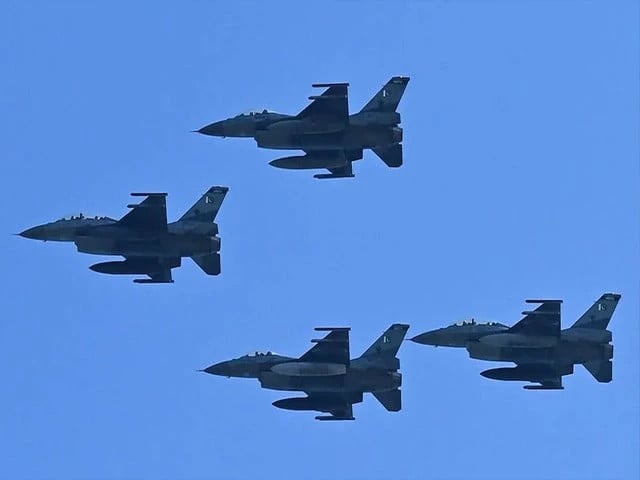
When Pakistan Air Force rose to meet Indian aggression, it did not merely respond — it dominated. Five Indian aircraft were destroyed, including the Rafale jets that India's defence lobby had sold to its public as near-mythological instruments of air superiority. Let that sink in. The aircraft around which India built its entire aerial deterrence narrative, the jets purchased at extraordinary cost to project regional supremacy, were neutralized by PAF pilots whose valour no procurement budget can replicate. The Rafale myth is dead. Pakistani hands killed it. While India spent fortunes importing weapons systems built in foreign factories serving foreign interests, Pakistan invested in self-reliance — and self-reliance held the line when imported prestige could not.
Operation Bunyan-um-Marsoos was not reactive. It was definitive. This was not escalation born of desperation; this was a sovereign state communicating, in the only language aggression understands, that Pakistan possesses both the will and the capacity to operate at every step of the escalatory ladder simultaneously – and climb higher if required.
The battle was never solely kinetic. Synchronized cyber operations dismantled Indian command-and-control infrastructure at the conflict's most critical moments. Pakistani loitering munitions and advanced drone technology penetrated Indian airspace and exposed the catastrophic vulnerabilities hiding beneath India's defence spending facade. And throughout it all, the DG ISPR stood before the world and spoke facts – measured, documented, irrefutable facts – while Indian media was busy announcing the capture of a Lahore port that does not exist on any map. The contrast was not merely embarrassing for India. It was strategically devastating.
Diplomatically, Pakistan dismantled India's narrative before it could solidify. Pakistani representatives in every major capital, from Washington to Beijing, presented evidence while India presented outrage. The overseas Pakistani community mobilized with a political consciousness that shook international discourse and countered Indian lobbying with something more powerful than money: moral clarity.
The United States acknowledged Pakistan's stabilizing role. The world's assessment shifted. On the other hand, India's regional architecture is fracturing. Bangladesh has reclaimed its sovereign trajectory. The idea of Indian hegemony as South Asia's natural order is being rejected not just by Pakistan but by history's own momentum.
What must be understood is that India fired first, lied first, and lost first. Pakistan did not seek this confrontation. But Pakistan finished it. The Pakistan Army did not merely defend territory in May 2025. It defended the principle that a nation anchored in truth, prepared in capability, and unified in resolve is unconquerable. That principle has now been demonstrated before the entire world. This is not a story about survival. This is a declaration of what Pakistan is and what it will always be when tested. Unbreakable. Unmistakable. Victorious.
The writer is a freelance columnist and can be reached at [email protected]
Comments
No comments yet. Be the first to join the discussion!