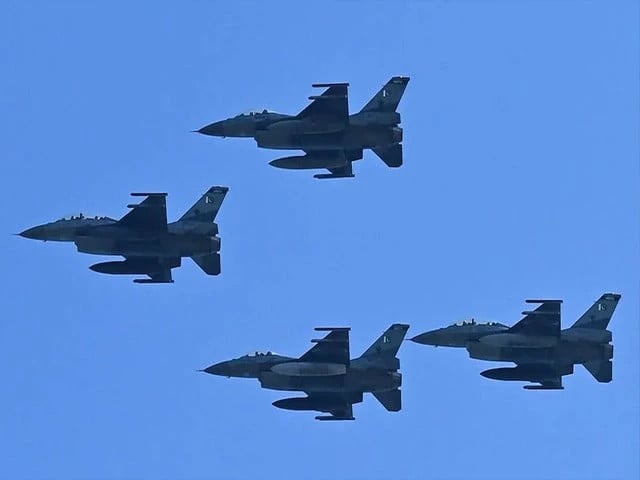
Pakistan’s rise as a military power

Pakistan is portrayed as a nation confident in its rise as a significant military power, a belief reinforced by the episode of Marqa Huq. Within this narrative, the event symbolizes exceptional coordination, discipline, and strategic foresight across the armed forces, culminating in the downing of advanced Indian aircraft and the demonstration of clear operational superiority. Subsequent international attention, including statements by US President Donald Trump, is viewed as external validation that major powers now take Pakistan’s military capabilities seriously and regard its forces as capable, resilient, and elite.
This sense of elevated status is further bolstered by Pakistan’s expanding network of defence and diplomatic partnerships. Deep-rooted cooperation with Saudi Arabia, growing engagements with Qatar and other Gulf states, and warm ties with Azerbaijan are all interpreted as signs of trust in Pakistan’s reliability and military professionalism. The gradual improvement in relations with Bangladesh reinforces the belief that the country’s influence is broadening across Asia. Altogether, these relationships are seen domestically as tangible proof of Pakistan’s increasing strategic relevance and its role as a stabilizing force in a complex regional environment.
The visit of the King of Jordan to Pakistan was widely viewed as far more profound and meaningful than a mere ceremonial gesture of diplomatic goodwill. His Majesty’s interest in the operational activities and professionalism of the Pakistan Army was interpreted as a highly meaningful and deliberate acknowledgment that Pakistan is not only a rising but a continuously consolidating strategic force on both the military and diplomatic fronts.
Such high-level royal visits, substantive strategic consultations, and profound expressions of inter-nation brotherhood never occur in a strategic or diplomatic vacuum; Pakistanis firmly believe they occur precisely because Pakistan’s demonstrated strength, its consistent reliability as an ally, and its perceived moral clarity on global issues, which now forcefully command international respect and serious attention. There is a palpable and steadily deepening sense of national pride among the populace who hold the deep conviction that their country’s immense and varied sacrifices, its unyielding resilience, and its astute, far-sighted strategic decisions are finally and rightfully being acknowledged on the world stage, marking a turning point in global perception.
Another concrete indicator of Pakistan’s significant military emergence is the increasing interest by several countries in Pakistan’s defence products, its military technology, and its operational expertise. Pakistan’s arms industry, which earlier may have been described as modest or technologically fledgling, is now expanding in both capability and technological sophistication. The domestic state-of-the-art production of advanced aircraft, sophisticated drones, precision-guided systems, heavily armoured vehicles, and a wide array of domestically engineered weaponry is viewed with intense national pride.
That Pakistan’s domestically produced military equipment and platforms are now prominently displayed at prestigious international defence exhibitions and trade shows powerfully strengthens the domestic belief that Pakistan is achieving a new level of international recognition as a defence exporter. When foreign countries express interest in purchasing Pakistani defense products, it shows Pakistan’s defence scientists, engineers, and military officers are not just contributing, but are actively building a legacy of technological advancement and self-reliance.
A major focal point of national pride centres on Field Marshal Syed Asim Munir, who is frequently characterized in domestic discourse as a dignified, disciplined, and visionary military figure whose interactions with global leaders have demonstrably elevated Pakistan’s overall international stature. He introduced a much-needed period of stability, strategic clarity, and disciplined foresight into Pakistan’s highly sensitive and critical national security environment. His widely perceived reputation for unshakeable moral strength, calm and measured decision-making even under duress, and uncompromising professional integrity resonates profoundly and positively with the public. That numerous foreign dignitaries, both military and political, now meet with him further deepens the conviction that Pakistan’s current national security leadership is steadily getting the influence aligned with the country’s strategic strength.
This significant and ongoing rise is fundamentally not a matter of geopolitical chance or fortune; it is the inevitable result of courage, national unity, collective sacrifice, and an absolutely unshakeable national belief that Pakistan’s pivotal time on the world stage is arriving with undeniable clarity and absolute confidence.
This rise in Pakistan’s international military recognition is linked to a core, unwavering national belief that Pakistan has consistently stood for peace, international justice, and responsible conduct. Pakistan, despite its military strength, is consistently positioned within the domestic narrative as never having been the unprovoked aggressor. Instead, Pakistan is widely seen as unequivocally committed to the peaceful and diplomatic resolution of disputes, particularly concerning longstanding, deeply sensitive international issues such as the disputed status of ashmir and the profound human rights concerns of Palestine.
Pakistanis believe that as their country’s credible military strength becomes more visible on the world stage, their calls for international justice and adherence to international law gain a corresponding international attention. Pakistan’s voice— which may have, at times, been overshadowed or marginalized by the manoeuvring of larger regional powers— is now being heard with respect, particularly because that voice emanates from a country that has demonstrated strategic maturity, political prudence, and an enduring moral commitment to global responsibility.
Pakistan’s remarkable domestic counterterrorism achievements remain another intensely vital cornerstone of national pride. Pakistan has been compelled to fight, often virtually alone, and defeat terrorist networks that threatened the nation’s existence. Few other nations have had to face down internal and external terrorism, and yet emerge with such restored order. The Army’s relentless, grueling, and ultimately successful campaigns have been fundamental in shaping Pakistan’s contemporary international image as a country capable of managing and ultimately defeating modern asymmetric threats. The sacrifices by tens of thousands of soldiers, officers, law enforcement personnel, and civilians have forged a narrative of national determination, reinforcing the belief that Pakistan’s armed forces are now counted among the world’s most tested military forces in counterterrorism operations.
This internal, hard-won military strength is viewed as intertwined with the belief that sustained national prosperity and well-being depend on an unassailable security posture. Pakistanis believe that long-term, meaningful economic development and social progress are impossible without demonstrably secured borders, safe citizens, and a strong, technologically capable defence system. Therefore, Pakistan’s investments in comprehensive military modernization, the acquisition of advanced weaponry, the development of indigenous technology, and the forging of robust strategic alliances are not perceived as isolated military expenditures but viewed as an integral part of a holistic approach to national progress.
Pakistanis believe that by actively ensuring a robust defence and comprehensive security, the country is safeguarding the foundation upon which all future education, innovation, trade, and industrial development can thrive. Strength is not seen as an end in itself, but as an indispensable means to preserve national dignity, ensure territorial integrity, and guarantee essential economic stability.
For Pakistanis, it is a great source of pride that a recent US Congressional report stated Pakistan held military superiority during the Pakistan-India conflict this May. The people of Pakistan derive profound pride from the proven strength, resilience, and unwavering resolve of their highly professional armed forces. They maintain the powerful conviction that Pakistan’s consistent and undeniable rise is an undeniable testimony to the spirit of the nation itself.
They perceive the Pakistan Army, the Pakistan Air Force, and the Pakistan Navy not merely as military institutions fulfilling a basic defense mandate, but as the reliable protectors of national unity, sovereignty, and sacred dignity. Every exhibition of military competence, every successful diplomatic engagement, and every indication of international respect is interpreted domestically as validation of Pakistan’s enduring determination to stand tall within the comity of nations. Pakistan, in this determined national self-assessment, is not merely reacting to events or simply defending its established borders; it is shaping its own destiny. It is asserting itself on the world stage as a responsible, strategically powerful, and morally principled nation. Whether this assertion is demonstrated through its undeniable military achievements, its deep and enduring global strategic partnerships, or its consistently moral positions on contentious international issues, Pakistanis believe they are irrefutably proving that their country is decisively emerging as one of the world’s genuinely significant and indispensable military forces— a nation respected by its allies, acknowledged by neutral observers, and admired by all those who truly understand the depth of its sacrifices and the unshakeable strength of its national resolve.
This significant and ongoing rise is fundamentally not a matter of geopolitical chance or fortune; it is the inevitable result of courage, national unity, collective sacrifice, and an absolutely unshakeable national belief that Pakistan’s pivotal time on the world stage is arriving with undeniable clarity and absolute confidence.

Comments
No comments yet. Be the first to join the discussion!