IMF sets Rs1.73 trillion petroleum levy target for FY27
The IMF has set Pakistan’s petroleum levy target for FY27 at Rs1.727 trillion and tightened revenue conditions for the FBR. Its report also warned that prolonged Middle East conflict could hurt growth, remittances and external financing.

ISLAMABAD: The International Monetary Fund (IMF) has set Pakistan’s petroleum levy collection target for fiscal year 2026-27 at Rs1.727 trillion, an increase of Rs259 billion, or 17.6%, over the target for the current year, according to the Fund’s staff-level report released on Friday.
The federal and provincial governments would undertake additional revenue measures equal to Rs860 billion to support tax collection goals. Of this amount, the federal government is to generate Rs430 billion through fresh tax steps and stronger enforcement, while the provinces are expected to contribute the remaining Rs430 billion by widening sales tax on services and collecting agricultural income tax.
The federal budget for the next fiscal year has been projected at more than Rs17.1 trillion, nearly 9% higher than the revised budget for the current year. The defence allocation is projected at Rs2.665 trillion, up by Rs101 billion.
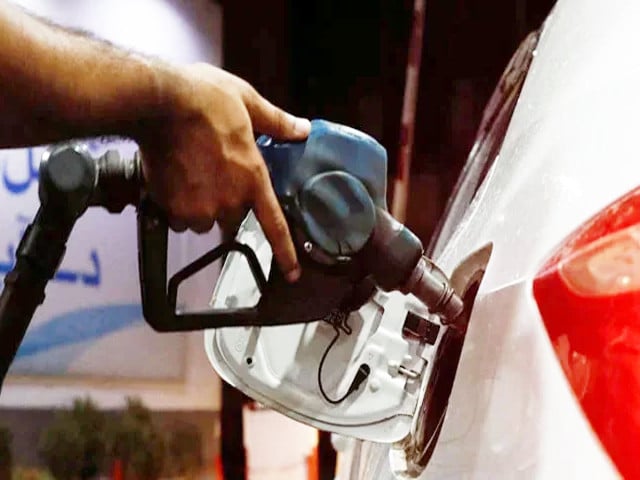
The IMF report said meeting the higher petroleum levy target may require exceptional steps, as rising prices could reduce demand. At present, the government is charging a levy of Rs117.4 per litre on petrol and nearly Rs43 per litre on diesel. The Fund noted that petroleum products currently face an effective tax rate of 166%, making government revenues heavily dependent on fuel taxation and exposed to shocks.
Revenue conditions tightened
Pakistan has agreed to impose Rs215 billion in additional taxes and raise another Rs215 billion through audit, production monitoring and other enforcement actions. The IMF has also made the revenue condition stricter for the Federal Board of Revenue (FBR), which is required to achieve a tax collection target of Rs15.27 trillion next fiscal year after missing targets in the previous two years.
Unlike the current year, when the target was indicative, the IMF has now converted it into a quantitative performance criterion. This means that if the FBR fails to meet the agreed benchmark, Pakistan will need a waiver from the IMF executive board. Pakistan has accepted this condition.
"With these measures, we expect to achieve revenues of Rs7.022 trillion by end-December 2026, which will be set as a new quantitative performance criterion," according to the government's assurance to the IMF.
The end-June 2027 target of Rs15.27 trillion would require nearly 14% growth over the expected collection for the current fiscal year.
Tax measures and provincial role
The government has assured the IMF that it will reduce income tax and sales tax expenditures to raise an additional 0.15% of GDP, or Rs215 billion. Another 0.15% of GDP, also equal to Rs215 billion, is expected through implementation of the FBR transformation plan.
"The impact of any potential revenue-reducing tax simplification policies introduced in the FY27 budget will be offset by new permanent tax policy measures with equivalent revenue yield," according to the written assurance.
The budget will also include provincial tax revenue targets aimed at adding 0.3% of GDP, or Rs430 billion, to the tax-to-GDP ratio. Provinces would mobilise these revenues by expanding enforcement of general sales tax on services to gradually cover all sectors of the economy. New agricultural income tax rates would apply to FY2026 agricultural income, with the revenue effect appearing in the following fiscal year.
The IMF said achieving the primary budget surplus target for next year would require additional revenue collection of 0.6% of GDP because of Pakistan’s weak tax buoyancy. Expenditure restraint would also be necessary, with primary spending remaining unchanged as a share of GDP in FY27, while targeted cash transfers and the ratios for health and education spending would increase.
Repeated shortfalls in FBR revenues highlight the risks of a narrow tax base. Although agriculture contributes 24.6% of value added, its effective tax rate is only 0.3%. While agricultural income tax rates were raised significantly in 2025, revenues remained below expectations because of delays in implementation and enforcement difficulties.
Pakistan’s standard 18% GST rate is not low compared to regional peers, but only about one-quarter of the theoretical base is taxed because many essential goods remain exempt or are taxed at concessional rates. According to the IMF, bringing sales tax efficiency closer to regional levels would require roughly Rs2.1 trillion in additional GST revenue.
Economic outlook and external risks
The IMF said a prolonged conflict in the Middle East could weaken Pakistan’s growth outlook, affect remittance inflows and short-term commercial borrowing from Gulf countries, and intensify capital outflows. Pakistan should continue efforts to build foreign exchange reserves and maintain fiscal consolidation.
The Fund revised down its growth forecast for the next fiscal year, citing higher commodity prices and weak external demand. "Amidst this challenging international environment, and with growing domestic concerns about poverty and growth, strong policy and reform efforts need to be sustained and deepened," the lender said.
Under an adverse scenario, the IMF said the cumulative impact on economic growth in the next fiscal year would reach 1.5%, reducing growth to 2.6%. Inflation would rise by 2.5%, taking it to nearly 10% next fiscal year, while the current account deficit would widen by around 1.5% of GDP to about 2.1%.
Consumer price inflation is expected to exceed 10% in the fourth quarter of the current fiscal year and average 8.4% in FY27 before returning to the State Bank of Pakistan’s target range in FY28.
The IMF has also ruled out any subsidies on petrol and diesel, linking approval of $1.3 billion in loan tranches to full recovery of prices and taxes. The current account is expected to worsen further in FY27 because of higher oil and gas prices, although weaker domestic demand may limit the effect on the trade deficit.
As a net importer of oil and gas, Pakistan depends heavily on Gulf countries for supplies, with 81% of fuel imports coming from the region. The IMF warned that if physical fuel supplies are disrupted for a sustained period, the impact on economic activity could be greater. Immediate exposure to fertiliser trade disruptions appears manageable because Pakistan is largely self-sufficient in urea production, but a prolonged disruption in DAP supply chains could affect the Kharif planting season in June and July.
55% of Pakistan’s foreign remittances come from Gulf countries, and any major disruption in those economies or the return of migrant workers could weigh on inflows. It also said worsening global financial conditions have already triggered capital outflows, which could intensify if the crisis continues, while access to short-term commercial financing, largely provided by Gulf banks, may also be affected.
According to the IMF, Pakistan’s public debt remains sustainable over the medium term under the baseline scenario, but risks remain elevated because of large gross financing needs and difficulties in securing external financing, including high-quality foreign investment.
Comments
No comments yet. Be the first to join the discussion!